
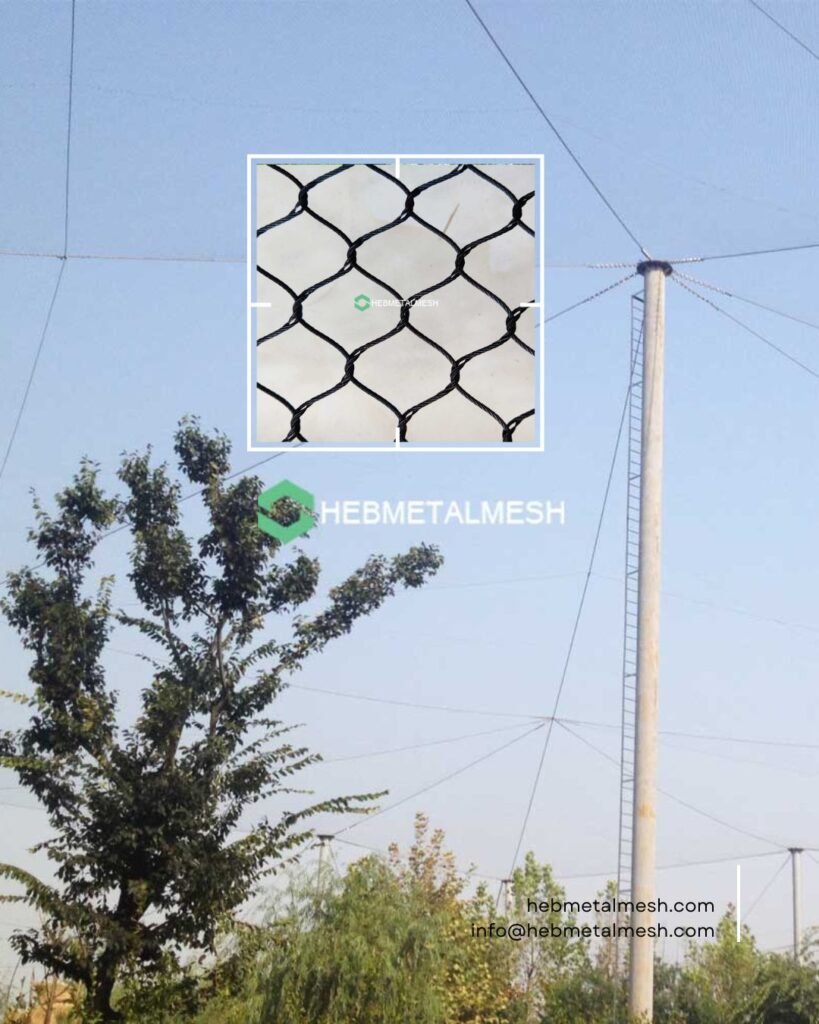
An aviary around existing trees looks like a shortcut. The trees already stand, they give shade and perches and something worth looking at, and they cost nothing. Then the frame arrives and every assumption starts to fail.
You cannot put a post through a root plate. You cannot pull a roof tight over a canopy that moves. You cannot seal mesh to a trunk that adds a finger of girth every year. And a limb that drops onto a net is a welfare event, not a maintenance note.
The trees are the reason the enclosure looks good and the reason it is hard to build. Most of the difficulty sits in four decisions: where the posts go, how high the roof sits, what the tree is allowed to do afterward, and who keeps watching it.
Executive Summary
An aviary around existing trees is a build with two owners, the collection and the tree. The mesh has to hold birds without stopping the tree from growing, shedding and moving in wind.
That changes the order of work, and it changes who signs off. An arborist survey comes before the drawing, post positions follow root zones rather than a grid, and the roof height follows the canopy rather than the wall.
The parts that fail are small and specific: a collar that girdles a trunk, a roof pocket that holds leaves until it ponds, a dead limb nobody logged, a post footing that severed a root three seasons ago and shows up now as a leaning tree. None of that costs much at design stage. All of it costs a great deal later.
Quick Answer
An aviary around existing trees is designed from the root plate outward: keep post footings outside the root protection zone, set the roof above the canopy rather than through it, and allow for the tree adding height and girth every year. The roof then becomes a debris surface, so leaf load and ponding belong in the specification. Get the arborist survey before the layout, not after.
Key Takeaways
- The tree is a structure you do not control, and it keeps changing.
- Root protection zones decide post positions, not the other way around.
- A roof through a canopy damages both the mesh and the tree.
- Growth allowance is a design number, not a maintenance problem.
- Leaf litter turns a flat roof panel into a pond.
- One inspection cycle should cover the mesh and the trees together.
The Tree Is the Structure You Do Not Control
Every other element in an enclosure stays where the drawing puts it. A tree does not. It adds height, widens, drops limbs and roots, and moves in wind, and it does all of that on a schedule nobody controls.
That makes aviary tree protection a design problem rather than a maintenance one. If the plan assumes a static trunk, the mesh will be wrong within a few seasons, and the failure will look like a mesh fault when it is a layout fault.
The aviary mesh for birds we weave tolerates that movement, because a handwoven panel flexes where a welded grid would crack. The layout still has to give it somewhere to flex.
An Arborist Survey Comes Before the Drawing
An arborist survey is the cheapest line in the budget and the one most often skipped. You need trunk positions and diameters, canopy spread, species, condition, and a root protection zone for each tree that stays.
The existing tree survey should also flag what the drawing cannot show: decay, included bark, previous pruning wounds, and lean. A tree with a defect near the enclosure line changes the whole plan, and it changes it before anyone orders steel.
Set the tree root protection zone first and treat it as a no-build area. Post footings, curbs, drainage runs and machine access all stay out of it.
Post Layout Around Root Zones
Post layout around trees is where the grid stops being a grid. On open ground you space posts evenly; here you place them where the roots allow and span the gaps.
Three moves cover most sites:
- Offset the post line outward and accept a wider bay.
- Cantilever a short bracket from a post outside the zone.
- Bridge the root plate with a beam and hang the panel from that.
Each one costs something, and the survey tells you which is cheapest on your site.
The structural side of those choices sits in the enclosure structure engineering notes, which cover footing loads and post spacing in more depth.
Height and the Roof Over the Canopy
Canopy clearance height is the number that decides whether the build works. Measure to the top of the canopy at its highest, add the growth the species will put on over the design life, then add working space above it.
An aviary roof over canopy that touches branches will abrade, collect debris and transfer wind movement from the tree into the frame. Keep the roof clear, even where that means a taller wall than the birds need.
Where a roof has to cross a large clear span, deflection becomes the governing figure rather than strength. The rope netting deflection guide sets out how a flexible panel behaves across a long bay.
Pruning, Growth and the Mesh
Branch pruning clearance is a real allowance, not a one-off tidy. Decide how much clear air the mesh needs from any branch, then prune to that line and write the figure into the handover so the next person keeps it.
Tree growth into mesh is the slow failure. A trunk that grows into a panel will push it out of plane, load the ferrule and eventually wear through a wire. A heavier wire rope diameter buys time at that contact point, but it does not rescue a layout that put the panel too close in the first place. A trunk collar detail that allows movement, and gets re-checked, prevents most of it.
Species growth rates vary enough to change the answer. A fast grower near a panel needs a wider allowance and a shorter inspection interval than a slow one.
Deadwood, Windthrow and Tree Failure
Deadwood removal belongs on a schedule, and so does the decision about which deadwood stays. Standing and fallen wood supports invertebrates, and the birds that feed on them, so a clean sweep is not automatically the right answer.
Windthrow risk is the load case nobody wants to model. A tree that fails inside an enclosure can take a panel with it, and the mesh is not the part that should absorb that energy. Conservation bodies make the same argument at landscape scale: BirdLife International works on habitat and species together, because a bird list without the structure that supports it does not last.
Log the trees that lean, the ones with visible decay, and the ones with a defect above the roof line. Those three categories carry most of the risk, and the aviary enclosure failures casebook covers the repeat offenders.
Leaf Litter, Roof Load and Drainage
Leaf litter roof load is the quiet one. A flat or low-pitch roof panel under a deciduous canopy collects leaves in the low points, and a mat of wet leaves holds water against the mesh.
That does three things at once. It adds weight the panel was not specified for, it keeps the wire wet for weeks, and it blocks the light the planting below needs. Crown the roof, or accept that autumn includes a cleaning visit.
Drainage matters as much as slope. Water that sheets off a roof lands inside the enclosure, and a floor that already takes droppings and irrigation does not need a new source.
Perches, Trunks and Detail
Perch branches are the one part of the tree you can shape. Cut dead limbs back to sound wood and leave a few at heights the birds actually use, rather than leaving everything and hoping.
Where mesh meets a trunk, detail beats force. A collar that allows the trunk to expand, with enough slack to move, will outlast any attempt to seal the junction rigidly. A rigid seal either crushes the bark or tears the panel.
Keep the mesh aperture decision separate from the tree. The mesh size guide covers the species side, and the tree only changes where the panels land, not how open they are.
Inspection: Mesh and Tree on One Cycle
Run one tree inspection cycle for both the trees and the mesh, because the failures interact. A branch that has grown into a panel is a mesh fault and a tree fault at once, and two separate contractors will each tell you it belongs to the other.
Walk the roof line first, then the trunks, then the base. Roof first catches debris and abrasion; trunks catch growth and collar damage; the base catches root heave and movement. Write the order down, because the person doing the walk changes more often than the trees do.
Specification at a Glance
| Element | Working figure | Why it matters |
| Root protection zone | Set by the arborist | Post footings stay outside it |
| Post spacing | Whatever the roots allow | Bays vary; expect custom panels |
| Roof height | Canopy top plus growth plus clearance | Keeps mesh off branches |
| Growth allowance | Species rate times design life | Written into the handover |
| Trunk collar | Slack, re-checkable | Prevents girdling and abrasion |
| Roof pitch | Crowned to a low point | Leaf load and ponding |
| Grade | 316 stainless in wet, coastal sites | Leaves keep wire wet |
| Inspection | Roof, trunks, base, in that order | Failures interact |
Three numbers carry across the table. Breaking load tells you what a bay survives in one event. Tension decides whether a panel behaves as a surface or a curtain, and a slack panel under a canopy collects leaves faster than a tight one. Open area decides how much of the canopy a visitor sees through the roof, which is the whole reason for building around trees in the first place. Panel size follows the bay spacing, which on a wooded site is irregular by default, so expect more than one non-standard length.
The stainless steel aviary netting we supply comes cut to the bay, and an aviary around existing trees almost always needs several panels cut to fit the gaps rather than to a drawing.
FAQ
Yes, and it is often the better site, provided the design starts from the root plate. Keep post footings outside the root protection zone, set the roof above the canopy, and allow for the tree adding height and girth over the enclosure’s life. The tree survey comes first, not the layout.
Far enough to clear the root protection zone the arborist sets, which usually scales with trunk diameter rather than following a fixed distance. Where the zone blocks the grid, offset the post line, cantilever a bracket, or bridge the root plate with a beam.
Not if the detail allows movement. A rigid seal at the trunk either crushes bark as the tree expands or tears the panel. A slack collar that can be re-checked keeps both intact, and pruning to a stated clearance stops branches abrading the wire.
It does, because leaves collect in low points and hold water against the mesh. That adds weight, keeps the wire wet, and blocks light. Crown the roof toward a low point and treat an autumn clean as part of the maintenance schedule rather than an exception.
On one cycle, and more often for fast-growing species near a panel. Walk the roof line, then the trunks, then the base, because growth, collar damage and root movement show up in that order. Two separate inspections tend to leave the overlap unowned.