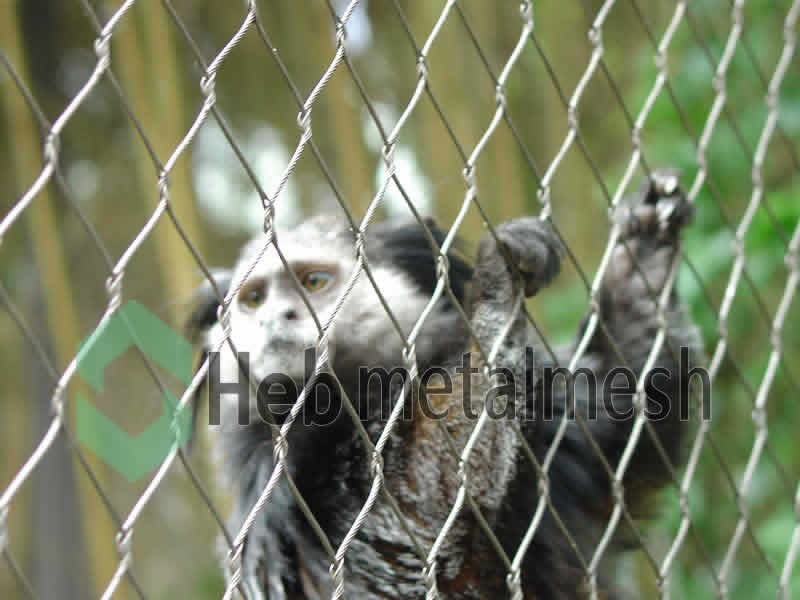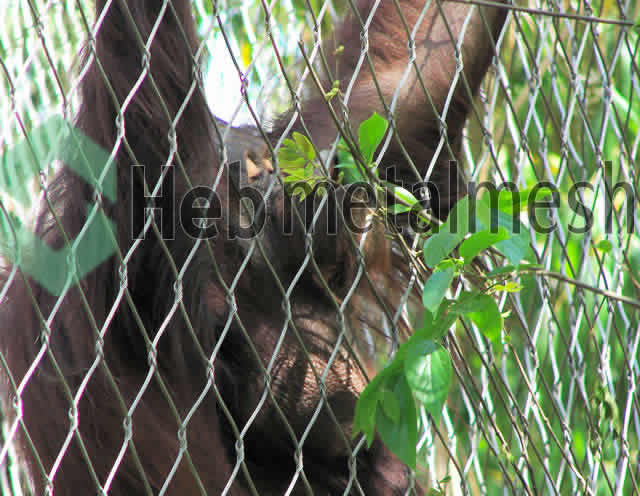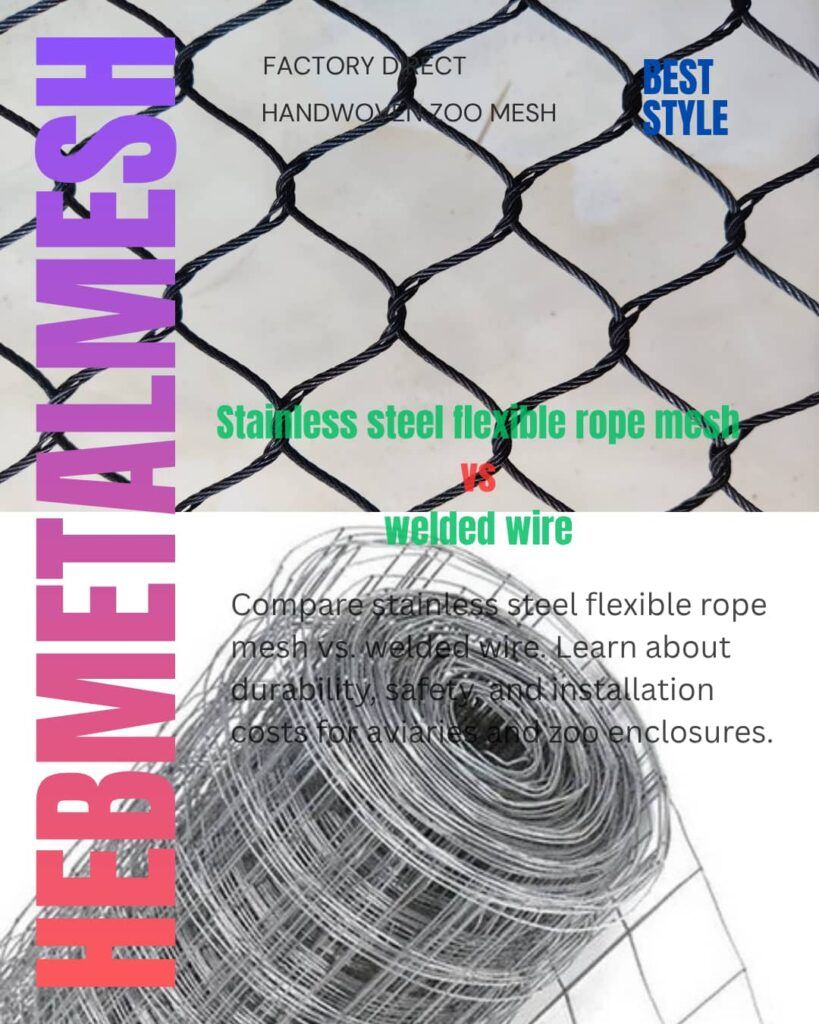
When comparing stainless steel flexible rope mesh vs. welded wire, the choice depends on the balance between upfront cost and long-term performance. Welded wire is a rigid, budget-friendly option suitable for straight-line fencing, but it is prone to weld-point failure, “white rust” corrosion, and impact trauma for animals. Stainless steel flexible rope mesh (hand-woven or ferruled) offers a high-strength, 3D-conformable alternative that absorbs kinetic energy, provides 90%+ transparency, and lasts over 30 years in corrosive environments. While rope mesh requires a higher initial investment, its zero-maintenance profile and superior animal safety make it the cost-effective choice for professional zoo exhibits and luxury backyard aviaries.
1. Introduction: The Great Enclosure Debate
For decades, the default choice for backyard enthusiasts and professional builders alike has been the standard cage wire roll. It is the familiar, rigid grid found in every hardware store, and most people choose it simply because it is what they know, not because it is the superior solution. However, as modern zoological standards evolve and high-end architectural designs demand more from their materials, a critical question has emerged: In the battle of stainless steel flexible rope mesh vs. welded wire, which material actually provides the best value over the lifespan of a project?
Defining the Contenders: Rigid Grid vs. Flexible Weave
To understand the debate, we must first define the two primary contenders. Welded wire consists of individual steel strands crossed at right angles and fused together at every intersection. This creates a stiff, unyielding panel that is excellent for straight-line utility fencing but struggles with complex geometry. On the other side is stainless steel flexible rope mesh—a sophisticated, hand-woven textile of high-tensile cables. Unlike its rigid counterpart, this mesh behaves like a metallic fabric, offering 3D conformability and a “soft-catch” physical profile that is revolutionary for animal safety.
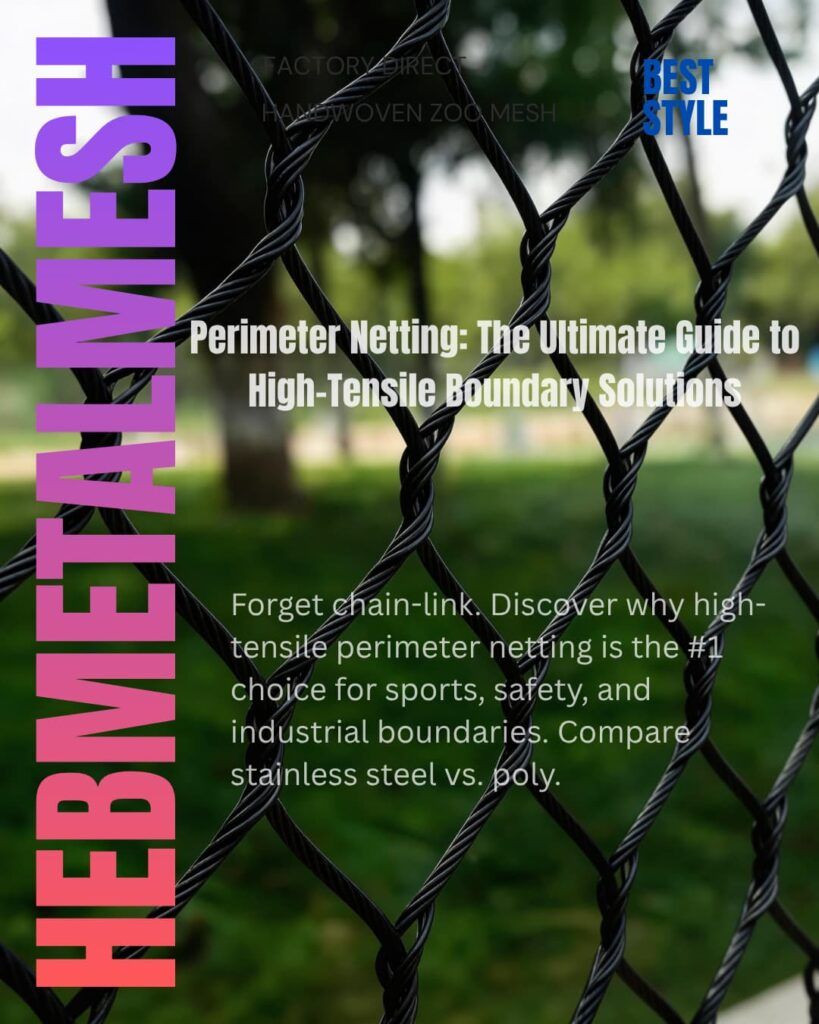
The Thesis: Temporary vs. Permanent
The choice between stainless steel flexible rope mesh vs. welded wire is ultimately a decision between “temporary containment” and “permanent infrastructure.” While welded wire offers a low upfront cost, its susceptibility to weld-point failure and corrosion often leads to a cycle of expensive repairs and replacements. Conversely, flexible rope mesh represents a long-term investment in durability, aesthetics, and safety. In this guide, we will break down the material science, installation labor, and total cost of ownership to show why the world’s leading zoos have moved away from the rigid grid in favor of the flexible weave.
At-A-Glance: Stainless Steel Rope Mesh vs. Welded Wire
| Feature | Welded Wire (Standard) | Flexible Rope Mesh (HEBmetalmesh) |
|---|---|---|
| Material Composition | Galvanized Carbon Steel (Zinc-Coated) | 316 Marine-Grade Stainless Steel |
| Joint Integrity | Fused Welds (Prone to Snapping/Brittle) | Hand-Woven Cables (High Flex/No Welds) |
| Animal Safety | Risk of Zinc Toxicity & Lacerations | 100% Non-Toxic, “Soft-Catch” Impact |
| Visual Clarity | High Interference (Thick Rigid Bars) | 90%+ Transparency (Invisible Barrier) |
| Installation Type | Rigid Panels (Difficult for Curves) | Flexible Textile (Adapts to 3D Shapes) |
| Functional Lifespan | 5–10 Years (Susceptible to Rust) | 30+ Years (Corrosion Proof) |
| Best Use Case | Temporary Utility Fencing | Permanent Zoo & Luxury Backyard Habitats |
*Note: While initial costs for a cage wire roll are lower, rope mesh offers a 3x higher ROI over a 10-year period.
2. Structural Integrity: How They Fail
When analyzing stainless steel flexible rope mesh vs. welded wire, the most critical factor is how these materials handle stress over time. To the naked eye, a galvanized cage wire roll looks impenetrable, but from a metallurgical perspective, it is a grid of thousands of potential fracture points. Understanding the physics of failure is essential for anyone building a long-term enclosure or architectural barrier.
Welded Wire’s Weak Link: The “Heat-Affected Zone” (HAZ)
The fundamental flaw of welded wire lies in its manufacturing process. To join two perpendicular wires, a high-voltage electrical current is pulsed through the intersection to fuse the metal. This creates what engineers call the Heat-Affected Zone (HAZ). This localized heating changes the molecular structure of the steel, making it brittle.
Under the constant vibration of wind, the weight of snow, or the repetitive pressure of an animal climbing the mesh, these brittle welds begin to snap. Once a single weld “pops,” the structural integrity of the entire panel is compromised, leading to a cascading failure. In contrast, the comparison of stainless steel flexible rope mesh vs. welded wire reveals that rope mesh has zero welds. It relies on a mechanical weave or seamless ferrules, ensuring that the material remains as strong as the cable itself.
Rope Mesh’s Strength: Load Distribution
Because stainless steel flexible rope mesh is composed of continuous, multi-strand cables, it possesses a unique ability to distribute force. When an animal impacts a specific point on the mesh, the energy is not concentrated on a single joint; instead, it is radiated across the entire woven surface. This “tensile harmony” allows the mesh to withstand extreme dynamic loads—such as a large bird in flight or a climbing primate—without the risk of localized snapping.
The “Drum Effect” vs. The Sag
Finally, we must consider the “Drum Effect.” Because flexible rope mesh is installed under tension, it maintains a crisp, tight appearance for decades. It resists the “memory effect” that plagues a standard cage wire roll. Over time, rigid wire panels tend to sag, warp, and develop “belly” bulges where pressure has been applied. Flexible mesh, however, acts like a drumhead; it is designed to be pulled taut against a perimeter cable, ensuring a professional, sag-free aesthetic that outlasts welded alternatives by a factor of ten.
3. The Aesthetics of Transparency
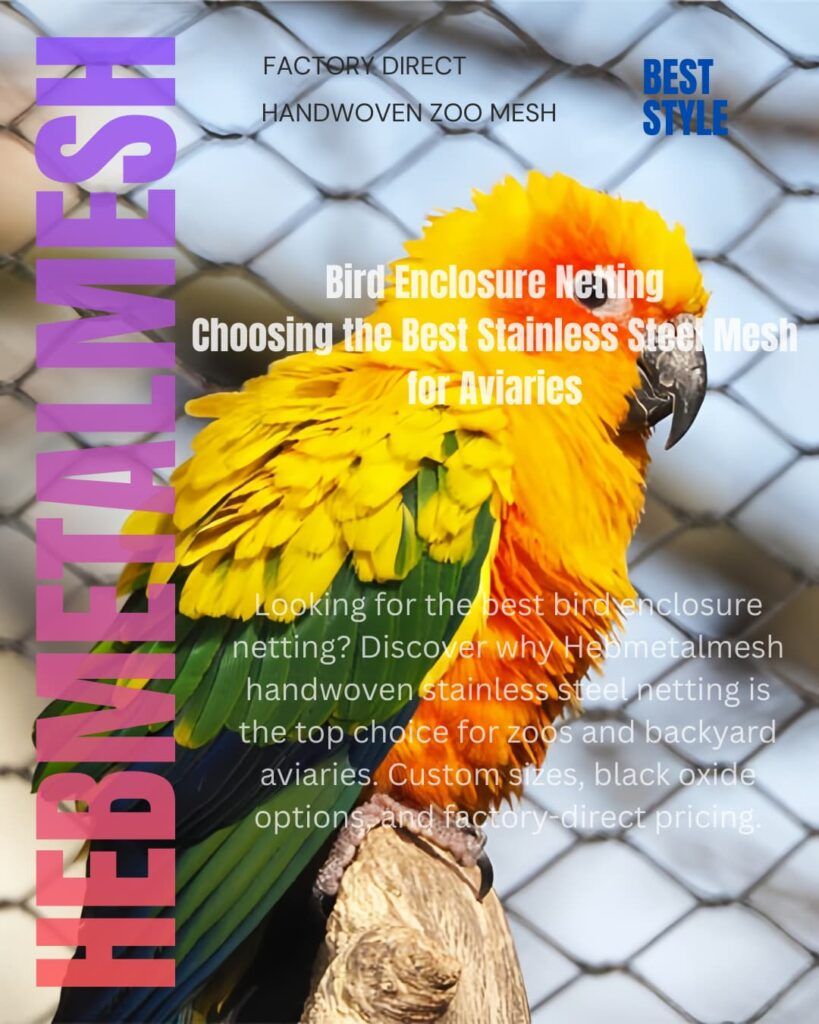
In modern habitat design, the goal is to make the barrier vanish. When evaluating stainless steel flexible rope mesh vs. welded wire, the most immediate difference is how each material interacts with the human eye—and the camera lens. For high-end backyard aviaries and professional zoo exhibits, the “visual weight” of the mesh can either create an immersive experience or a distracting sense of confinement.
Visual Interference and “Shuttering”
Welded wire, particularly a standard cage wire roll, relies on thick, rigid bars to maintain its structural integrity. These bars, often spaced in a 1-inch or 2-inch grid, create a high degree of visual interference. When a viewer moves past the enclosure, or when a photographer attempts to focus on an animal inside, these thick vertical and horizontal lines create a “shuttering” effect. This optical stuttering makes it difficult for the eye to settle on the inhabitant, effectively placing a “cage” between the observer and the nature they are trying to enjoy.
The 90% Rule: The Vanishing Act
In contrast, stainless steel flexible rope mesh utilizes a “90% Open Area” principle. Because the high-tensile 316 stainless steel cables are incredibly strong, they can be manufactured with a diameter as thin as 1.2mm or 1.5mm. When stretched under tension, these thin filaments virtually disappear against a natural backdrop of foliage or rock. This allows the viewer to focus entirely on the vibrant colors of a bird or the texture of a primate’s fur, rather than the metallic grid in the foreground.
The Science of the “Invisible Barrier”
This transparency isn’t accidental; it’s physics. Round cables are superior to the flat or square edges of welded wire because of light diffraction. A round cable allows light to “wrap” around its surface, minimizing the shadow cast by the mesh. Square welded wires have sharp edges that catch and reflect light, creating a “glare” that alerts the brain to the presence of a barrier. By choosing the round-profile rope mesh from hebmetalmesh, you are utilizing an invisible barrier science that has been the industry secret of world-class zoos for decades.
4. Installation & Flexibility: Thinking Outside the Box
In the practical world of construction, “straight lines” are often a luxury that nature doesn’t provide. When you compare stainless steel flexible rope mesh vs. welded wire in the field, the differences in installation labor and architectural potential become Stark. One material fights the frame, while the other flows with it.
The Rigid Limit of Welded Wire
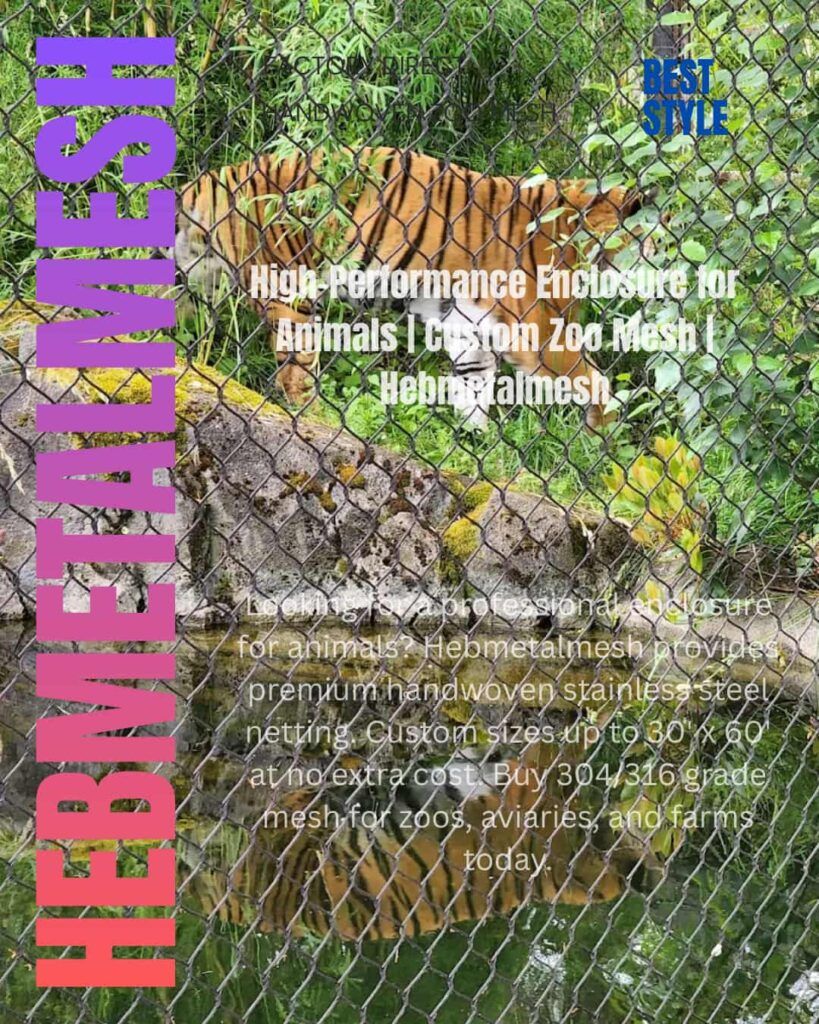
The primary struggle with a standard cage wire roll is its inherent stiffness. Welded wire is manufactured as a flat, two-dimensional grid. When an installer attempts to fit this rigid panel onto a curved frame—such as a domed aviary or a rounded primate enclosure—the metal resists. To achieve a curve, the installer must “faceting” the wire, cutting it into small flat sections and piecing them together. This creates thousands of sharp cut edges, weak joints, and a “patchwork” look that ruins the professional aesthetic. Furthermore, on uneven terrain, welded wire must be stepped, leaving gaps at the bottom that are difficult to secure.
Organic Architecture: Mesh as Fabric
Stainless steel flexible rope mesh belongs to a different category of material altogether: structural textiles. Because it is hand-woven from high-tensile cables, it possesses 3D conformability. It can be draped, twisted, and stretched over irregular 3D structures like a piece of high-tech fabric. This allows architects and DIYers to move away from “box” shapes and toward organic architecture—enclosures that mimic the natural shapes of trees, rocks, and hillsides. Whether you are wrapping a complex geodesic dome or creating a “tunnel” through a garden, the flexible mesh from hebmetalmesh follows the contour perfectly without a single cut.
Installation Math: Stapling vs. Lacing
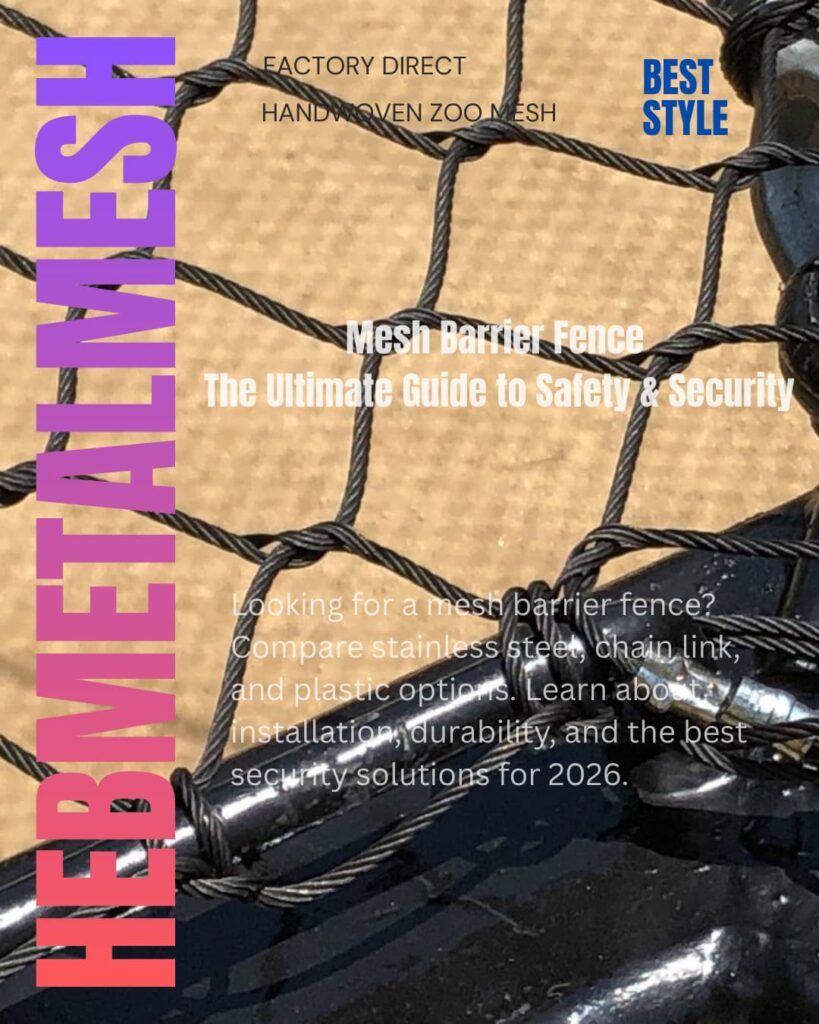
Finally, consider the labor hours. Installing a cage wire roll usually involves “stapling” or “clipping” the wire to a wooden or metal frame every few inches. This is repetitive, back-breaking work that creates thousands of puncture points in your frame. Rope mesh utilizes a “Perimeter Cable” system. You simply install a high-tension border cable and “lace” the mesh onto it using a continuous stainless steel wire. This lacing process is significantly faster for large spans and creates a uniform, high-tension finish that is structurally superior to thousands of individual staples. In the battle of stainless steel flexible rope mesh vs. welded wire, rope mesh wins on both creative freedom and long-term installation stability.
5. Financial Analysis: The 10-Year Cost
When comparing the price tags of stainless steel flexible rope mesh vs. welded wire, many project managers make the mistake of looking only at “Day One” costs. To find the true value, you must perform a 10-year financial analysis. When you calculate the hidden expenses of maintenance, safety risks, and labor, the “expensive” premium option often reveals itself as the most economical choice.
Phase 1: The Initial Purchase Price
In the short term, a standard galvanized cage wire roll wins on upfront cost. It is a mass-produced commodity available at most local suppliers. For a small, temporary project or a low-risk utility fence, the lower entry price is attractive. Stainless steel flexible rope mesh is a specialized, hand-woven architectural product made from 316-grade alloys; its initial purchase price reflects that superior material quality and craftsmanship.
Phase 2: Maintenance and Hidden Medical Costs
Between years three and seven, the financial gap begins to close. Welded wire is prone to “white rust” and weld-point failure. Maintaining these enclosures requires constant wire brushing, spot-welding, or toxic anti-rust coatings. For animal owners, the “cheap” wire often leads to “New Cage Syndrome”—heavy metal poisoning that can result in thousands of dollars in emergency veterinary bills. Because the rope mesh from hebmetalmesh is chemically inert and physically durable, it incurs zero maintenance costs and eliminates the medical risks associated with toxic coatings.
Phase 3: The Replacement Cycle
The final blow to the “budget” option comes during the replacement phase. A galvanized cage wire roll in a humid or coastal environment typically has a functional lifespan of five to seven years before it becomes a structural liability. Replacing an enclosure involves dismantling the old wire, disposing of rusted metal, and paying for a full second installation. By year ten, you have paid for two installations and two sets of materials. A single installation of stainless steel flexible rope mesh vs. welded wire lasts 30+ years, meaning the “premium” mesh has already paid for itself twice over before its first decade is even finished.
6. Final Verdict: Which One Should You Buy?
The choice between stainless steel flexible rope mesh vs. welded wire ultimately comes down to the intended lifespan and the value of the inhabitants within the enclosure. There is no “perfect” material for every budget, but there is always a “right” material for the specific job.
- Choose Welded Wire if: You are building a short-term utility structure, such as a temporary chicken coop, a garden compost bin, or a low-budget perimeter fence where aesthetics and long-term corrosion resistance are not a priority. If the “disposable” nature of a standard cage wire roll fits your five-year plan, it remains a functional, low-cost option.
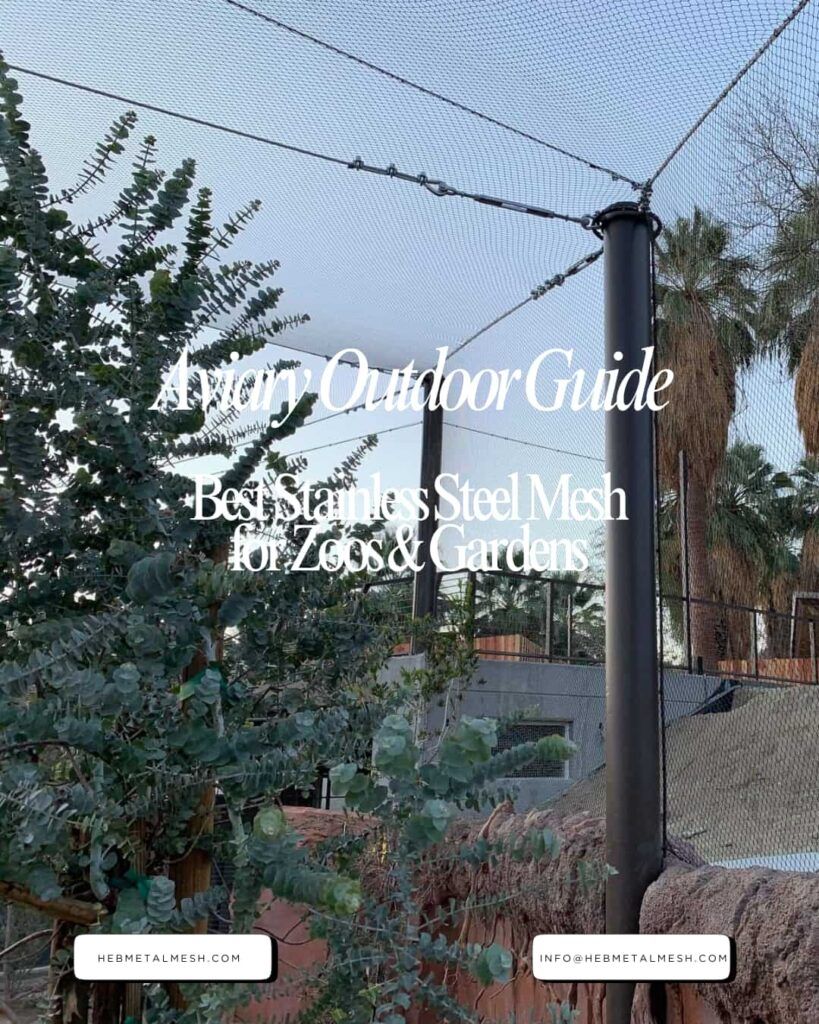
- Choose Flexible Rope Mesh if: You are designing a permanent sanctuary, a professional zoo exhibit, or a luxury architectural feature. If your project involves sensitive species, high-wind loads, coastal salt spray, or organic, curved geometry, the flexible mesh from hebmetalmesh is the only logical choice. It offers the “Invisible Barrier” aesthetic, 30+ years of structural integrity, and a safety profile that welded wire simply cannot replicate.
In the world of infrastructure, you get exactly what you pay for. While welded wire is a product of the past, stainless steel rope mesh is the future of safe, beautiful, and permanent animal husbandry.
Standard Wire vs. Professional Mesh
Don’t settle for the limitations of a standard cage wire roll. Switch to the strength and transparency of 316 Stainless Steel Rope Mesh.
30+ years of rust-free performance in any climate.
Zero weld-snaps and 100% non-toxic materials.