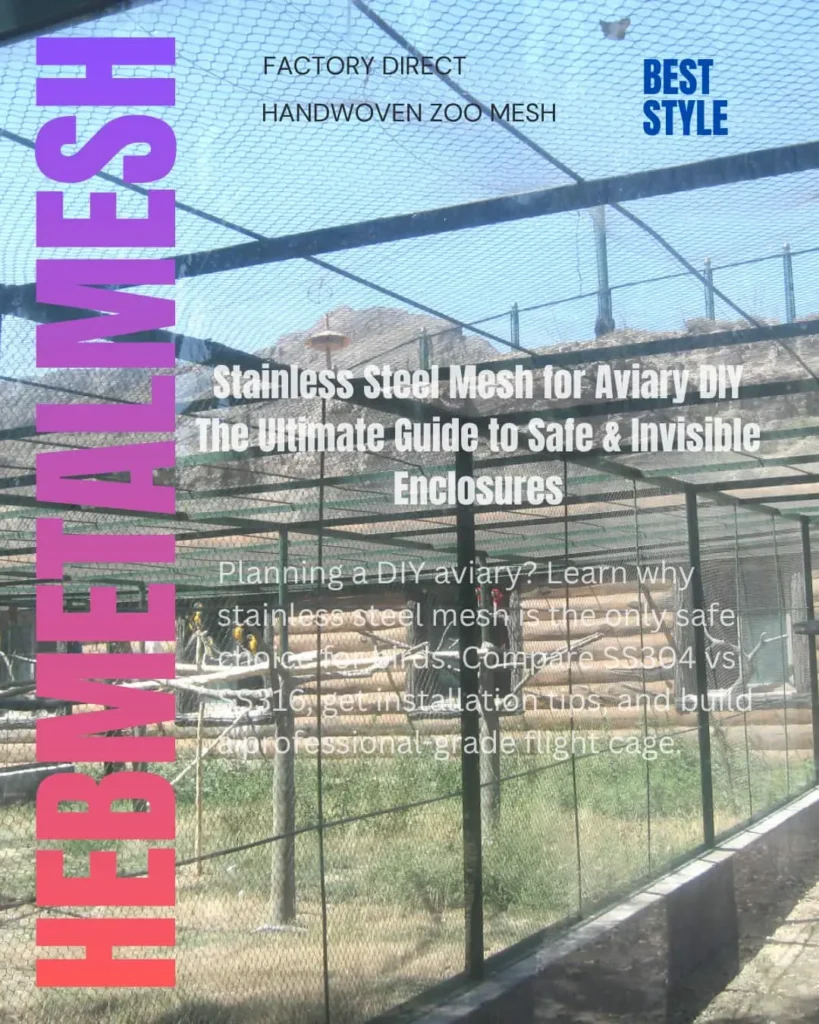
Stainless steel mesh for aviary DIY is the premier choice for bird health and enclosure longevity. Unlike galvanized wire, SS304 and SS316 stainless steel are non-toxic, preventing zinc poisoning in hook-billed birds. This flexible, high-tensile rope mesh offers 90%+ transparency and extreme weather resistance, making it the “gold standard” for professional-grade backyard aviaries.
Why Your Aviary Material is a Life-or-Death Decision
When you dive into a stainless steel mesh for aviary DIY project, the stakes are higher than just aesthetics. For a bird, their enclosure is their entire world. They don’t just sit behind the wire; they interact with it. They climb it, they rub their beaks against it, and they often use it as a tool for play.
The Hidden Danger: Zinc Toxicity (New Wire Disease)
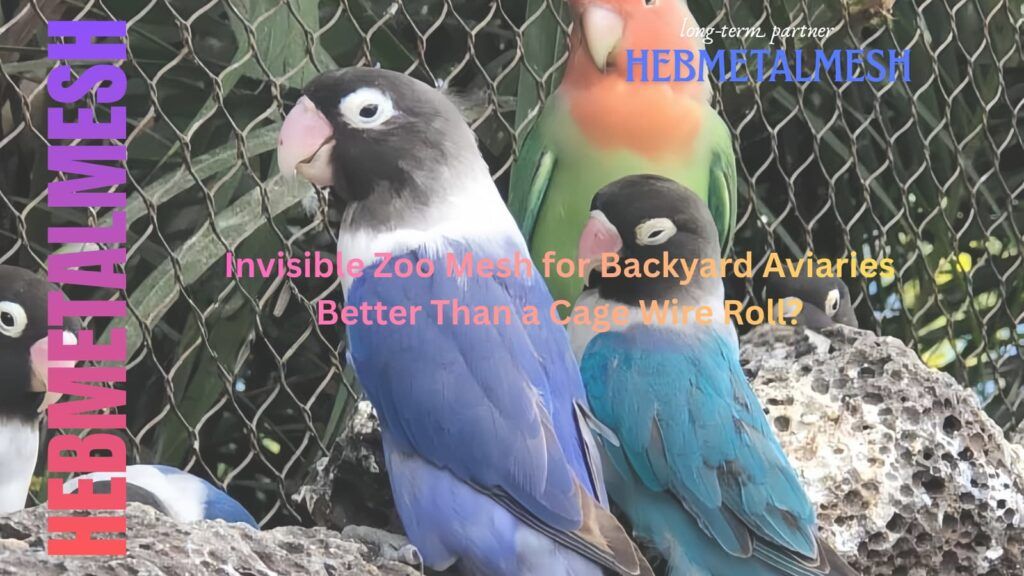
Many DIYers reach for galvanized hardware cloth because it’s the “standard” at local hardware stores. But here is the “aha” moment that most big-box retailers won’t tell you: Galvanized wire is coated in zinc. In the avian world, we call the result “New Wire Disease.” When a bird—especially a hook-billed species like a parrot or macaw—climbs the mesh, they ingest microscopic flakes of zinc. Over time, this leads to heavy metal toxicity, which can cause kidney failure, feather plucking, seizures, and eventually death. By choosing a parrots and macaw enclosure mesh, you aren’t just buying a fence; you are buying health insurance for your flock. Stainless steel is chemically inert, meaning it stays non-toxic and bird-safe for its entire lifespan.
Stainless Steel vs. Galvanized: The 10-Year Reality Check
Let’s talk numbers. As a 35-year-old SEO expert, I’m all about data-driven decisions. Most people look at the upfront price of stainless steel mesh for aviary DIY and flinch. But let’s do the “10-Year Math” to see why “cheap” is the most expensive mistake you can make.
The Cost-Benefit Breakdown
- The Galvanized Choice: You buy $200 worth of galvanized wire. Within 24 months, the weld points start to “white rust.” By year 4, the mesh is brittle and looks like a junkyard. You spend another weekend (and another $200 plus disposal fees) tearing it down and replacing it. You do this three times in a decade. Total cost: $600+ and 30+ hours of frustrated labor.
- The Stainless Steel Investment: You spend $650 on high-quality bird netting aviary mesh. You install it once. In year 10, it looks exactly the same as the day you bought it. Total cost: $650 and 0 hours of maintenance.
Why “Cheap” is Actually Expensive
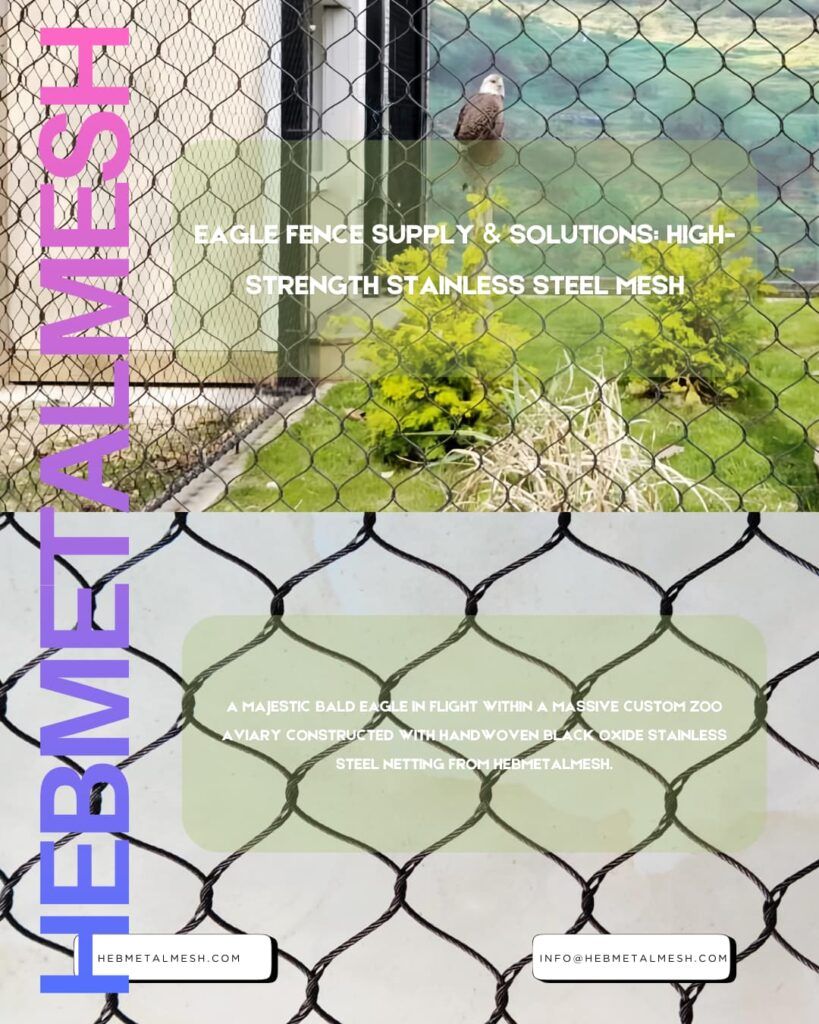
Beyond the material cost, there is the Value of the View. Galvanized wire is thick and reflects light poorly, creating a “haze” between you and your birds. Stainless steel rope mesh has a high tensile strength that allows for a much thinner wire diameter. This creates a 90% open area.
You’ve invested hundreds or thousands of dollars in your birds—don’t look at them through a “fog” of cheap wire. When you use a professional-grade product, you’re investing in the clarity of your experience and the safety of your animals.
Choosing Your Mesh: SS304 vs. SS316
When you’re sourcing stainless steel mesh for aviary DIY projects, you’ll run into two main “flavors”: SS304 and SS316. To the naked eye, they look identical. But in the world of metallurgy, they are worlds apart. Choosing the wrong one for your zip code is the fastest way to turn a “lifetime” project into a five-year headache.
Which One Do You Need for Your Specific Climate?
- SS304 (The Interior & Inland Workhorse): This is the standard grade for most residential bird netting aviary mesh setups. It is incredibly strong, entirely non-toxic for birds, and handles rain and humidity like a champ. If you live more than 10-15 miles from the ocean and aren’t in a high-pollution industrial zone, SS304 is your go-to. It offers the best balance of “pro-grade” performance and budget-friendliness.
- SS316 (The Coastal Defender): If you can smell the salt air from your backyard, don’t even look at SS304. You need SS316. This “Marine Grade” stainless steel contains Molybdenum, a secret weapon that prevents “pitting” and “tea-staining” caused by chlorides (salt). Even if your aviary is hit by salty mist every morning, SS316 will stay bright, silver, and structurally sound for decades.
Expert Tip: Check the technical specifications on our product pages. If you’re building a luxury outdoor flight cage, spending the extra 15-20% for $SS316$ in coastal areas is the smartest “insurance policy” you’ll ever buy.
DIY Aviary Design: Matching Mesh to Your Bird Species
One size does not fit all. A mesh that keeps a sparrow safe is useless against a Macaw’s bolt-cutter beak, and a mesh strong enough for an Eagle might let a Finch fly right through the diamond. To get that “aha” moment of perfect design, you have to match the wire diameter and opening size to your specific birds.
Sizing Guide: From Finches to Raptors
| Bird Category | Mesh Opening | Wire Diameter | Expert Recommendation |
|---|---|---|---|
| Small Birds (Finches, Canaries) | 0.8″ x 0.8″ (20mm) | 1.2mm | Prevents escape and keeps out small predators like snakes or rodents. |
| Medium Birds (Parakeets, Cockatiels) | 1.0″ x 1.0″ (25mm) | 1.5mm | Balanced visibility with enough strength to resist constant climbing. |
| Large Hookbills (Macaws, Cockatoos) | 1.5″ x 1.5″ (38mm) | 2.0mm – 2.4mm | Needs high-tensile mesh that can’t be snapped by extreme beak pressure. |
| Raptors & Owls (Eagles, Falcons) | 2.0″ x 2.0″ (50mm) | 2.4mm – 3.2mm | High impact resistance for heavy flight landings and large talons. |
The “Beak Pressure” Factor
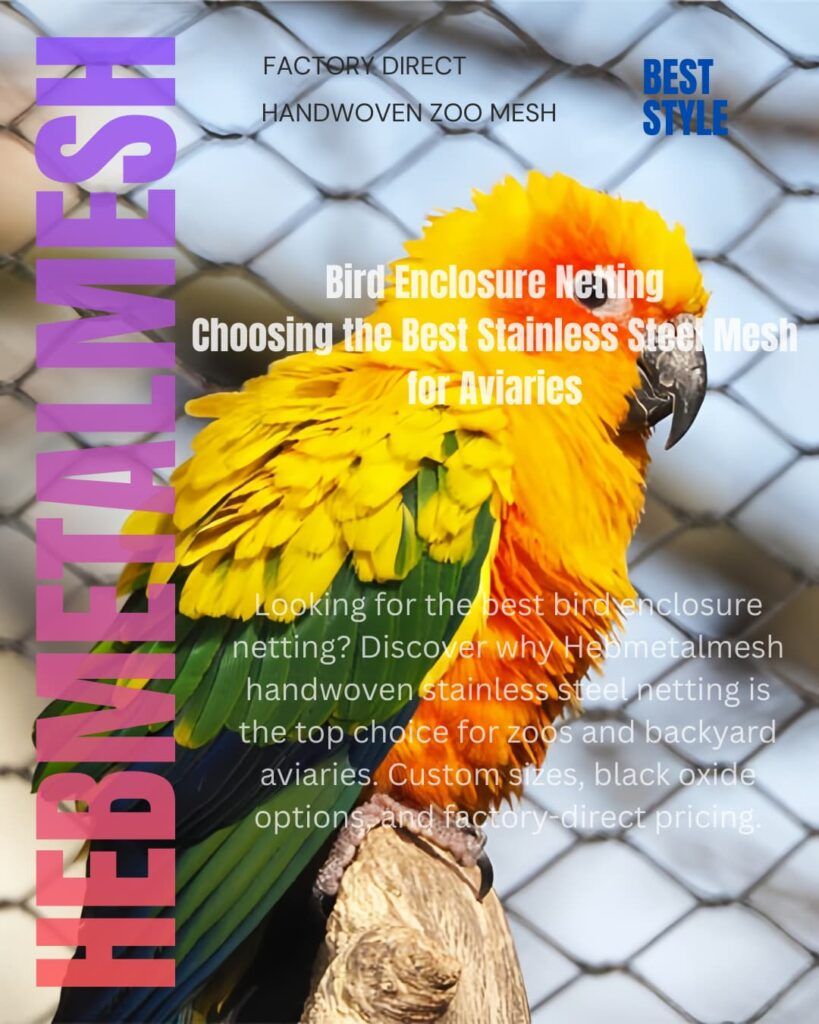
If you are housing parrots, remember: they are feathered engineers. They will find the weakest point in your stainless steel mesh for aviary DIY build. This is why we recommend hand-woven rope mesh; unlike welded wire where a single broken weld can unzip the whole fence, our knotted rope mesh distributes the pressure. Even the most determined Macaw won’t be able to “pop” the joints.
Step-by-Step DIY Installation: From Frame to Flight
You’ve got your SS316 bird netting aviary mesh delivered, your frame is up, and your birds are chirping in anticipation. Now comes the part that separates the “amateur cage” from the “professional sanctuary.”
When working with stainless steel mesh for aviary DIY, you aren’t just nailing wire to wood; you are tensioning a high-performance fabric.
1. The Perimeter Anchor
Before the mesh goes on, you need a solid boundary. If you’re using a wooden frame, install heavy-duty eye bolts or a stainless steel perimeter cable.
- The Pro Tip: Thread a 3.0mm stainless steel wire rope around the entire opening. This “border cable” acts as the skeleton that the flexible mesh will cling to.
2. Positioning and “Hanging”
Stretch your mesh out on the ground first to let it “breathe.” Stainless steel rope mesh is woven at an angle (usually 60angle or 90angle). Lift it and temporarily zip-tie the top corners to your frame. Don’t worry if it looks loose or baggy—we fix that in the next step.
3. The Art of Lacing (The Secret to the “Invisible” Look)
This is where the magic happens. Instead of using staples (which birds can pull out), use a lacing wire.
- Technique: Take a coil of 1.2mm or 1.5mm stainless wire and “sew” the edge of the mesh to your border cable or eye-bolts.
- Tensioning: As you lace, pull the mesh tight. You want it to be “drum-tight.” A properly tensioned parrots and macaw enclosure mesh should have almost zero “bounce” when a bird lands on it.
4. Closing the Gaps
Check every corner. If a Finch can fit its head through a gap, it can get its body through. Ensure your lacing is tight and consistent around every post and beam.
Maintenance & Longevity: Set It and Forget It
The beauty of a stainless steel mesh for aviary DIY project is that once the last wire is laced, your “maintenance” schedule is basically non-existent. Unlike wooden slats that rot or galvanized wire that requires “white rust” scrubbing, 300-series stainless steel is the ultimate low-maintenance material.
1. The “Rain Wash” Benefit
In most climates, natural rainfall is enough to keep your mesh clean. Because the wire is smooth and polished, dust and bird dander don’t stick to it like they do on plastic-coated netting.
2. Occasional Inspections
Once a year, walk the perimeter. Check your tension. If you live in a high-wind area, your frame might shift slightly, requiring you to tighten a turnbuckle. But the mesh itself? It’s not going anywhere. It’s rated to last 30 to 50 years in outdoor environments.
3. Dealing with “Bird Mess”
If you have a particularly messy Macaw, a quick blast with a garden hose is all you need. Since the product is chemically inert, you can even use mild soap if necessary without worrying about toxic runoff affecting your birds’ sensitive respiratory systems.
The Bottom Line: You are building a legacy. This aviary will likely outlast the very birds living inside it. That is the power of choosing the right materials from day one.
Conclusion: Building a Habitat, Not Just a Cage
At the end of the day, a stainless steel mesh for aviary DIY project isn’t just about boundary lines or keeping a bird from flying away. It’s about the philosophy of the space you’re creating. There is a profound psychological difference between a “cage” and a “habitat,” both for the birds living inside and for you, the observer.
A cage feels restrictive; it’s a constant visual reminder of confinement. But a habitat—built with the nearly invisible strength of bird netting aviary mesh—feels like an extension of the natural world. When you choose SS316 or SS304 rope mesh, you are choosing to prioritize the mental well-being of your flock by giving them a space that feels open, airy, and integrated with the environment.
The “Aha” Moment of the DIY Journey
The real “aha” moment happens the first time you sit in your garden after the project is finished. You’ll realize that the extra investment in professional-grade products wasn’t just about “buying a fence.” It was about:
- Safety: Knowing your Macaws are safe from zinc poisoning.
- Security: Knowing that no predator, from a stray cat to a determined raccoon, is getting through that mesh.
- Beauty: Seeing your birds in high-definition through a mesh that effectively disappears into the background.
Don’t settle for the “standard” hardware store wire that will rust and fail within a few years. Build a sanctuary that matches the beauty and longevity of the birds you love. Whether you’re housing delicate Finches or powerful Parrots and Macaws, the right mesh makes all the difference.
Your Birds Deserve the Best.
Stop looking through rusty wires. Start your Stainless Steel Aviary DIY today with the mesh trusted by professional zoos worldwide.
Need a custom quote or specific gauge? Contact our experts here.
Frequently Asked Questions: Stainless Steel Mesh for Aviary DIY
Yes, absolutely. Parrots and macaws use their beaks to climb, and galvanized wire contains zinc, which is highly toxic to birds. Ingesting even microscopic flakes of zinc leads to heavy metal poisoning. Stainless steel mesh for aviary DIY is the only 100% non-toxic, “bird-safe” material that eliminates the risk of “New Wire Disease” while providing superior strength.
If you are housing multiple bird sizes, you must size for the smallest bird to prevent escape and the largest bird to ensure security. A 1″ x 1″ (25mm) opening with a 1.6mm wire diameter is the “sweet spot” for most DIYers. It is small enough to contain finches while being strong enough to withstand the beak pressure of medium-to-large parrots.
Because this is high-tensile 316-grade steel, standard household pliers won’t work. You will need a pair of high-quality wire rope cutters. When cutting, ensure you leave enough “tail” to properly lace the mesh onto your perimeter frame. We recommend wearing protective gloves, as the cut ends of professional-grade bird netting can be sharp.
While you can use heavy-duty staples, the professional “Aha!” method is to use stainless steel lacing wire. By installing eye-bolts or a perimeter cable onto your wooden frame, you can “sew” the mesh onto the structure. This provides much higher tension, prevents birds from pulling out staples, and gives your stainless steel mesh for aviary DIY project a sleek, zoo-like finish.
When using SS316 marine-grade mesh, your aviary is built to last 30 to 50 years. Unlike plastic netting that degrades in UV light or galvanized wire that rusts in 3-5 years, stainless steel is virtually immune to the elements. It won’t rust, sag, or lose its structural integrity, making it the most cost-effective long-term solution for bird owners.