
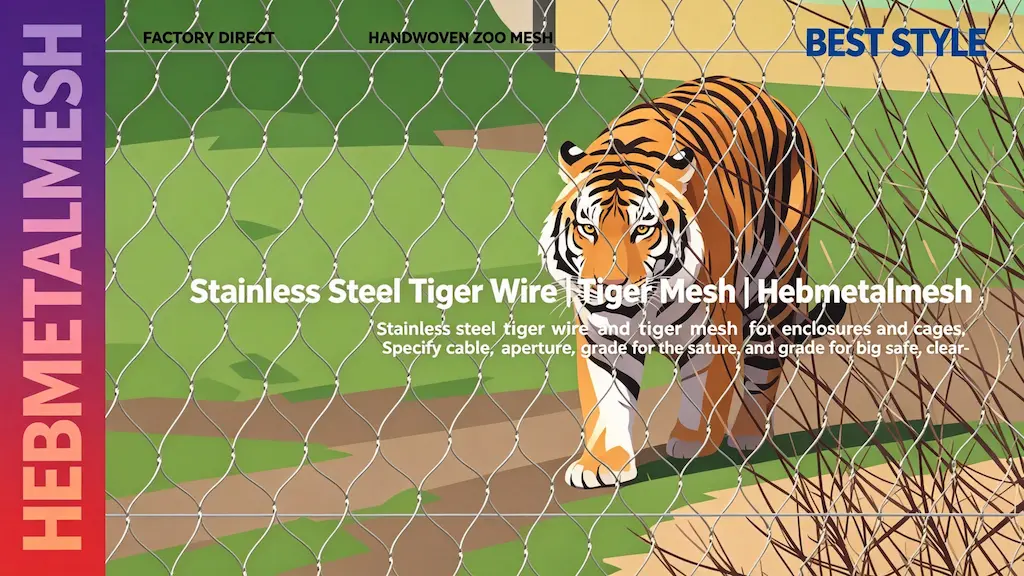
Summary: This guide helps zoo curators, facility managers, and procurement specialists select the right stainless steel tiger wire for enclosure fencing. You will learn the critical specifications—cable diameter, mesh aperture, and material grade—needed to build a safe, durable, and clear-view barrier that contains adult tigers, withstands aquatic environments, and meets professional zoo standards.
🛒 Ready to secure your tiger exhibit?
Explore our premium tiger enclosure mesh solutions.
Shop Tiger Enclosure Fence Netting Mesh →Key Takeaways
- Tigers are aquatic cats—their enclosure mesh must resist constant moisture, chlorine, and saltwater exposure.
- The industry standard for adult tiger enclosures is 2″ × 2″ aperture with 1/8″ (3.2mm) cable diameter for high-impact perimeter security.
- 304 stainless steel delivers excellent corrosion resistance for most zoo environments; 316 stainless steel is recommended for coastal installations within five kilometers of saltwater.
- Handwoven construction provides superior flexibility, impact resistance, and a 30+ year service life compared to welded alternatives.
- Black oxide finish reduces glare for better visitor viewing while adding an extra layer of corrosion protection.
Why Tigers Demand Specialized Fencing
Tigers are unlike any other big cat when it comes to enclosure requirements. Unlike lions that primarily stay on dry land, tigers are powerful swimmers that frequently soak, wade, and even submerge in pools and moats within their enclosures. This behavioral trait—unique among the pantherine lineage—demands a fencing material that can withstand constant moisture exposure, chlorine or saltwater corrosion, and repetitive scratching from sharp claws.
Standard fencing materials simply don’t cut it. Carbon steel rusts. Galvanized mesh corrodes. Welded wire breaks under impact. The only material that consistently meets the rigorous demands of tiger enclosure design is stainless steel tiger wire—specifically, handwoven stainless steel cable netting engineered for big cat habitats.
Beyond the aquatic factor, tigers are also exceptional climbers. They scale vertical enclosure walls with ease, using their powerful forelimbs and retractable claws to gain purchase. This climbing behavior introduces a safety risk that many enclosure designers overlook: claw entrapment. If the mesh aperture is too large, a tiger’s claw can hook through during vertical climbing, potentially leading to injury or escape attempts. That’s why professional tiger enclosure mesh uses a deliberately smaller aperture than what you might see in lion enclosures.
The stakes couldn’t be higher. Zoo enclosures must contain animals that can generate immense impact forces—up to several tons of kinetic energy during a charge. The mesh must also withstand years of UV exposure, temperature extremes, and the constant physical stress of animals leaning, scratching, and climbing against it. Stainless steel tiger wire, when properly specified, delivers the strength, corrosion resistance, and longevity that these demanding applications require.
For a deeper look into how modern zoos engineer these complex habitats, explore our comprehensive guide on zoo tiger enclosures and the science behind ethical exhibit design.
What Is Stainless Steel Tiger Wire?
Stainless steel tiger wire—also referred to as tiger mesh, tiger fence mesh, or tiger enclosure mesh—is a specialized form of handwoven stainless steel cable netting designed specifically for big cat enclosures. Unlike traditional welded wire fencing, tiger wire mesh is constructed from stainless steel wire ropes that are hand-knotted and twisted into a flexible, diamond-shaped mesh pattern.
The handwoven construction method is what sets tiger mesh apart from conventional fencing. Each intersection of wire rope is crossed twice with a single knot, creating a structure that is both exceptionally strong and remarkably flexible. This flexibility is critical in zoo environments because it allows the mesh to absorb impact forces without breaking—the netting flexes under pressure rather than snapping or deforming permanently.
Tiger wire mesh is typically manufactured from 304 stainless steel as the standard grade, with 316 stainless steel available for installations in coastal areas or environments with high chloride exposure. The wire rope itself is constructed using either a 7×7 or 7×19 strand configuration, which determines the cable’s flexibility and breaking strength.
The mesh is available in a range of aperture sizes and cable diameters, with the most common specification for adult tigers being 2″ × 2″ aperture with 1/8″ (3.2mm) cable diameter. This combination provides an optimal balance of security, visibility, and animal welfare—the aperture is small enough to prevent claw entrapment yet large enough to maintain clear sightlines for visitor viewing and animal monitoring.
To understand how tiger mesh compares to other fencing solutions and why it has become the industry standard, read our detailed analysis of tiger mesh fencing and its 30-year rust-proof performance.
Critical Specifications for Tiger Enclosure Mesh
Selecting the right stainless steel tiger wire requires careful attention to three key specifications: cable diameter, mesh aperture, and material grade. Each parameter directly impacts the safety, durability, and functionality of the enclosure.
Cable Diameter (Wire Rope Thickness)
The cable diameter determines the mesh’s tensile strength and impact resistance. For adult tiger enclosures, the industry standard is 1/8″ (3.2mm) cable diameter. This thickness provides sufficient strength to withstand the immense forces generated by a charging or climbing tiger while remaining flexible enough to absorb impact without fracturing.
Thinner cables—such as 5/64″ (2.0mm) or 3/32″ (2.4mm)—may be suitable for smaller big cats or juvenile animals but are not recommended for adult tiger enclosures. Conversely, thicker cables (4mm or greater) can be used for high-security applications but may reduce flexibility and increase cost.
Mesh Aperture (Opening Size)
The mesh aperture—the size of the openings between cables—is arguably the most critical safety parameter for tiger enclosures. The industry standard for adult tigers is 2″ × 2″ (51mm × 51mm) aperture. This opening size is deliberately smaller than what you might see in lion enclosures because tigers are more frequent climbers.
Apertures larger than 2″ × 2″ create a risk of claw entrapment during vertical climbing, which can lead to injury, panic, and escape attempts. Apertures significantly smaller than 2″ × 2″ may obstruct visibility and create a less natural viewing experience for visitors. The 2″ × 2″ specification represents the optimal balance between safety and aesthetics.
Material Grade: 304 vs. 316 Stainless Steel
304 stainless steel is the standard material for tiger enclosure mesh in most zoo environments. It offers excellent corrosion resistance, high tensile strength, and cost-effectiveness. For most inland zoos and wildlife parks, 304 stainless steel provides more than adequate protection against rust and degradation.
316 stainless steel is the premium choice for installations in coastal areas (within five kilometers of saltwater) or environments with high chloride exposure. The addition of molybdenum to the 316 alloy provides superior resistance to pitting and crevice corrosion in saltwater environments. For tiger enclosures with saltwater moats or pools, 316 stainless steel is strongly recommended.
For a complete technical breakdown of material selection, aperture sizing, and safety standards, refer to our comprehensive zoo enclosure fencing guide for curators and designers.
Handwoven Construction: The Gold Standard
Not all tiger mesh is created equal. The construction method—specifically, whether the mesh is handwoven or machine-welded—has a profound impact on performance, durability, and safety.
Handwoven stainless steel tiger wire is manufactured by skilled craftsmen who knot and twist each wire rope intersection individually. This labor-intensive process produces a mesh that is:
- Exceptionally strong: The knotted intersections distribute stress evenly across the entire mesh panel.
- Highly flexible: The mesh can absorb impact forces without permanent deformation.
- Extremely durable: Handwoven mesh typically provides a 30+ year service life with minimal maintenance.
- Animal-safe: The smooth wire rope surface prevents fur damage and reduces the risk of injury.
In contrast, welded wire mesh—while less expensive to manufacture—is prone to breakage at the weld points under impact stress. A single broken weld can create a gap large enough for a tiger’s paw or head to pass through, creating a serious security risk. Handwoven construction eliminates this vulnerability by using continuous wire rope with knotted intersections that cannot “pop” or break apart under load.
The handwoven rhombus mesh pattern also provides superior visibility compared to welded alternatives. Visitors can observe tigers through the mesh with minimal visual obstruction, enhancing the educational and aesthetic value of the exhibit.
When you’re ready to specify the exact mesh for your project, explore our premium 2″ × 2″ × 1/8″ tiger enclosure fencing —the industry-standard solution for adult tiger habitats .
Why Tigers Need Aquatic-Grade Netting
Tigers are unique among big cats in their strong affinity for water. Unlike lions that primarily stay on dry land, tigers are powerful swimmers that frequently soak, wade, and even submerge in pools and moats within their enclosures. This behavioral trait demands a fencing material that can withstand constant moisture exposure, chlorine or saltwater corrosion, and repetitive scratching from sharp claws.
Standard fencing materials simply don’t cut it. Carbon steel rusts. Galvanized mesh corrodes. Welded wire breaks under impact. The only material that consistently meets the rigorous demands of tiger enclosure design is stainless steel tiger wire—specifically, handwoven stainless steel cable netting engineered for big cat habitats.
Beyond the aquatic factor, tigers are also exceptional climbers. They scale vertical enclosure walls with ease, using their powerful forelimbs and retractable claws to gain purchase. This climbing behavior introduces a safety risk that many enclosure designers overlook: claw entrapment. If the mesh aperture is too large, a tiger’s claw can hook through during vertical climbing, potentially leading to injury or escape attempts. That’s why professional tiger enclosure mesh uses a deliberately smaller aperture than what you might see in lion enclosures.
The stakes couldn’t be higher. Zoo enclosures must contain animals that can generate immense impact forces—up to several tons of kinetic energy during a charge. The mesh must also withstand years of UV exposure, temperature extremes, and the constant physical stress of animals leaning, scratching, and climbing against it. Stainless steel tiger wire, when properly specified, delivers the strength, corrosion resistance, and longevity that these demanding applications require.
For a historical perspective on how tiger enclosures have evolved and what makes a truly secure habitat, check out our article on creating safe and stunning tiger enclosures with stainless steel fences.
Standard Tiger Mesh Specifications at a Glance
| Item ID | Mesh Aperture | Cable Diameter | Material | Typical Application |
|---|---|---|---|---|
| HM2438 | 1.5″ × 1.5″ | 3/32″ (2.4mm) | SS304 / 316 | Juvenile tigers, smaller big cats |
| HM2450 | 2″ × 2″ | 3/32″ (2.4mm) | SS304 / 316 | Light‑duty adult enclosures |
| HM3250 | 2″ × 2″ | 1/8″ (3.2mm) | SS304 / 316 | Industry standard—adult tigers |
| HM2476 | 3″ × 3″ | 3/32″ (2.4mm) | SS304 / 316 | Large enclosures, low‑climb areas |
| HM3276 | 3″ × 3″ | 1/8″ (3.2mm) | SS304 / 316 | High‑strength, larger aperture |
| HM2410 | 4″ × 4″ | 3/32″ (2.4mm) | SS304 / 316 | Very large animals, non‑climbing |
| HM3210 | 4″ × 4″ | 1/8″ (3.2mm) | SS304 / 316 | Maximum strength, wide aperture |
| Note: Custom sizes are always available upon request. Standard roll sizes include 6′ × 60′, 10′ × 60′, and 30′ × 60′. | ||||
Note: Custom sizes are always available upon request. Standard roll sizes include 6′ × 60′, 10′ × 60′, and 30′ × 60′.
Black Oxide Finish: Enhancing Visibility and Durability
Many professional tiger enclosures utilize black oxide finish on the stainless steel tiger wire. This specialized coating serves two critical purposes:
First, black oxide reduces glare. Stainless steel in its natural (bright) finish can reflect sunlight in ways that distract visitors and create uncomfortable viewing conditions. The black oxide finish provides a matte, non-reflective surface that allows visitors to observe tigers clearly without visual interference.
Second, black oxide adds corrosion protection. The coating forms an additional barrier against moisture and chemical attack, extending the already impressive service life of stainless steel mesh. For enclosures with pools, moats, or high-humidity environments, black oxide finish provides an extra layer of security against long-term degradation.
The black oxide finish does not compromise the mesh’s strength or flexibility. It is applied as a surface treatment that bonds with the stainless steel substrate, creating a durable, long-lasting coating that withstands years of environmental exposure.
Customization Options for Unique Enclosures
Every tiger enclosure is different. Site conditions, animal behavior, budget constraints, and aesthetic preferences all influence the final specification of stainless steel tiger wire. Leading manufacturers offer extensive customization options to meet these diverse requirements.
Custom cable diameter: While 1/8″ (3.2mm) is the industry standard for adult tigers, some enclosures may benefit from thicker cables (up to 4mm) for enhanced security, or thinner cables for reduced cost and weight.
Custom mesh aperture: The standard 2″ × 2″ aperture works for most adult tiger enclosures, but some facilities may require larger or smaller openings based on animal size, climbing behavior, or visibility requirements.
Custom roll dimensions: Standard rolls are available in 6′ × 60′, 10′ × 60′, and 30′ × 60′ configurations. Custom widths and lengths can be manufactured to match specific enclosure dimensions, reducing waste and simplifying installation.
Custom material grade: Choose between 304 stainless steel for standard applications or 316 stainless steel for coastal or high-chloride environments.
Custom finish: Options include natural (bright) stainless steel or black oxide finish for reduced glare and enhanced corrosion protection.
For step-by-step guidance on installing your custom mesh panels, visit our zoo mesh installation guide —covering everything from measuring and planning to tensioning and final inspection。
Frequently Asked Questions
1. What is the best stainless steel tiger wire specification for an adult tiger enclosure?
The industry standard for adult tiger enclosures is 2″ × 2″ aperture with 1/8″ (3.2mm) cable diameter, manufactured from 304 stainless steel with optional black oxide finish. This specification provides optimal security, visibility, and durability for adult tigers.
2. What is the difference between 304 and 316 stainless steel for tiger mesh?
304 stainless steel offers excellent corrosion resistance for most zoo environments and is the standard choice for tiger enclosures. 316 stainless steel contains molybdenum for superior resistance to pitting and crevice corrosion, making it the recommended choice for coastal installations (within five kilometers of saltwater) or enclosures with saltwater moats.
3. Why is handwoven tiger mesh better than welded wire mesh?
Handwoven tiger mesh uses knotted intersections that distribute stress evenly across the entire panel, providing superior impact resistance and flexibility. Welded wire mesh is prone to breakage at weld points under impact stress—a single broken weld can create an escape hazard. Handwoven mesh typically provides a 30+ year service life with minimal maintenance.
4. How long does stainless steel tiger wire mesh last?
High-quality handwoven stainless steel tiger mesh typically provides a 30+ year service life with minimal maintenance. The exact lifespan depends on environmental conditions, animal behavior, and maintenance practices, but stainless steel’s inherent corrosion resistance ensures decades of reliable performance.
5. Can tiger mesh be customized for specific enclosure dimensions?
Yes. Leading manufacturers offer extensive customization options including custom cable diameter, mesh aperture, roll dimensions, material grade, and finish. Custom sizes are always available upon request to match specific enclosure requirements.
Ready to Build a Safer Tiger Enclosure?
Choosing the right stainless steel tiger wire is one of the most important decisions you’ll make for your zoo, wildlife sanctuary, or exotic animal habitat. The right mesh keeps tigers secure, visitors safe, and maintenance costs low for decades to come.
Our professional-grade tiger enclosure mesh is handwoven from premium 304 or 316 stainless steel, available with black oxide finish, and customizable to your exact specifications. With a 30+ year service life and industry-standard 2″ × 2″ aperture with 1/8″ cable diameter, our mesh delivers the strength, durability, and clarity that professional tiger enclosures demand.
🛡️ Ready to Build a Safer Tiger Enclosure?
Choosing the right stainless steel tiger wire is critical for safety, durability, and animal welfare. Let our experts help you specify the perfect mesh for your habitat.
Contact Our Team Today for a Custom Quote →Authority Reference
For enclosure and animal-welfare standards used by accredited institutions, see the Association of Zoos and Aquariums