
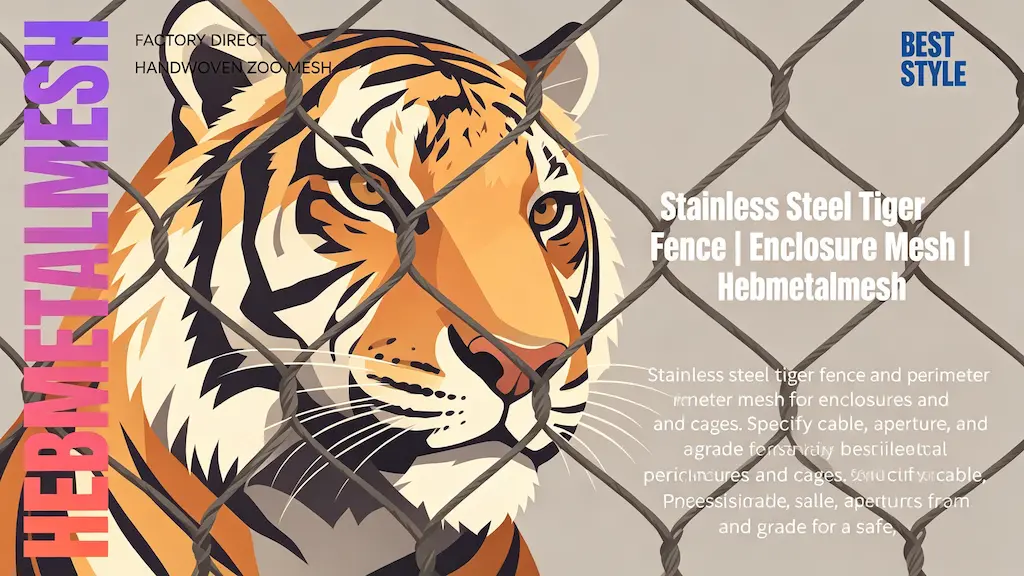
This guide helps zoo operators, wildlife sanctuary managers, and procurement specialists select the right stainless steel tiger fence for their big cat enclosures. You’ll learn which mesh specifications meet USDA and AZA standards, how to choose between 304 and 316 stainless steel grades, and why handwoven cable netting outperforms traditional chain-link or welded wire for tiger safety and long-term durability.
Ready to spec your enclosure? Request a quote for stainless steel tiger fence →
Introduction: Why Tigers Need Specialized Fencing
Tigers are unlike any other big cat when it comes to enclosure design. They are powerful swimmers that frequently soak, wade, and even submerge in pools and moats within their habitats. They are also natural climbers that will scale enclosure walls—a behavior lions rarely exhibit. These unique traits demand a fencing material that can withstand constant moisture exposure, resist corrosion from chlorine and saltwater, and endure repetitive scratching from sharp claws.
Standard chain-link fencing or welded wire simply cannot meet these demands. Chain-link is rigid and prone to deformation under impact. Welded wire can snap at weld points when a large mammal charges the perimeter. A stainless steel tiger fence, by contrast, acts like a high-tension spring: when a tiger jumps against it, the handwoven structure deforms slightly to absorb kinetic energy, then returns to its original shape. This “elastic safety” feature protects both the animal and the enclosure integrity.
For zoo operators and procurement managers across the US and Europe, choosing the right tiger fence specification—whether 2″ x 2″ for high-security perimeters or larger apertures for overhead netting—is the single most critical decision in enclosure design.
What Is a Stainless Steel Tiger Fence?
A stainless steel tiger fence—also known as tiger enclosure mesh, tiger barrier fence, or tiger perimeter mesh—is a specialized fencing system engineered specifically for big cat containment in zoos, wildlife sanctuaries, and safari parks.
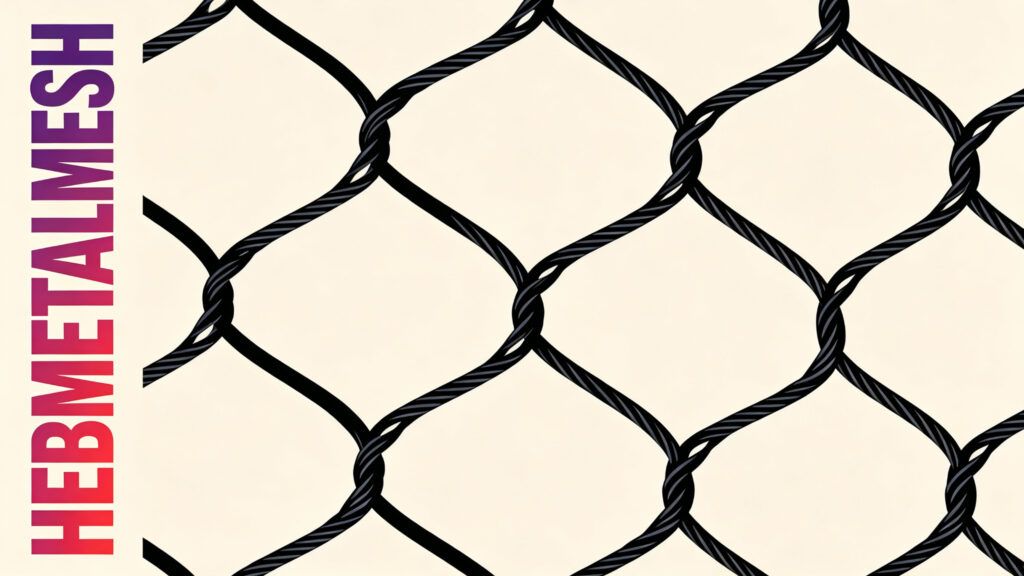
Unlike conventional fencing solutions, tiger fence is handwoven from premium stainless steel wire rope, creating a flexible, diamond-pattern barrier that combines exceptional strength with remarkable elasticity. The mesh is typically crafted from high-grade stainless steel—either AISI 304 or AISI 316—with a 7×7 or 7×19 strand core structure.
Handwoven vs. Welded: What’s the Difference?
The handwoven construction method is what sets professional-grade tiger fence apart from cheaper alternatives. Handwoven stainless steel netting has become the industry gold standard for tiger enclosures worldwide. Unlike welded mesh that has rigid weak points at intersections, handwoven cable mesh distributes stress evenly across the entire panel. This means no single failure point—even if a tiger applies concentrated force through scratching or biting, the mesh absorbs and redistributes the load without snapping.
Furthermore, the smooth, burr-free surface of handwoven cable protects tiger fur and foot pads from abrasion. The open weave allows natural airflow and lighting, creating a healthier, more naturalistic habitat that meets AZA and GFAS enrichment standards.
Critical Technical Specifications for Tiger Enclosure Fencing
Selecting the right mesh for your tiger enclosure requires careful consideration of the animal’s size, climbing behavior, and habitat conditions. Below are the key specifications that define a professional-grade tiger fence.
Recommended Mesh Aperture: 2″ x 2″
For adult tigers, industry experts strongly recommend a 2″ x 2″ (51mm x 51mm) aperture. This mesh size is deliberately smaller than what’s used for lion enclosures to prevent claws from hooking through during vertical climbing—a behavior tigers exhibit far more frequently than lions.
The 2-inch diamond aperture is too small for a tiger to gain a significant foothold, discouraging climbing behavior. It also prevents the tiger from reaching their paws through the mesh, a critical safety feature for keeper corridors and public viewing areas.
Cable Diameter: 1/8″ (3.2mm)
The 1/8″ (3.2mm) cable diameter is the industry standard for large predators like tigers, lions, and leopards. It offers the high breaking load necessary to secure adult Siberian and Bengal tigers in high-activity habitats. For lighter predators or smaller enclosures, 3/32″ (2.4mm) cable may be sufficient, but for tigers, 1/8″ is the recommended minimum.
Material Grades: 304 vs. 316 Stainless Steel
Both 304 and 316 stainless steel are used in tiger enclosure fencing, but they serve different environments:
🔍 AI Overview – 304 vs 316 Stainless Steel for Tiger Fencing
Choose 304 stainless steel for most inland zoos—it offers excellent corrosion resistance at a lower cost.
Opt for 316 stainless steel if your enclosure is near coastal saltwater, has extensive chlorine-treated pools, or requires maximum pitting resistance.
316 lasts 5–10× longer in saline conditions, but comes with a higher upfront investment.
Both grades are lead‑free and safe for animals.
304 stainless steel is the standard choice for most zoo applications. It offers exceptional corrosion resistance, withstands harsh weather and animal waste, and is suitable for all climates except extreme coastal salt spray. It is also lead-free and zinc-free, protecting animals from heavy metal poisoning while remaining impervious to chewing.
316 stainless steel is marine-grade and recommended for coastal locations or enclosures with extensive water features. With enhanced molybdenum content, this grade offers superior resistance to chloride-induced pitting and crevice corrosion.
Standard Roll Sizes
Tiger fence netting is typically available in standard rolls of 6′ x 60′, 10′ x 60′, and 30′ x 60′. Custom sizes are available up to 30′ x 60′. Large mesh panel design allows for installations with no joints in the middle, providing great convenience to users.
Key Design Considerations for Tiger Enclosures
Designing a tiger enclosure requires a fundamentally different approach than lion habitats. Below are the critical factors that set tiger enclosures apart.
Visibility vs. Security Balance
The 2″ x 2″ aperture provides the optimal balance—small enough to prevent claw penetration while offering unobstructed sightlines for visitors and animal monitoring. The black oxide finish option reduces glare for better visitor viewing while adding an extra layer of protection against water-induced corrosion.
Water Integration
Tigers require access to deep water pools for swimming and thermoregulation. Our mesh is fully submersible with zero corrosion risk, making it ideal for pool-edge barriers, underwater viewing panels, and moat systems.
Vertical Space and Climbing
Tigers are natural climbers. Unlike lions that stay ground-level, tigers will scale enclosure walls. We recommend a 4-meter minimum height with a 30° inward cantilever overhang at the top to prevent high-jump escapes. Mesh panels can be fabricated to any height with zero seams.
Buried Apron for Digging Prevention
Tigers dig at enclosure bases, especially near water sources. An optional buried footing extension (1-2ft apron) prevents undermining and ensures the barrier remains impenetrable from below.
Why Choose Handwoven Stainless Steel Tiger Fence?
Uncompromising Safety
Handwoven tiger fence creates a secure primary or secondary barrier for tiger habitats, preventing escapes and ensuring public safety. The high-tensile cables withstand the weight and force of even the largest animals.
Animal and Keeper Friendly
The smooth, handwoven construction minimizes injury risk. It allows for natural light and air flow, promoting a better habitat environment. The soft touching surface can be stretched, folded, and rolled naturally.
Virtually Maintenance-Free
304 stainless steel will not rust, rot, or degrade, slashing long-term enclosure maintenance costs. Designed for decades of outdoor use, this mesh is resistant to rust, animal waste, and extreme weather. It maintains its professional aesthetic and structural strength with zero maintenance.
Customization Available
Dimensions, edge treatments, and fittings can be tailored to integrate seamlessly with existing tiger enclosure structures. Custom dimensions are always available.
Applications: Where Tiger Fence Is Used
Stainless steel tiger fence is used in a variety of settings:
- Zoo exhibits – Primary and secondary barriers for tiger habitats
- Wildlife sanctuaries – Secure enclosures for rescued or captive tigers
- Safari parks – Large-span enclosures that blend with natural landscapes
- Breeding facilities – High-security cages for breeding programs
- Tiger cages – Indoor and outdoor containment
- Overhead netting – Roof containment for open-top enclosures
The mesh can be used for both wall fencing and roof netting, creating a completely enclosed space for the animal enclosures that is highly close to nature.
Installation Best Practices
Proper installation is critical to the performance of your tiger fence. Here are key considerations:
- Do not trim before installation – The handwoven netting can only be produced in rectangular shape. If you need special shapes, the only way is to cut off the excess part after installing, once the four edges of the whole mesh have been fixed.
- Ensure proper tensioning – The mesh should be tensioned correctly to maintain its elastic safety properties.
- Use appropriate lacing – Learn how to lace and tension your big cat mesh for optimal performance.
- Consider the buried apron – Install the optional buried footing extension to prevent digging escapes.
Regulatory Compliance and Safety Standards
When selecting a tiger fence, it’s essential to ensure compliance with relevant regulations:
- USDA 9 CFR § 3.127 – Requires fences of at least 8 feet high for potentially dangerous animals like tigers. The fence must be constructed to restrict animals and unauthorized persons from going through it or under it.
- AZA standards – The open weave allows natural airflow and lighting, creating a healthier, more naturalistic habitat that meets AZA enrichment standards.
- State regulations – Many states require cage construction materials to consist of not less than 9-gauge chain link or equivalent materials for tigers. Primary enclosures must be at least 600 square feet and 12 feet high with a cantilever or roof.
For a deeper dive into the specific engineering and material science behind tiger-safe barriers, explore our comprehensive guide to tiger fencing solutions .
Cost Considerations
A standard 30′ x 60′ roll of 2″ x 2″ x 1/8″ tiger enclosure netting in SS304 is priced at approximately $6,050.00. Smaller rolls of 25′ x 60′ are available at a lower price point. While the initial investment is higher than traditional chain-link, the 30+ year service life with zero maintenance makes it the more cost-effective choice in the long run.
Frequently Asked Questions
1. What is the best mesh size for a tiger enclosure?
The industry standard and most recommended mesh size for adult tiger enclosures is 2″ x 2″ (51mm x 51mm) with a 1/8″ (3.2mm) cable diameter. This aperture prevents claw entrapment during vertical climbing while maintaining excellent visibility.
2. What is the difference between 304 and 316 stainless steel for tiger fencing?
304 stainless steel is the standard choice for most zoo applications, offering excellent corrosion resistance at a more cost-effective price. 316 stainless steel contains molybdenum for superior resistance to saltwater and chemicals, making it ideal for coastal zoos or enclosures with extensive water features.
3. How high should a tiger enclosure fence be?
Industry standards recommend a minimum height of 4 meters (approximately 13 feet) with a 30° inward cantilever overhang at the top to prevent high-jump escapes. USDA regulations require fences of at least 8 feet high for potentially dangerous animals like tigers.
4. How long does stainless steel tiger fence last?
High-quality stainless steel tiger fence provides a 30+ year service life with zero maintenance. The material will not rust, rot, or degrade, even in pool-side and high-humidity environments.
5. Can tiger fence be used for overhead containment?
Yes, tiger fence mesh can be used for overhead netting and large-span roof applications. For overhead containment, a 3″ x 3″ aperture may be used for higher transparency while maintaining security.
Key Takeaways
- Tigers require specialized fencing due to their swimming and climbing behaviors—standard chain-link or welded wire is insufficient.
- The industry standard specification for adult tiger enclosures is 2″ x 2″ aperture with 1/8″ (3.2mm) cable diameter in SS304 or SS316 stainless steel.
- Handwoven construction distributes stress evenly with no single failure point, providing superior safety compared to welded mesh.
- 304 stainless steel suits most applications; 316 stainless steel is recommended for coastal locations or enclosures with extensive water features.
- Proper design includes minimum 4-meter height with inward cantilever, buried apron for digging prevention, and water-compatible materials.
- 30+ year service life with zero maintenance makes stainless steel tiger fence the most cost-effective long-term solution.
For a complete breakdown of tiger enclosure mesh specifications, including custom sizing options and factory-direct pricing, visit our dedicated tiger enclosure netting product page .
Ready to Secure Your Tiger Enclosure?
Choosing the right stainless steel tiger fence is one of the most important decisions you’ll make for your zoo, sanctuary, or wildlife facility. Hebmetalmesh supplies professionals worldwide with reliable fencing solutions. With over 30 years of experience in zoo mesh systems, we offer factory-direct pricing on handwoven SS304 and SS316 tiger enclosure netting.
Order a 30′ x 60′ roll today or contact us for a quote on customized tiger enclosure netting tailored to your specific project needs. Custom sizes are available up to 30′ x 60′ with zero cutting waste.
Get a sized quote in 24 hours. Send us your stainless steel tiger fence dimensions for a quote →
Additional Resources
To further assist your planning, explore these related guides:
- Understanding Tiger Wire Mesh: A Comprehensive Guide – Detailed breakdown of tiger wire mesh types, from standard to heavy-duty and coated variants.
- Heavy-Duty Lion Enclosure Netting – Compare lion-specific mesh specifications and impact-resistance engineering.
- Stainless Steel Animal Enclosure Mesh – Explore broader animal enclosure mesh options for zoos, wildlife habitats, and farms.
- For enclosure and animal-welfare standards used by accredited institutions, see the Association of Zoos and Aquariums