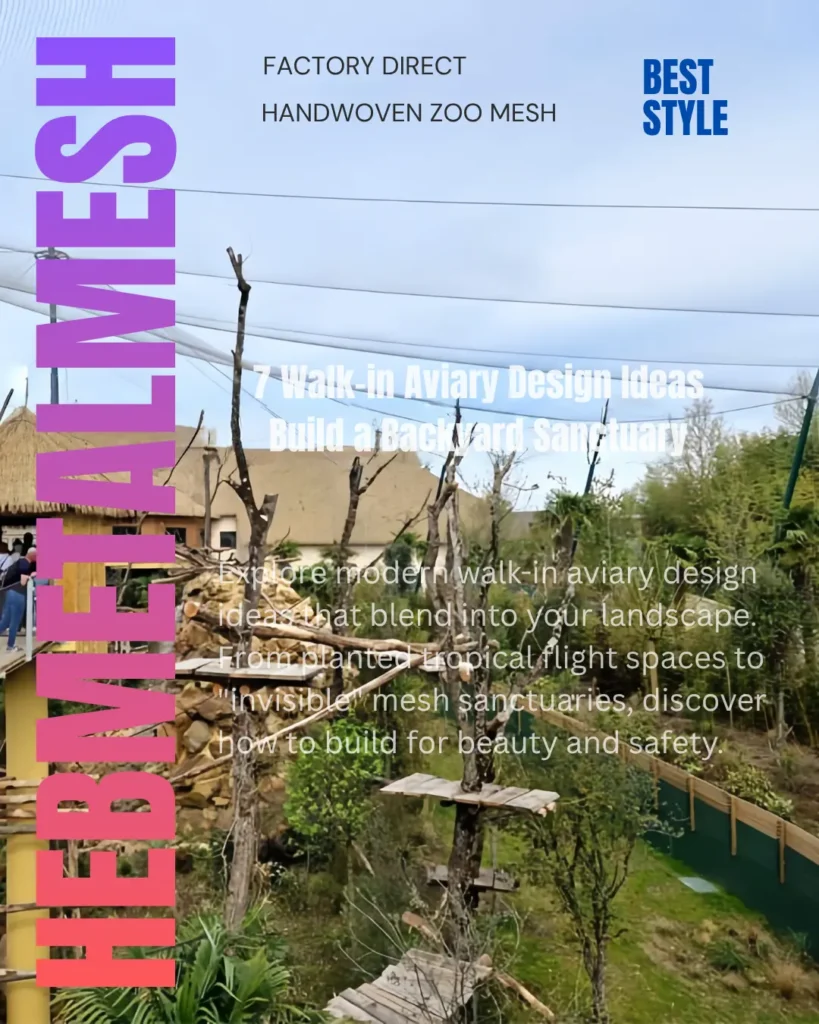
Modern Walk-in Aviary Trends 2026: The shift in backyard aviary design is moving away from heavy wooden frames toward “frameless” or slim-profile metal structures. By utilizing flexible stainless steel rope mesh, designers can now create curved, organic shapes that disappear into the garden. The most successful walk-in aviary design ideas prioritize double-door safety entries (safety porches), integrated natural landscaping, and high-transparency mesh to ensure the enclosure enhances the property value rather than detracting from it.
1. Beyond the “Cage” Mentality: Why Your Backyard Needs a Sanctuary
For too long, the term “bird cage” has evoked images of cramped, rectangular wire boxes that sit awkwardly in a corner of the yard. But in 2026, the trend has shifted. We aren’t just housing birds anymore; we are creating immersion habitats.
The “Aha!” moment for most hobbyists comes when they realize that a walk-in aviary design idea isn’t just about the birds—it’s about the human experience. Imagine stepping through a double-door entry into a lush, quiet space where the sound of wings and water replaces the noise of the street.
- The Psychological Shift: When you can walk into the enclosure, your relationship with your birds changes. You aren’t a “keeper” looking in through bars; you are a guest in their world.
- Property Value vs. Eyesore: Traditional wood-and-chicken-wire structures scream “temporary.” A professionally designed walk-in sanctuary using high-spec stainless steel bird netting looks like a deliberate architectural feature, often increasing the perceived value of your landscape.
- Scale and Freedom: Designing for a walk-in experience allows for natural flight patterns. Whether you are housing small finches or building a massive Eagle enclosure, vertical space is your best friend.
2. The “Invisible” Flight Space: Minimalist Framing
The #1 complaint about DIY aviaries? “There’s too much wood/metal, and I can’t see the birds.” Traditional construction relies on heavy 4×4 posts every few feet to support heavy, rigid wire panels. This creates a visual “stutter” that ruins the view.
The Engineering “Aha!” Moment
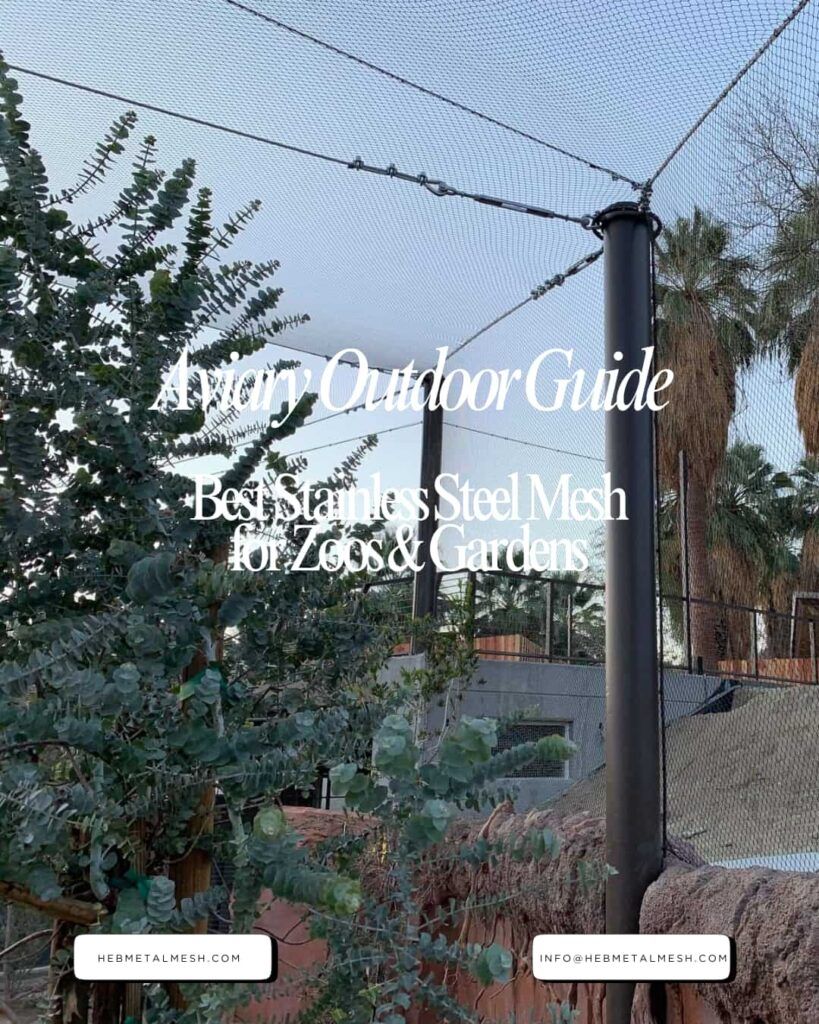
By switching to hebmetalmesh, you can ditch the bulky frames. Because stainless steel rope mesh is incredibly strong and handles tension like a structural cable, you can span much larger distances with fewer supports.
- Floating Roofs: Instead of a heavy timber roof, use high-tension boundary cables. You can create a 20-foot span of Parrot and Macaw enclosure netting that stays perfectly taut with only corner pillars.
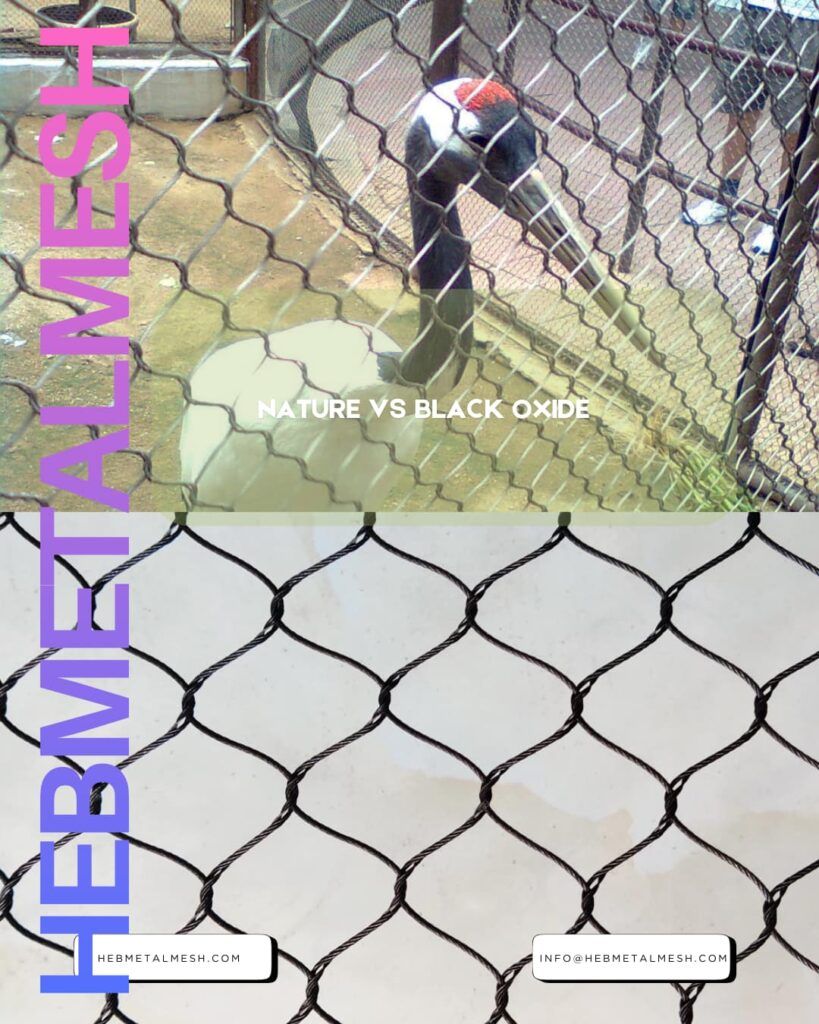
- Slim-Profile Materials: Use powder-coated black steel pipes or thin cedar posts. When paired with black-oxide rope mesh, the entire frame virtually disappears into the shadows of the surrounding trees.
- The Transparency Factor: In modern walk-in aviary design ideas, we prioritize an “open-air” feel. Unlike plastic netting which sags and catches the light, or heavy chain-link which looks like a prison, hand-woven mesh has a high opening rate. From 10 feet away, it looks like your birds are flying in the open air.
This minimalist approach is exactly how luxury Peacock enclosures are built in botanical gardens. It’s about the bird, the plants, and the light—not the fence.
3. The Tropical Greenhouse Hybrid: Where Airflow Meets Shelter
One of the most sophisticated walk-in aviary design ideas emerging in 2026 is the “Hybrid Habitat.” For owners of exotic species—specifically those looking at Parrot and Macaw enclosure netting—the challenge is always balancing protection from the elements with the need for fresh, moving air.
The Best of Both Worlds
By combining a solid structural roof (think tempered glass or UV-resistant polycarbonate) with breathable hebmetalmesh walls, you create a microclimate.
- The “Aha!” Moment: You don’t have to choose between an indoor cage and an outdoor flight. The hybrid design allows birds to sunbathe against the mesh while having a dry, shaded “retreat” area under the solid roof.
- Climate Control: In southern climates, the mesh walls allow for 100% natural ventilation, preventing the “oven effect” of fully enclosed glass structures.
- Humidity Management: For tropical birds, you can easily mount misting systems directly onto the stainless steel cable borders. Unlike wood or plastic, the stainless steel bird netting won’t rot or degrade under constant moisture.
4. Living Walls: Integrating Flora with Fauna
Nothing ruins the “Sanctuary” vibe faster than a barren concrete floor and empty wire walls. If you want a world-class walk-in aviary, you have to think like a landscape architect. This is where your mesh stops being a fence and starts being a vertical garden.
Using Mesh as a Structural Trellis
Because hand-woven stainless steel rope mesh is incredibly strong, it can support the weight of climbing plants. Imagine a Peacock enclosure where the back wall is a solid curtain of non-toxic jasmine or passionflower.
- The Bio-Dome Effect: Planting heavily inside and outside the mesh softens the perimeter. The birds feel more secure with “natural cover,” and the humans get a lush, botanical view.
- Bird-Safe Planting: Always choose bird-safe species (like bamboo, hibiscus, or certain palms). The “Aha!” moment here is realizing that birds love to forage. By planting directly into the enclosure, you provide natural enrichment that keeps them mentally sharp.
- Predator Barrier + Camouflage: A thick layer of vegetation against the hebmetalmesh adds an extra layer of visual security. Predators like hawks or neighborhood cats are less likely to harass your birds if they can’t get a clear line of sight through the foliage.
Whether you are building a small finch garden or a massive Eagle enclosure, integrating “living walls” turns a structural necessity into a masterpiece of garden design.
5. The Safety Porch: The Non-Negotiable Design Feature
If there is one walk-in aviary design idea that separates the rookies from the pros, it’s the Safety Porch (also known as an “Air-lock” or “Double-Door” entry). Nothing ruins a peaceful afternoon in your sanctuary faster than a high-value bird darting past your shoulder as you enter with a tray of fruit.
The “Aha!” Moment: Security Meets Sophience
Think of the safety porch not as a “cage entry,” but as a transition foyer. It’s a 3′ x 4′ (or larger) vestibule that ensures one door is always closed before the other opens.
- The “Zero-Escape” Guarantee: This is critical for Parrot and Macaw enclosures, where birds are incredibly observant and lightning-fast.
- Storage Optimization: Use the safety porch as a clean, dry zone for hanging specialized tools, storing premium seed, or staging cleaning supplies.
- Aesthetic Integration: By using the same hebmetalmesh for the porch as the main flight area, the structure remains visually cohesive. It doesn’t look like a “trap”—it looks like a professional gatehouse.
6. Sculptural Shapes: Curves, Domes, and Tunnels
Why are we still building boxes in 2026? The most breathtaking walk-in aviary design ideas today reject the 90-degree angle. Because stainless steel bird netting is hand-woven and flexible, it acts more like a high-tensile fabric than a rigid fence. This allows you to sculpt your sanctuary.
Breaking the Box
- The Geodesic Dome: Domes are structurally superior and offer the most flight volume for the least amount of surface material. They handle wind loads beautifully and look like futuristic art in your garden.
- Curved Corridors: For long, narrow yards, a “flight tunnel” or “S-curve” design allows birds to reach full flight speed while staying protected. This is a favorite for Eagle enclosures where horizontal distance is key.
- Organic Contours: Want to wrap your aviary around an existing oak tree? You can’t do that with stiff wire panels. With hebmetalmesh, you can contour the mesh around natural obstacles, creating a “built-in” look that mimics a high-end Peacock enclosure at a luxury estate.
When you move away from flat planes and embrace curves, the mesh gains even more structural integrity through tension. It becomes a self-supporting sculpture that protects your birds and wows your neighbors.
7. Lighting and Water Features: The Night-View Sanctuary
The final “Aha!” moment happens after the sun goes down. Most people ignore their aviaries at night, but with the right walk-in aviary design ideas, your sanctuary can become the focal point of your evening landscape.
- “Firefly” Lighting: Low-voltage LED “fairy lights” woven into the top border of the hebmetalmesh create a magical glow without disturbing the birds’ sleep cycles.
- Self-Sustaining Waterfalls: A small stone waterfall provides essential bathing opportunities for the birds and white noise for you. Because you’ve chosen 304 or 316 stainless steel, you never have to worry about rust from the constant splashing or high humidity.
Turn Your Vision Into a Reality
A world-class walk-in aviary starts with the right foundation. Don’t settle for ugly wire when you can have zoo-grade transparency.
*Expert advice available for custom DIY designs. We ship worldwide.*
Frequently Asked Questions: Designing Your Walk-In Sanctuary
Answer: While any size is better than a small cage, the best walk-in aviary design ideas start with a minimum footprint of 6′ x 8′ with a 7′ height. This allows enough “flight run” for the birds to reach speed and enough “human-scale” space for you to enter, clean, and interact without crowding the inhabitants. If you are designing for larger species like those in Peacock enclosures, you should aim for at least 200–300 square feet to accommodate their impressive tail spans.
Answer: Not necessarily, but a foundation is highly recommended for predator proofing. Many modern designs use a “perimeter “curb” of concrete or heavy timber. You can then secure your hebmetalmesh directly to this base. For a more natural look, some designers use a buried “apron” of mesh that extends 12 inches underground to prevent digging predators like foxes or rats from entering.
Answer: Yes! This is a major “Aha!” moment for many DIYers. Because stainless steel bird netting is flexible and hand-woven, it can be contoured around living trees. We recommend using “tree-friendly” stainless steel standoff bolts or tension cables to ensure the tree has room to grow without the mesh girdling the trunk. This creates a stunning “treehouse” aesthetic for your birds.
Answer: The best design involves a multi-layer floor. Start with a sloped drainage layer of gravel, followed by a “living floor” of bird-safe mulch or sand. Because 316-grade stainless steel is rust-proof, you can heavily hose down the interior and the Parrot and Macaw enclosure netting daily without worrying about corrosion or wood rot.
Answer: Actually, a mesh sanctuary is often safer than a solid-walled structure in high winds. The open-weave pattern of hebmetalmesh allows wind to pass through rather than acting like a sail. For the birds’ comfort, your design should always include a “three-sided” sheltered corner or a small indoor “night box” where they can retreat from heavy rain or drafts.