
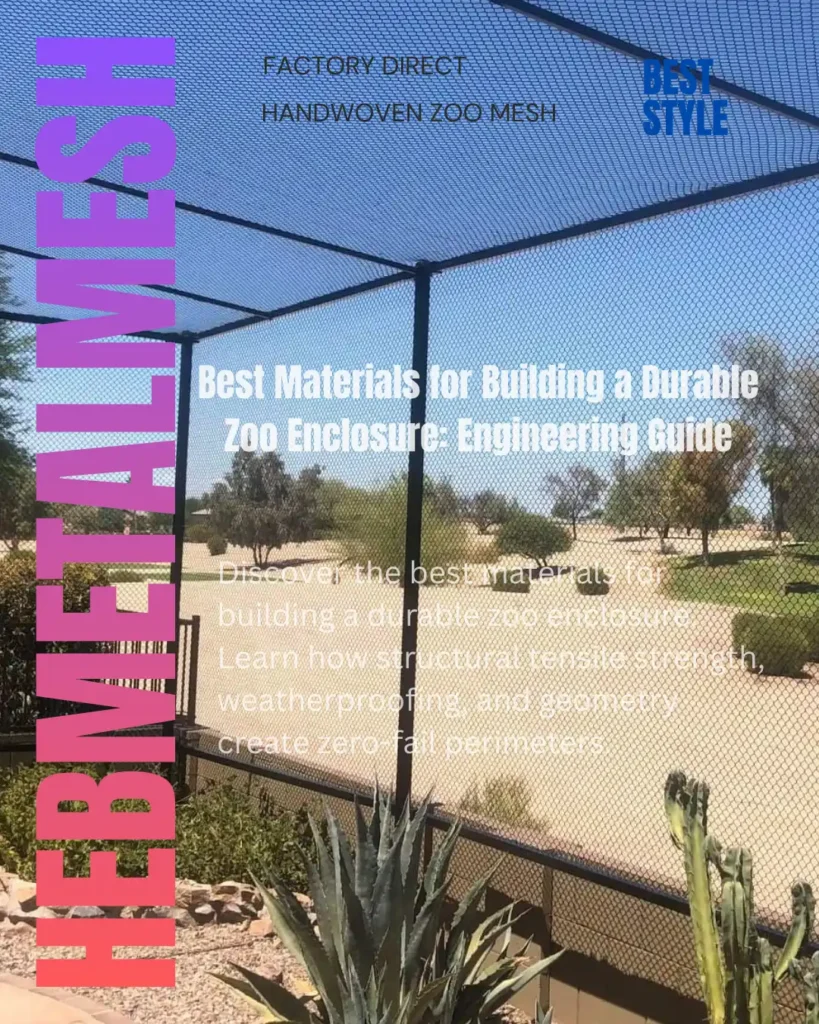
What are the best materials for building a durable zoo enclosure? The best materials for building a durable zoo enclosure are 304 and 316-grade handwoven stainless steel wire rope mesh paired with structural steel framing. Unlike traditional rigid iron bars or welded chain-link fences, flexible stainless steel cable mesh absorbs high kinetic impacts through elastic energy dispersion, offering a maintenance-free lifespan exceeding 30 years without rusting or breaking.
Key Takeaways
- Elite Energy Dispersion: Unlike rigid barriers that concentrate stress at weld points, the handwoven diamond grid distributes impact forces evenly across the entire surface area, preventing structural fractures.
- Decades of Corrosion Resistance: Utilizing 304 and marine-grade 316 stainless steel eliminates the risk of rust, UV degradation, and chemical weathering—completely bypassing the need for ongoing sandblasting or painting.
- Unmatched Visual Transparency: With an open area often exceeding 90%, this high-tensile fabric provides premium, zero-glare visibility and optimal airflow, melting seamlessly into the natural landscape.
- Long-Term Cost Efficiency: While the initial investment is higher than basic chain-link, the near-zero maintenance and replacement cycle yields a massive total cost of ownership (TCO) advantage within the first five years.
1: The Modern Crisis in Containment Architecture
Let’s be completely honest: building any structural barrier intended to last for decades outdoors is a constant battle against physics and chemistry. If you are an architect, an industrial designer, a structural engineer, or a project manager tasked with enclosing a physical space, you are fighting a multi-front war. You aren’t just trying to contain the physical mass inside the perimeter; you are fighting weathering, environmental stress, and growing aesthetic demands.
For over a century, the go-to solution for heavy-duty containment was remarkably crude: thick iron bars, heavy concrete walls, or rigid welded chain-link fences. If it looked like an unyielding fortress, we assumed it worked like one.
But traditional materials fail consistently because they misunderstand how kinetic energy behaves. When a heavy force hits a rigid iron bar or a welded wire panel, that energy has nowhere to go. It concentrates entirely on the point of impact or travels down to the weld spots, fasteners, and anchor bolts. Over time, this repetitive structural stress causes micro-fractures, metal fatigue, and sudden joint failure.
Traditional Rigid Systems
Advanced Flexible Systems
Add to this the relentless toll of outdoor exposure. Ultraviolet (UV) radiation breaks down protective PVC coatings, humidity fuels localized oxidation, and acid rain aggressively strips away zinc galvanization layers. The moment the base metal is exposed to oxygen and moisture, structural degradation accelerates exponentially. That is why identifying the best materials for building a durable zoo enclosure requires looking past raw thickness and shifting toward smart materials designed for energy dispersion.
2: Breaking Down the Core Contenders
When mapping out heavy-duty architectural perimeters or specialized outdoor containment systems, projects generally filter through four primary material groups. Each comes with clear compromises in structural lifecycle, hidden maintenance costs, and total aesthetic impact.
1. Carbon Steel and Iron Bars
Carbon steel provides massive dead-weight resistance and high rigidity. It makes a perimeter look completely unyielding. However, its greatest strength is also its architectural pitfall. Because carbon steel lacks elasticity, it requires massive concrete footings to survive sustained cross-winds or heavy impacts without bending permanently.
Furthermore, iron is inherently unstable when exposed to atmospheric moisture. Left unprotected, it forms iron oxide (rust) almost immediately. To combat this, you are forced into an endless, costly cycle of sandblasting, priming, and painting every few years. In commercial settings, this maintenance downtime destroys operational budgets.
2. Chain-Link and Welded Wire Mesh
Chain-link is cheap, widely available, and relatively easy to string up between standard pipe posts. But chain-link is essentially a temporary fix scaled up to a permanent budget. The interlocking loops are highly vulnerable to deformation; once a single strand is warped or clipped, the structural tension of the entire panel unravels.
Welded wire mesh is stiffer, but it introduces thousands of microscopic weak points. Every single spot weld alters the crystalline structure of the metal, creating a highly localized zone where rust thrives. If your project faces high vibrations, variable wind loads, or direct physical impact, those welds snap like dry twigs long before the wire itself fails.
3. Concrete Barriers and Glass Balustrades
Reinforced concrete provides structural permanence and absolute opacity, which works well if you want to completely isolate a space. However, it blocks natural airflow, traps heat, destroys visual continuity, and is prone to seismic cracking.
Laminated glass panels offer incredible visibility but create an acoustic greenhouse effect, reflect high levels of heat, scratch easily under outdoor abrasive elements (like blowing sand), and require a dedicated cleaning crew to stay pristine.
4. Handwoven Stainless Steel Mesh
This is where the paradigm shifts completely. Instead of fighting kinetic force with massive weight, handwoven wire rope mesh resolves tension through geometry and flexibility.
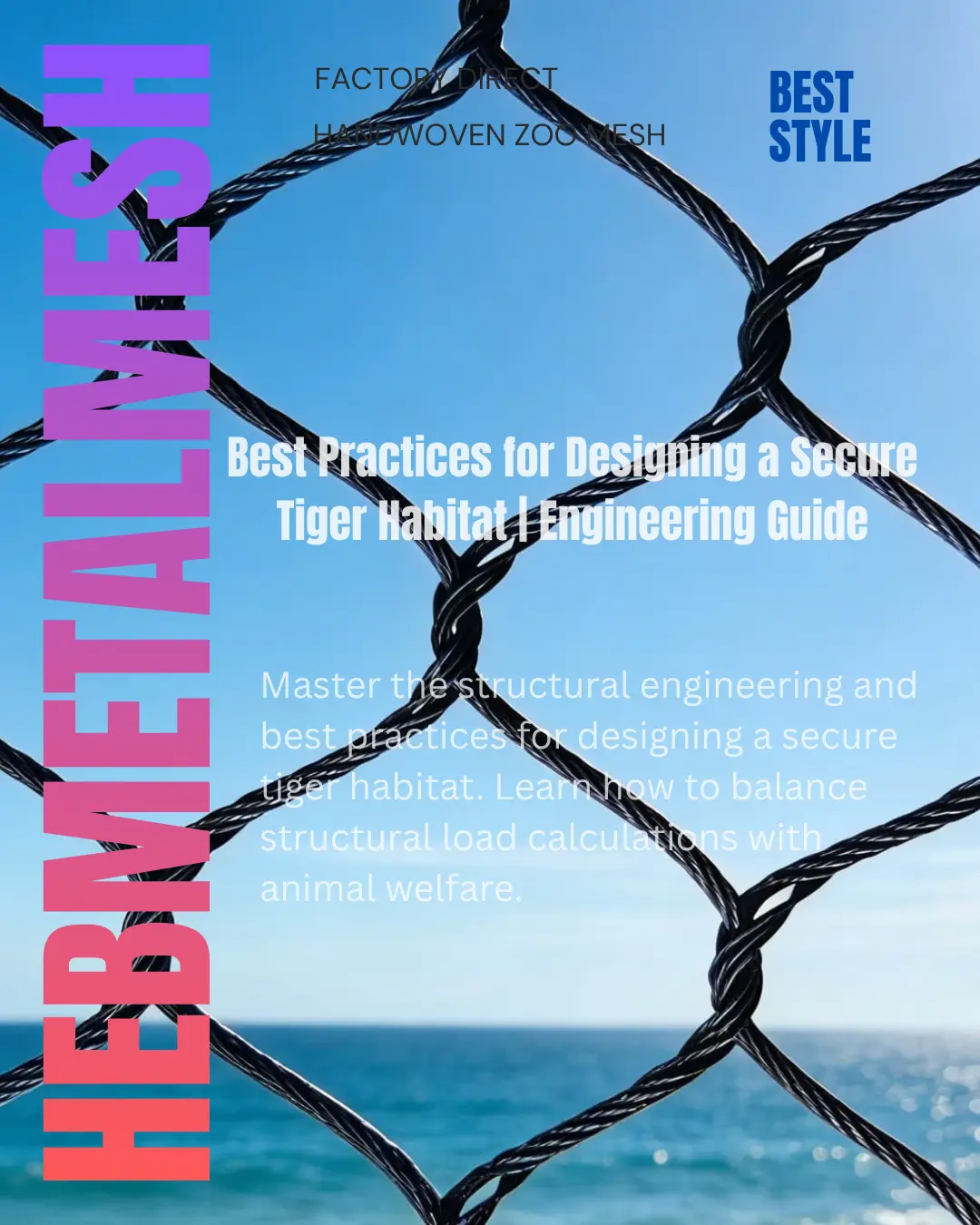
Made by crossing high-grade stainless steel cables using complex manual knotting or twisting patterns, this material forms a continuous, uninterrupted fabric. When a force hits a single point, the diamond pattern instantly redistributes that energy across the entire structural surface area. It doesn’t deform, it doesn’t fracture, and it doesn’t snap at a localized weld because there are no welds.
To understand how this flexible design applies to highly active and intelligent species, read our upcoming deep dive into the best materials for large primate habitat construction, where elastic recovery prevents both material fatigue and animal injury. Alternatively, for high-stakes containment with massive sheer loads, check out our guide on how to source durable fencing for big cat exhibits.
3: The Chemistry of Longevity (304 vs. 316 Stainless Steel)
If you have realized that wire rope fabric is the correct technical path for your structural boundary, your next decision is purely chemical. Not all stainless steel is created equal. The industry standards center entirely around two specific alloys: AISI 304 and AISI 316. Understanding the molecular differences between them determines whether your project survives flawlessly for decades or falls victim to premature degradation.
Grade 304: The Structural Workhorse
Grade 304 is the most widely utilized stainless steel alloy on the planet. Composed of roughly 18% chromium and 8% nickel, it offers exceptional tensile strength and excellent resistance to standard atmospheric corrosion. For standard inland installations, municipal public spaces, interior architectural accents, and general structural safety barriers, Grade 304 provides an incredible performance-to-cost ratio. It is highly durable, handles physical stress beautifully, and remains pristine under typical weather patterns.
Grade 316: The Marine-Grade Shield
The moment your project moves near a coastline, an urban center facing heavy smog, or an industrial zone subject to harsh washdown regimens, Grade 304 hits its chemical limits. Enter Grade 316.
By altering the chemical recipe to include 16% chromium, 10% nickel, and a critical 2% to 3% molybdenum, Grade 316 undergoes a massive leap in environmental defense. Molybdenum specifically targets and neutralizes pitting corrosion caused by chlorides (such as sea salt, coastal mist, and winter road-salting runoff) and industrial pollutants.
If you are specifying materials for high-exposure perimeters, coastal installations, or heavy industrial barriers, choosing 316 stainless steel is non-negotiable to eliminate the risk of surface tarnishing and structural compromise. To review the complete range of alloy choices and customized weave options direct from the manufacturing source, you can explore the structural overview on the Hebmetalmesh Homepage.
Section 4: Engineering the Diamond Grid (Diameters and Apertures)
Structural durability isn’t just about selecting the right alloy; it’s about configuring the physical architecture of the mesh fabric to match your specific environmental and impact loads. When diving into high-end wire fabric specifications, you have two primary variables to calibrate: Wire Rope Diameter and Mesh Aperture Size.
Cable Diameters (The Weight Classes)
The thickness of the individual stainless steel wire ropes dictates the overall breaking force of the fabric network.
- 3/64″ to 1/16″ (1.2mm to 1.6mm): Lightweight, highly pliable, and visually near-invisible. Perfect for aviary netting, historical building retrofits, and decorative green-wall trellises where the primary loads are wind and lightweight physical impact.
- 5/64″ to 3/32″ (2.0mm to 2.4mm): Medium-duty stabilization. Excellent for residential safety netting, pedestrian bridge balustrades, public park partitions, and mid-sized primate containment.
- 1/8″ (3.2mm): Heavy-duty structural class. Boasting massive breaking strength, this thickness is engineered for extreme load environments—think high-velocity physical impacts, large mammal perimeters, and industrial fall-protection systems.
Aperture Sizes (The Open Area Grid)
The aperture is the internal measurement of the diamond openings, typically configured from 3/4″ x 3/4″ up to 4″ x 4″.
- Small Apertures (3/4″ to 1.5″): Prevents small objects, debris, or wildlife talons from passing through the grid while maintaining pristine airflow and structural density.
- Large Apertures (2″ to 4″): Maximizes visual transparency. From a distance of more than fifteen feet, a 3″ diamond aperture made with a 3/32″ cable completely disappears against a natural landscape or city backdrop. It creates a seamless visual viewport (often exceeding 90% open area) without sacrificing structural boundary integrity or blocking natural light.
For a comprehensive technical breakdown of these specific dimensions, load capacities, and weight ratings, you can deep dive into the engineering tables on the Hebmetalmesh Zoo Mesh Product Specification.
5: The “Aha” Moment: From Wildlife Enclosures to Industrial Design
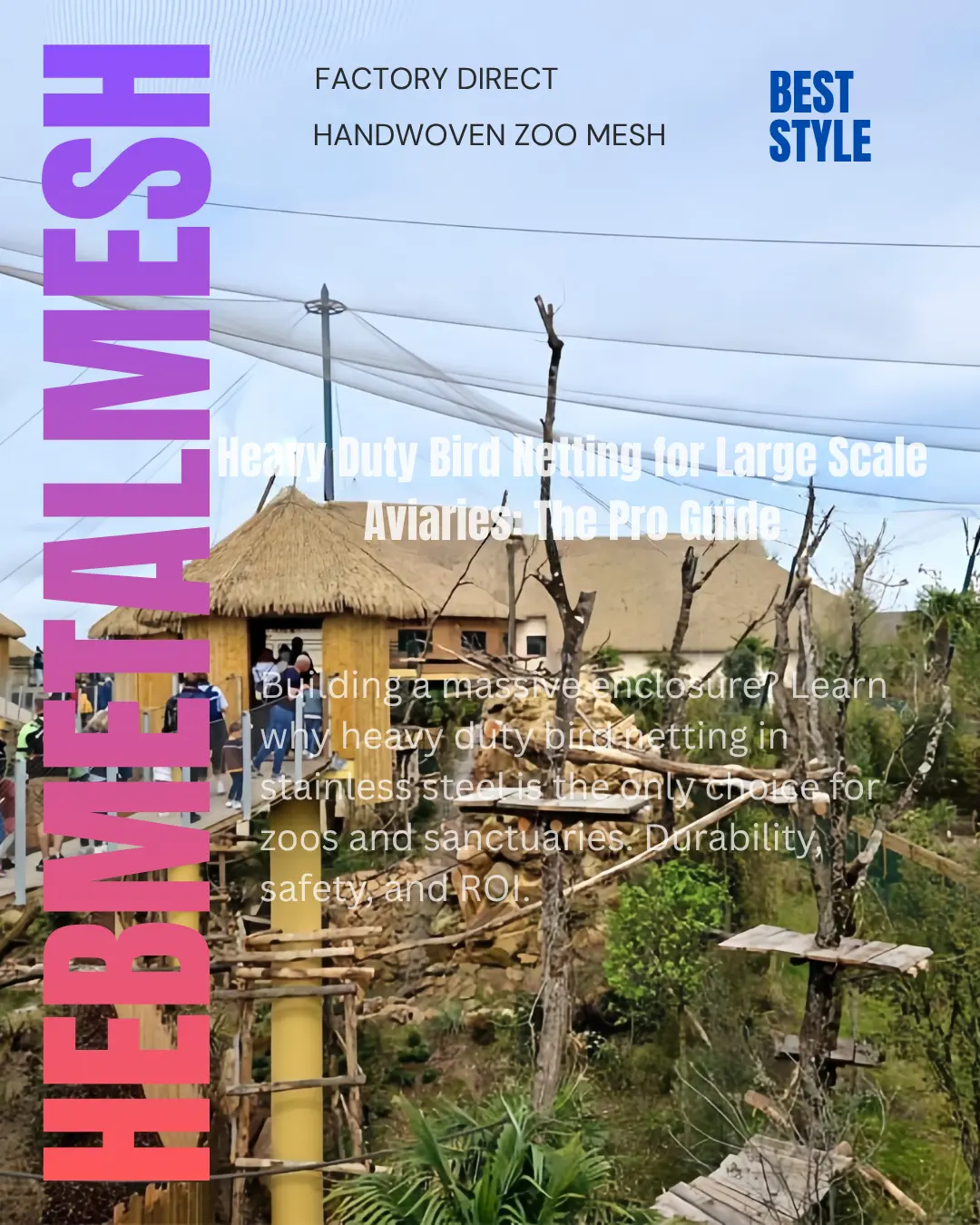
This brings us to the core realization that is currently transforming modern industrial design and commercial architecture: if a material is engineered to hold a 400-pound screaming silverback gorilla or contain the explosive kinetic charge of a leaping Siberian tiger, it can handle your commercial infrastructure project effortlessly.
Architects, general contractors, and civil engineers worldwide are looking at the grueling, zero-fail testing grounds of professional zoological design and reaching an immediate conclusion. Why continue to specify high-maintenance, fragile glass panels or heavy, prison-like iron rails for human public spaces when a material exists that offers absolute security with near-total invisibility?
Zoological Testing Ground
Leaping Big Cats, Extreme Dynamic Loads, 30+ Year Weathering
Bridge & Balustrades
Zero maintenance, sleek architectural aesthetics.
Green Wall Facades
Plant roots climb securely without moisture or rust decay.
Safety Fall Zones
High-tensile, near-invisible overhead drop protection.
Consider these innovative, high-performance cross-industry applications where zoo-grade handwoven wire rope fabric is completely outperforming traditional options:
- Commercial Bridge and Balustrade Safety Railings: Instead of vertical steel bars that obscure the horizon, or laminated glass balustrades that constantly collect handprints, dust, and pollen, a continuous run of high-tensile mesh provides complete fall protection. It keeps pedestrians perfectly safe while remaining completely open to air, light, and sweeping panoramic views.
- Biophilic Architecture and Green Walls: Modern urban designs frequently incorporate vertical living walls to lower building temperatures and improve air quality. However, climbing plant roots and constant moisture strip and rot traditional wire grids. Handwoven stainless mesh provides an indestructible structural spine that integrates organically into the building facade without ever rusting out.
- Industrial Drop-Safety Networks: In heavy manufacturing, automated warehousing, or high-rise construction zones, securing overhead spaces from falling tools or debris is a massive legal liability. A high-tensile wire rope net catches high-velocity drops effortlessly, distributing the structural load instantly across its diamond grid without tearing.
The engineering design philosophy that bridges the gap between apex predator containment and luxury architectural safety is explained in thorough detail within the Hebmetalmesh Industry Analysis Article.
6: Long-Term Financial ROI (The TCO Framework)
When assessing the best materials for building a durable zoo enclosure or a high-traffic commercial perimeter, you must step away from initial material purchase costs and calculate the Total Cost of Ownership (TCO) over a 25-year lifecycle.
Many procurement officers fall into the trap of buying cheap materials upfront, only to pay for them three times over in localized repairs, full replacements, and recurring maintenance labor. Let’s look at the financial reality of specifying standard galvanized or welded steel fencing versus premium handwoven stainless steel rope mesh over a 25-year operational window:
| Expense Category | Standard Galvanized / Welded Steel | Handwoven Stainless Steel Rope Mesh |
|---|---|---|
| Initial Purchase Cost | Low to Moderate | Premium Upfront Investment |
| Installation Complexity | Rigid panels require exact framing alignment | Flexible rolls adapt to irregular shapes easily |
| Years 1–5 Maintenance | Spot-painting welds, corrosion tracking | Zero Maintenance |
| Years 6–15 Maintenance | Sandblasting, rust stripping, full repainting | Zero Maintenance |
| Years 16–25 Replacement | Structural failure requires 100% replacement | Clean with water if dusty; zero degradation |
| Total Lifespan TCO | 3x to 4x initial cost in maintenance & labor | 1x flat investment (Zero ongoing costs) |
The math is clear. Standard carbon steel or welded mesh options accumulate thousands of dollars in hidden costs because their crystalline structure alters during welding, creating built-in failure points for rust. Handwoven stainless steel mesh utilizes zero sacrificial coatings, contains no structural welds to crack, and is completely immune to UV radiation and thermal fracturing. It represents a permanent, one-time infrastructure asset.
7: Structural Installation & Frame Pre-Tensioning
To achieve an absolute zero-fail boundary that lasts for decades, installing handwoven wire rope fabric requires adhering to specific structural mechanics. Unlike traditional rigid panel fences that rely on deadweight mass, handwoven wire fabric functions dynamically as a tensioned skin.
When flat rolls of handwoven mesh are unfurled and stretched into their optimal diamond geometry, they transform from a loose metal cloth into an active, high-tensile structural membrane. This tensioned state allows the mesh to absorb massive kinetic loads seamlessly; however, it also means the fabric exerts a continuous, inward-pulling force on all four sides of its supporting structure.
Stop Specifying High-Maintenance Materials. Build a Permanent Asset.
Whether you are engineering an ultra-secure habitat for apex predators or designing a luxury commercial balustrade that requires near-total visual transparency, handwoven stainless steel wire mesh eliminates ongoing operational maintenance. Get precision-cut, factory-direct rolls delivered straight to your job site.
Because of this constant baseline tension, two installation protocols are entirely non-negotiable:
- Rigid Perimeter Framing: The underlying structural framework—whether composed of heavy steel pipe, structural channels, or high-tension perimeter boundary cables—must be engineered to handle both the static pre-tension loads and the maximum dynamic impact loads simultaneously. If the perimeter frame bows or flexes under load, the mesh fabric will sag, creating structural weak points and compromising the visual transparency of the asset.
- Continuous Spiral Edge Lacing: Many contractors make the catastrophic mistake of securing wire mesh using weak mechanical clips, rivets, or individual zip-ties. Under repeated dynamic stress, these localized points experience high shear force and snap one by one. True industrial and zoological installations utilize a continuous stainless steel lacing wire that spirals tightly around the framing pipe and through every perimeter diamond edge loop. This redistributes any single point of impact across the entire length of the rigid frame, ensuring the connection point remains as indestructible as the core fabric itself.
For engineering teams looking to minimize field-labor overhead and source material configurations tailored to specific frame geometries, pre-cut solutions can be found by reviewing the specialized collections inside the Hebmetalmesh Zoo Mesh Category.
Ready to design a system that fits your terrain instead of grading your site to fit a box? Read our Guide: Species Class Metric Calibration to see how we match mesh specifications to specific animal behaviors.
Stop Specifying High-Maintenance Materials. Build a Permanent Asset.
Whether you are engineering an ultra-secure habitat for apex predators or designing a luxury commercial balustrade that requires near-total visual transparency, handwoven stainless steel wire mesh eliminates ongoing operational maintenance. Get precision-cut, factory-direct rolls delivered straight to your job site.
FAQ: Engineering High-Tensile Mesh for Industrial & Architectural Use
A: While standard galvanized or powder-coated welded wire typically requires full replacement every 7 to 12 years due to structural rust and weld fatigue, handwoven stainless steel mesh is engineered as a 30+ year permanent asset. Utilizing high-grade AISI 304 or 316 alloys, the material is immune to UV degradation, thermal fracturing, and the pitting corrosion that destroys traditional boundaries.
A: Yes. When using the Total Cost of Ownership (TCO) framework, handwoven mesh typically reaches price parity with “cheap” fencing within 5 to 7 years. Because standard fencing incurs recurring costs for sandblasting, repainting, and localized repairs, you eventually pay 3x to 4x the initial price in labor alone. Handwoven mesh is a one-time capital expenditure with zero ongoing maintenance liabilities.
A: No. Unlike glass balustrades that require specialized chemical cleaners to remove streaks and pollen, or steel bars that require rust-inhibitors, stainless mesh is virtually self-cleaning in outdoor environments. A simple high-pressure water washdown is sufficient to remove surface dust. Because it is installed as a pre-tensioned structural skin, it does not sag or require re-tensioning once the initial installation is finalized.
A: Absolutely. One of the primary “Aha” moments for architects is the realization that this material is a metallic textile. Unlike rigid panels, it can be factory-manufactured into irregular triangles, trapezoids, or continuous runs of several hundred feet. This flexibility allows it to wrap around circular bridge supports or follow the complex curves of a biophilic green wall facade effortlessly.
A: At a standard viewing distance, handwoven wire rope mesh offers up to 95% visual transparency. While glass provides a clear view when new, it quickly becomes an opaque eyesore due to handprints, scratches, and environmental film. Stainless mesh allows for 100% airflow and natural light penetration, rendering the safety barrier virtually invisible to the eye while maintaining the structural integrity of a steel wall.