
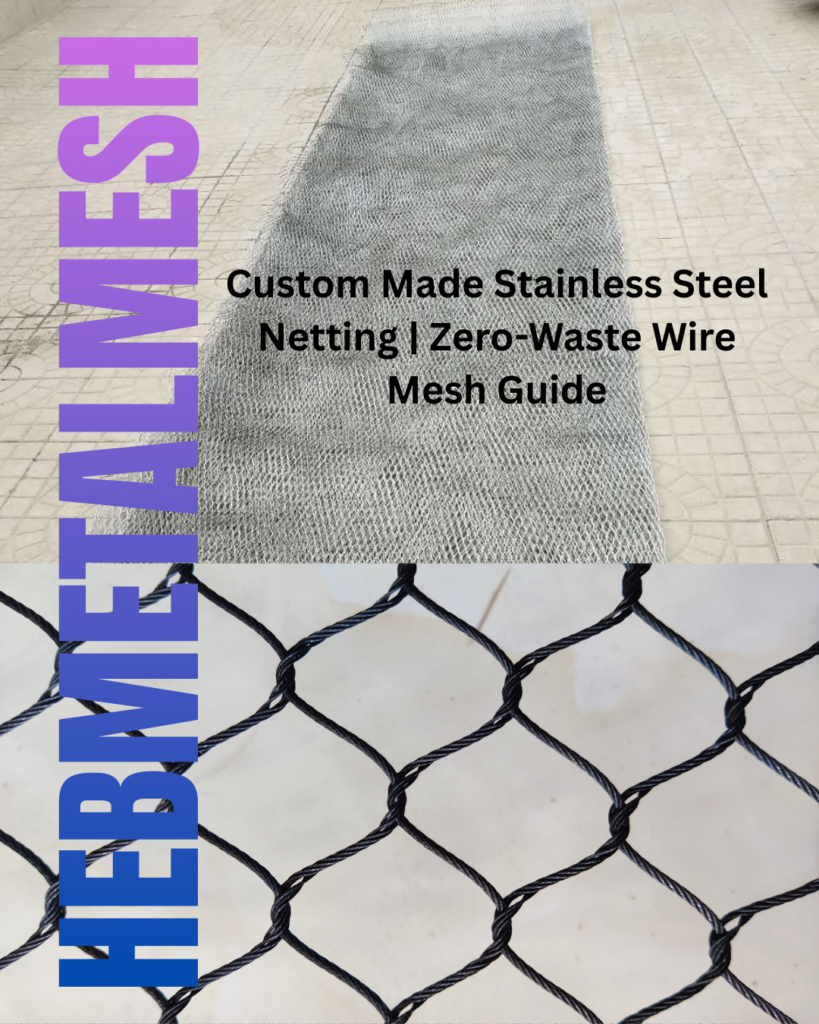
A made-to-measure panel is not cut down from a roll. It is planned out of a coil, and the plan — the netting cut plan — decides how much of that coil ends up inside your enclosure. That share is settled at the drawing stage, long before anyone touches wire, and it is why two projects with identical finished panels can leave the factory carrying very different amounts of leftover rope. Ordering cut to size netting is therefore a specification decision rather than a shopping one: you are buying an opening, a run length and a module; the factory is buying a coil. This guide follows the material from coil to finished panel and shows where material is won and where it is quietly lost.
Executive Summary
Yield, not price per square meter, is the number a custom panel is really sold on, and it is decided before production begins. Three consequences follow. First, an opening that is not a whole number of weave modules leaves a residue that no amount of clever cutting can recover, so the drawing is where material waste reduction actually happens or fails to happen. Second, panel nesting is the cheapest optimization available on any job: a run split into panels that share one coil will beat the same run split by eye, and the difference shows up in the material yield before the first rope is drawn. Third, a quotation that does not state its scrap allowance and its cutting allowance cannot be compared with one that does, because those two lines are precisely where a supplier’s plan is either transparent or hidden. Treat the takeoff, the module and the allowances as a single document, and the custom size netting you order becomes predictable in fit and in quantity at the same time. The reference specification is the animal fence mesh product page.
About to order a run that has to come off one coil? Send us the opening dimensions, the run length and the aperture you have specified. We will return the cut plan, the panel count and the yield it recovers.
Quick Answer: What Is a Netting Cut Plan?
A netting cut plan is the production drawing that turns your openings into panels and your panels into coil lengths. It does three jobs. It rounds every opening to the weave module so the mesh can leave the loom square rather than trimmed. It arranges those panels across the coil — panel nesting — so the shortest usable lengths are consumed first instead of last. And it states the two allowances that absorb the cut itself and the edge turn-back. What comes back to you is a predicted material yield and a panel count you can check against the takeoff. The wider menu of panel formats and constructions sits in our fence netting mesh guide.
Key Takeaways
- A coil is a length and a panel is an area; the cut plan is the bridge between them, and it is drawn before production.
- An opening that is not a whole number of weave modules will always leave residue, so the residue is designed at the drawing, not discovered on site.
- Nesting panels into shared coil lengths is free material; splitting a run by eye is material you have already paid for.
- The scrap allowance and the cutting allowance are the two lines that make one quotation comparable with another.
- Zero-waste netting is a drafting discipline, not a material claim — steel rope is recyclable at end of life, but the cheapest offcut is the one never generated.
A Panel Is Planned, Not Cut
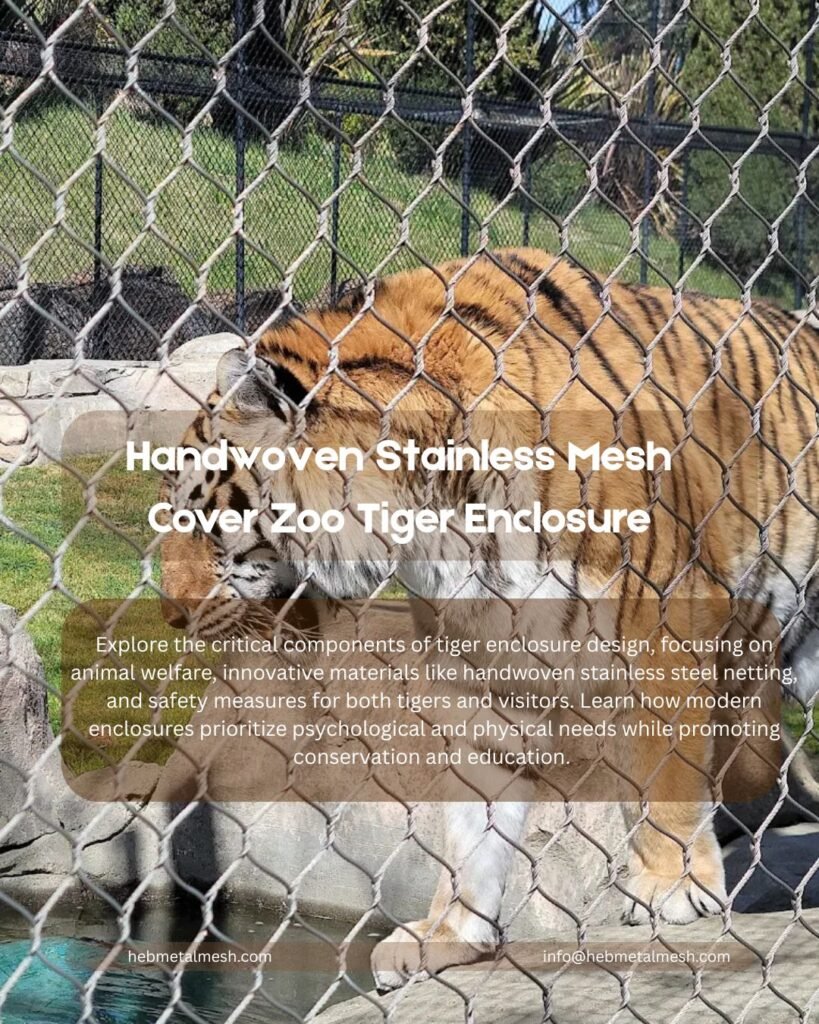
A coil is a length; a panel is an area. All of custom manufacturing lives in that mismatch. Netting made to your dimensions is a different product from netting sold by weight, because the coil arrives in fixed lengths of rope already drawn to the cable diameter you specified, while the panel you need is an opening of some height by some width, framed by an edge rope that has to be turned back and locked. Between the two sits a module: the repeating unit of cable diameter and aperture that the loom can actually produce in one pass. Anything that is not a whole number of modules is residue, and residue is where the first few percent of a job quietly disappears. A supplier who asks only for finished dimensions will always ship more offcut than one who asks for the opening and the module together, because only the second one can round the opening down to something the loom can weave square. It also helps to remember what the loom is doing: it can weave to size in a single pass, but only inside the module it has been set for, so the honest question to a supplier is never how close can you get to my drawing, but which module best fits the opening I already have.
The Cutting Plan: Nesting a Run Into a Coil
Writing the cutting plan is an exercise in compromise, and it happens on paper rather than on the shop floor. Start with the netting takeoff: every panel listed by size, plus the aperture and rope code that fix the module. Then nest those panels into the coil lengths you are buying. A twelve-meter run is not automatically two six-meter panels. If the coil is drawn at eleven and a half meters, two sixes waste half a meter at every panel pair, while a split of 5.2 m, 5.2 m and 1.6 m leaves a keeper length that can be assigned to a gate leaf. The arithmetic is dull and the payoff is not. Larger panels also reduce the number of joins, and fewer joins means fewer places where seam strength has to be proved and more of the run held in one continuous membrane — which is why panels are woven as a maxi panel up to nine meters by eighteen meters where handling and shipping allow. That trade-off between panel size, transport and yield is the subject of the order handoff review that runs alongside the plan.
What the Yield Rate Actually Measures
Material yield is delivered panel area divided by coil length consumed, and it is the only honest way to compare two suppliers offering the same panel. The yield rate does not move with steel prices or freight; it moves with the geometry of your own openings. A rectangular aviary wall that happens to sit on a whole number of modules will nest at a high yield, because almost nothing is left over. A curved or tapered run, an irregular rock face, a wall broken by buttresses — each one forces the plan to cut across modules and each one costs several points of yield that no negotiation can recover afterwards. That is why the waste factor is stated as a multiplier rather than an apology: it prices the rounding, the cut ends, the edge turn-back and the lengths too short to reassign, all of which are known before production and none of which are a surprise to a factory that has drawn the plan properly.
The Two Allowances
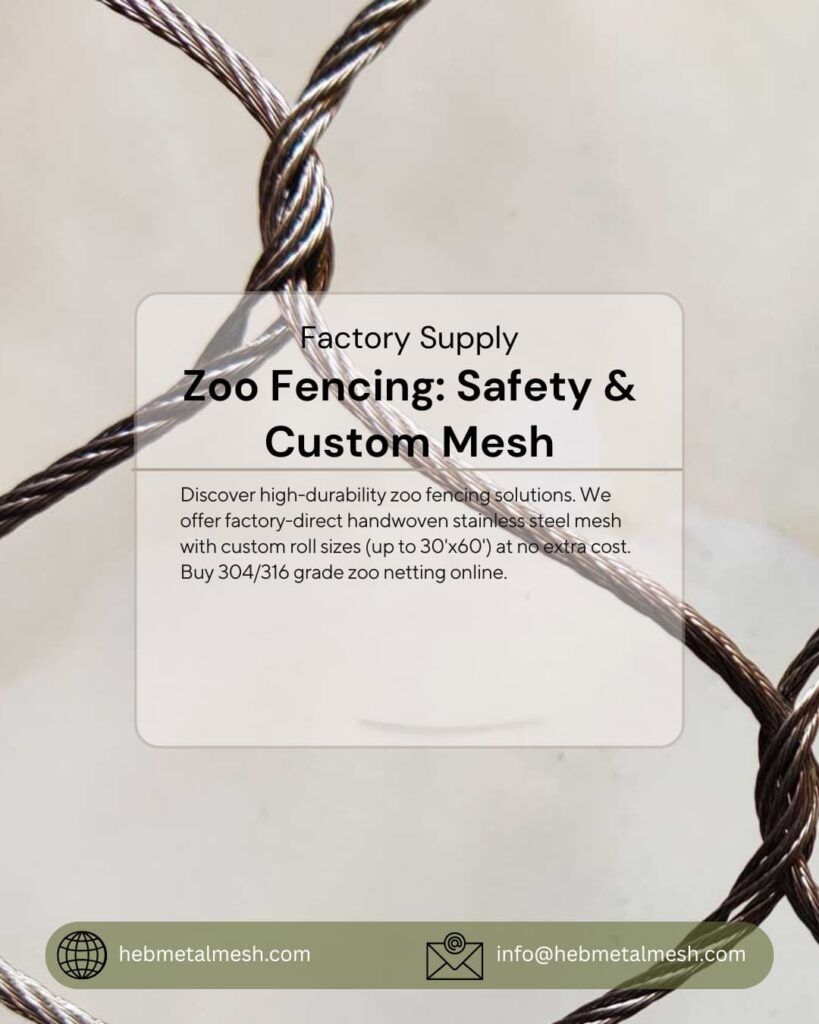
Two lines in a cutting plan are routinely left implicit and should never be. The cutting allowance is the material reserved for the cut itself and for the turn-back that forms the edge rope on each panel — a place where a good plan gives the loom room to finish the edge rather than shaving a module to find it. The scrap allowance covers the lengths that remain after nesting and cannot be reassigned to any panel in the same job, because they are shorter than the smallest module the order needs. The two are different numbers for a reason: one is planned for and consumed in production, the other is planned for and left on the floor. A quotation that names neither is not a cheaper quotation; it is an unquantified one, and the quantity tends to appear later as a change order. Ask for both lines, in meters, before you compare anything else. A worked example of the same discipline applied to a specific animal is in our custom size deer mesh specification.
Recovering the Offcut
An offcut is a length, not simply waste, and offcut recovery is a drafting habit rather than a salvage operation. Keep the leftover lengths on the drawing and they can be assigned before the cut instead of discovered afterwards: a 1.2 m keeper will frame a gate leaf, a short run of spare rope becomes tie tails and replacement edge rope for the repair kit that every zoo-grade panel should ship with. Offcut recycling then splits into two quite different activities. The first is re-weaving: short lengths can be drawn back into small panels or into the repair stock that keeps a long boundary serviceable without a new order. The second happens at end of life, where the alloy itself is fully recyclable and the scrap rate of the whole project — the share of the coil that leaves the site as neither panel nor reusable length — is a fair measure of how well the plan was drawn in the first place.
Designing the Waste Out
The cheapest offcut is the one that is never generated, and every sound plan arrives at that conclusion the same way: by fixing the opening to the module, by nesting the panels into shared coils, and by naming the allowances in meters. That order matters. Designing waste out at the drawing is materially cheaper than sorting, storing and recycling it afterwards, which is the principle behind WRAP‘s guidance on designing out waste in construction, and it is why zero waste netting should be read as a drawing standard rather than a marketing line. It is also the reason a run planned around whole modules tends to be the specification that survives a budget review: the yield is already visible in the takeoff, and a transparent plan is easier to defend than an allowance nobody wrote down. Where the whole job is being costed together, the same figures feed the zoo netting pricing breakdown that explains which lines a quotation is actually made of.
FAQ
It is the drawing that converts your openings into panels and your panels into coil lengths, and states the yield, the panel count and the two allowances before production starts. If a supplier cannot show you one, the plan exists — it simply has not been written down for you.
Usually, but not automatically. The advantage comes from rounding the opening to the weave module and nesting the panels into shared coil lengths. An irregular run planned badly can lose more than a neat one planned well, so the yield figure matters more than the promise.
A wall that lands on whole modules and nests into the coil without forcing a cut across the weave will recover most of the material, with the waste factor covering the cut ends and the edge turn-back. Expect a curved, tapered or heavily broken elevation to cost several points more, and ask for the figure rather than assuming one.
Lengths long enough to weave are the most valuable: they can become gate leaves, repair stock or edge rope. Anything shorter goes back into the steel recycling stream. Either way, the volume should have been declared in the scrap allowance before the order was placed.
Ready to plan the run rather than react to it? Send us the elevations, the run lengths and the aperture band. We will return a cut plan with the yield, the panel count and both allowances written in meters.
A finished enclosure is judged on the panel, but the panel was decided on paper — and the paper is where the material went, or did not. Our animal fence mesh is quoted with the cut plan attached, so the yield, the allowances and the panel count are visible while the order can still be changed.