
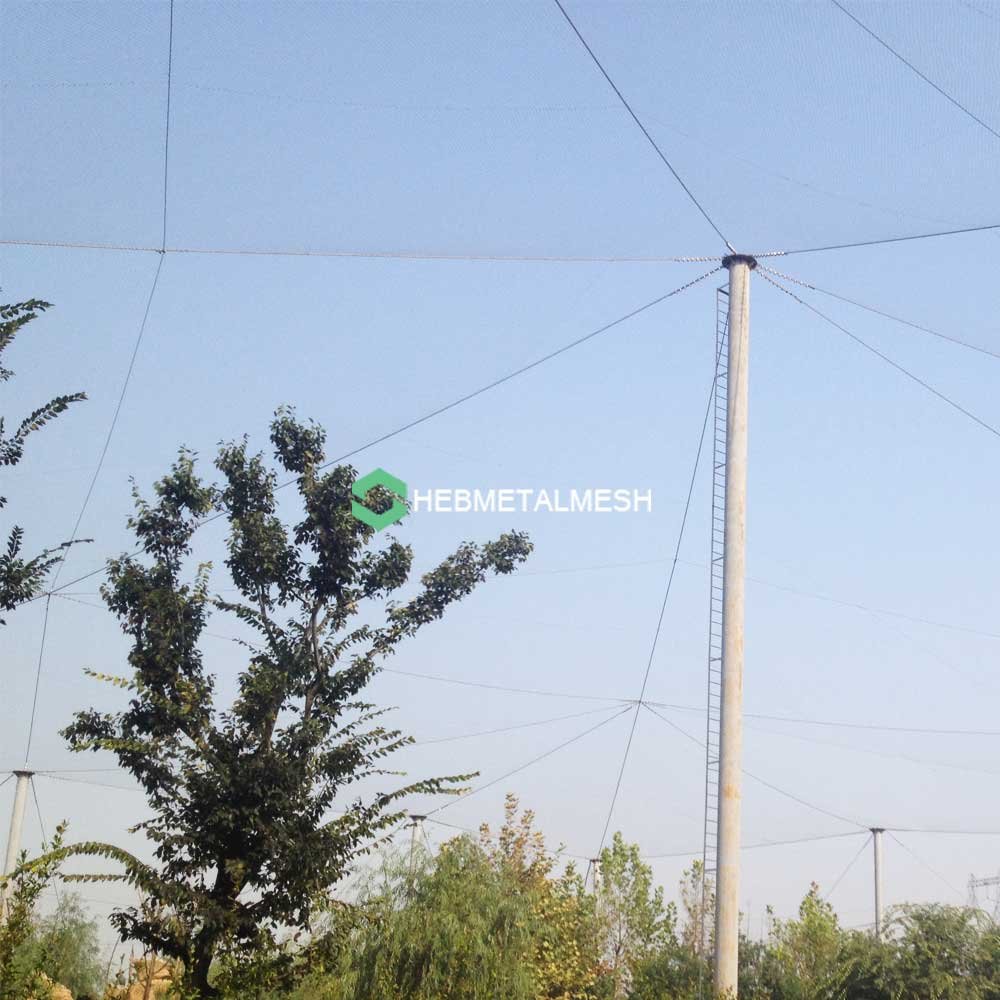
Executive Summary: Steel cable mesh delivers 30+ years of service life with near-zero maintenance — but only if you specify the right grade, aperture, and wire diameter for your environment. Grade 304 suits inland projects; Grade 316 is mandatory within 5–10 miles of coastlines. Mesh aperture ranges from 18mm to 400mm; wire diameter from 1.0mm to 5.0mm. Total Cost of Ownership (TCO) analysis shows stainless steel cable mesh breaks even with galvanized alternatives by Year 4, with functional lifespans exceeding three decades. Always request Mill Test Reports (MTRs) to verify chemical composition before shipment. This guide covers material selection, specification tables, installation best practices, and supplier evaluation criteria for US and European buyers.
🔒 Need the Right Steel Cable Mesh for Your Project?
Get expert guidance on grade selection, custom sizing, and ASTM-compliant solutions — delivered to your spec.
Request a Quote →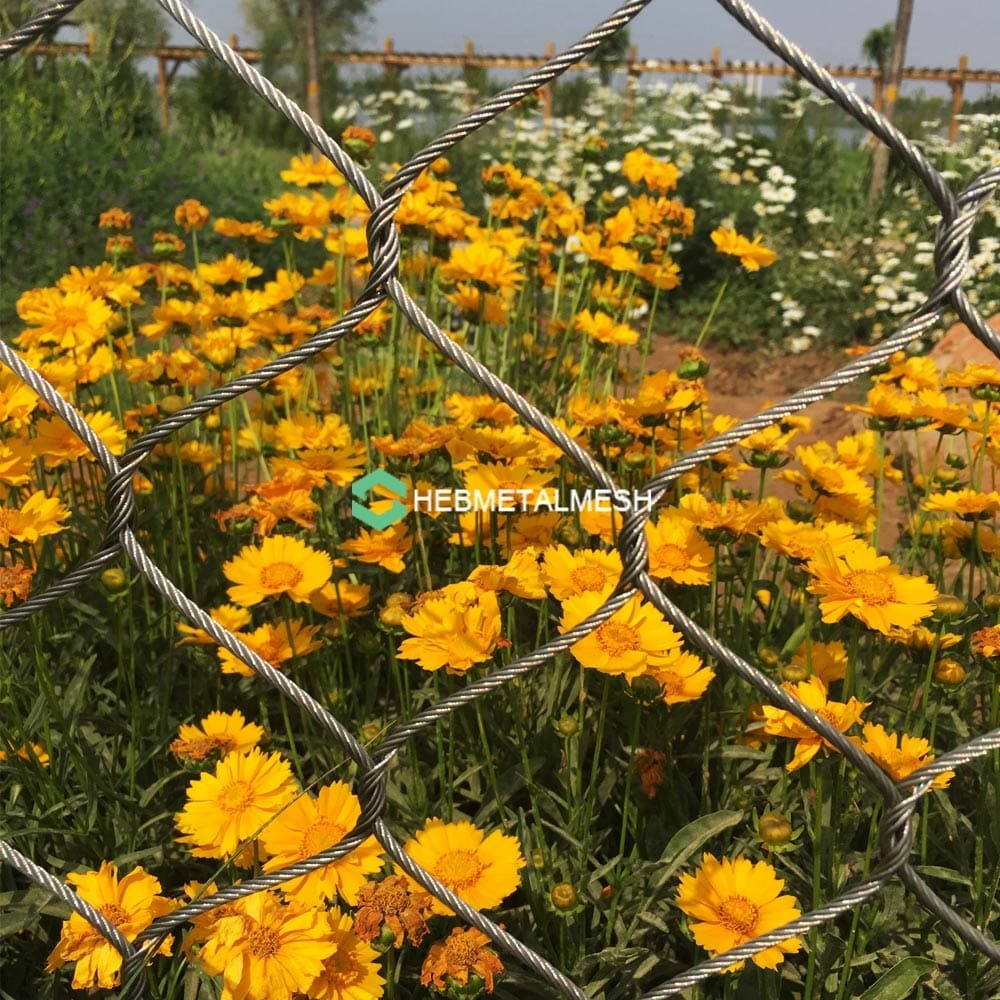
Key Takeaways
| # | Takeaway |
|---|---|
| 1 | Grade matters — 304 for inland, 316 (marine-grade) for coastal projects within 5–10 miles of saltwater |
| 2 | Specs define performance — aperture (18–400mm) and wire diameter (1.0–5.0mm) determine strength, visibility, and flexibility |
| 3 | Verify before buying — always demand Mill Test Reports (MTRs) confirming chromium, nickel, and molybdenum content |
| 4 | TCO wins — stainless steel cable mesh breaks even with galvanized by Year 4, lasts 30+ years |
| 5 | Installation matters — proper tensioning and frame attachment are critical to long-term performance |
What Is Steel Cable Mesh and Why Is It the Preferred Choice for Modern Infrastructure?
Steel cable mesh — also known as wire rope mesh, stainless steel cable mesh, or handwoven stainless steel netting — is a flexible, open-structure barrier system woven or interlinked from stainless steel wire rope rather than conventional wire. Unlike welded wire mesh that relies on fixed joints, cable mesh uses mechanical weaves or seamless ferrule connections, meaning the strength remains as strong as the cable itself — zero weak points at intersections.
Architects and zoo designers across 40+ countries specify our cable mesh netting for its unmatched combination of durability, transparency, and aesthetic appeal.
Core Characteristics
- High tensile strength — maintains shape under extreme tension without sagging
- Extreme corrosion resistance — stainless steel forms a self-healing passivation layer; chromium reacts with oxygen to create a microscopic protective shield against rust
- UV resistance — unlike synthetic netting that becomes brittle under sunlight, stainless steel is unaffected by UV degradation
- Virtually indestructible — withstands impact, weather extremes, and animal force
Steel Cable Mesh vs. Traditional Alternatives
| Feature | Steel Cable Mesh | Galvanized Wire Mesh | Synthetic Netting |
|---|---|---|---|
| Corrosion resistance | Excellent (passivation layer) | Poor (zinc coating depletes) | Moderate (UV degradation) |
| Tensile strength | High (cable construction) | Medium (welded joints fail) | Low (brittle over time) |
| Lifespan | 30+ years | 5–10 years with maintenance | 3–5 years |
| Maintenance | Near‑zero | Regular inspections + touch‑ups | Frequent replacement |
| TCO break‑even | Year 4 | N/A (ongoing costs) | N/A |
Galvanized steel relies on a zinc coating that acts as a sacrificial anode — it agrees to rust first to protect the steel underneath. Once that zinc layer is spent (accelerated by rain, salt, and wind), the raw carbon steel is exposed and tensile strength drops by up to 70%. In professional zoological specifications, galvanized mesh is often banned because flaking zinc can be toxic to animals if ingested — a phenomenon known as “New Bird Disease” in aviaries.
Plastic or synthetic netting suffers UV photodegradation; the sun’s radiation breaks down polymer chains, turning a “heavy-duty” net into brittle material within years.
Steel cable mesh eliminates these failure points, offering a “buy it once” solution that delivers decades of reliable performance.
The table above compares corrosion resistance, tensile strength, lifespan, and maintenance. If you want to dive deeper into why galvanized coatings fail — specifically how the zinc sacrificial layer depletes and causes tensile strength to drop by up to 70% — we have a dedicated technical article: galvanized vs. stainless steel cable mesh – complete comparison.
Key Technical Specifications for Steel Cable Mesh Procurement
Material Grades — 304 vs. 316 Stainless Steel
One of the most critical decisions in steel cable mesh procurement is selecting the correct stainless steel grade. The “hidden” cost of choosing the wrong grade isn’t just the price of the material — it’s the catastrophic expense of removing and replacing a failed system just a few years after installation.
| Grade | Composition | Best For | Cost |
|---|---|---|---|
| 304 | 18% chromium, 8% nickel | Inland, non‑corrosive environments; indoor applications | Lower |
| 316 (Marine‑Grade) | 16% chromium, 10% nickel, 2–3% molybdenum | Coastal projects (within 5–10 miles of saltwater), marine environments, chemical exposure | Higher |
304 Grade is the standard “off-the-shelf” stainless steel — cost-effective and perfectly suited for inland, non-corrosive environments where exposure to salt, heavy pollution, or harsh chemicals is minimal.
316 Grade — often called “marine-grade” — includes 2–3% molybdenum. This specific element drastically increases resistance to pitting and crevice corrosion caused by chlorides. If your project is within 5–10 miles of the coast, or if the mesh will be exposed to de-icing salts or industrial chemical sprays, 316 is not optional — it is a requirement.
Verification: Not all stainless steel is created equal. In a global market, counterfeit or mislabeled materials are a reality. Always request Mill Test Reports (MTRs) for every batch of wire. A legitimate report lists the exact chemical composition — specifically confirming the percentage of nickel and molybdenum. If a supplier cannot provide traceable certification, this is a red flag.
Take large carnivore enclosures as an example — lions and tigers require exceptional impact resistance and corrosion protection. We have designed a dedicated 1/8″ wire × 3″ aperture lion‑enclosure mesh in SS304 (with optional anti‑glare black oxide finish), which has been successfully installed in multiple zoological parks worldwide.
Mesh Specifications — Aperture, Wire Diameter, and Configuration
Mesh aperture (mesh size) ranges from approximately 18 mm (¾″) up to 400 mm (4″). Larger openings offer better visibility but may compromise strength; smaller openings enhance security but reduce transparency.
Wire (cable) diameter ranges from 1.2 mm (3/64″) to 3.2 mm (1/8″). Thicker wires increase strength but reduce flexibility.
Standard specifications from Hebmetalmesh’s Zoo Mesh Series:
| Mesh Size | Wire Diameter | Common Applications |
|---|---|---|
| ¾″ × ¾″ (19mm) | 3/64″ (1.2mm) | Small bird aviaries, songbird enclosures |
| 1″ × 1″ (25mm) | 3/64″ – 1/16″ | Aviaries, small animal habitats |
| 1.5″ × 1.5″ (38mm) | 3/64″ – 1/16″ | Parrot netting, medium bird enclosures |
| 2″ × 2″ (51mm) | 1/16″ – 1/8″ | Primate enclosures, zoo habitats |
| 3″ × 3″ (76mm) Standard | 1/16″ – 1/8″ | Lion habitats, large carnivore enclosures |
| 4″ × 4″ (102mm) | 3/64″ – 1/8″ | Large perimeter fences, overhead netting |
Mesh angle typically features a diamond (rhombus) pattern — the standard 60° diamond opening, with customization available for 20°, 30°, 70°, and 75° angles depending on application requirements.
Manufacturing Methods — Ferrule vs. Knotted vs. Hand-Woven
| Method | Description | Best For |
|---|---|---|
| Ferrule (buckle) mesh | Cables connected by stainless steel ferrules — offers distinct architectural geometry and rigidity | Balustrades, bridges, facade systems |
| Knotted / hand‑woven mesh | Cables wound together — provides maximum flexibility and unbroken sightlines | Zoo enclosures, green walls, aviaries |
| Handwoven construction Premium | Meticulous hand‑weaving ensures superior flexibility and fatigue resistance, absorbing impact and accommodating structural movement | Premium architectural and zoo applications |
Most premium steel cable mesh products are handwoven using CAD-printed moulds to precisely control mesh hole size. This handwoven construction delivers exceptional durability, with the flexible, spring-like nature of wire rope mesh absorbing impact energy while protecting both the contained animals and the structural integrity of the habitat.
The above ranges cover the most common specifications. For a complete HM series parameter matrix — including 30+ combinations from ¾″ to 4″ aperture and 3/64″ to 1/8″ wire diameter — please refer to our complete Zoo Mesh series product specification sheet.
Our classic HM1276 specification (3″ × 3″ aperture × 3/64″ wire diameter) is a pure handwoven product covering 30′ × 60′ per roll. The handwoven structure provides exceptional flexibility and fatigue resistance — it absorbs dynamic impact from animals without structural failure, which is why it is preferred for large‑carnivore habitats.
💡 Pro Tip: The mesh is 100% recyclable with minimal maintenance requirements, representing the perfect marriage of sustainability and performance.

Applications of Steel Cable Mesh in Construction and Architecture
Steel cable mesh has become indispensable across multiple sectors, offering an exceptional combination of strength, flexibility, and corrosion resistance.
Architectural and Safety Applications
- Balustrade infill systems and stair railings — transparent safety without obstructing views
- Bridge safety nets and fall protection systems — high-tensile security for elevated walkways and mezzanines
- Building facade cladding and tensile facade systems — visually striking exteriors that allow natural light and airflow
- Mesh guardrails — unlike traditional barriers, cable mesh offers unparalleled transparency, maintaining architectural integrity while providing robust security
How to choose steel cable mesh for railing? For balustrade applications, ferrule-type mesh with 2″–3″ aperture and 1/16″–3/32″ wire diameter offers the optimal balance of transparency, strength, and code compliance.
Zoological and Environmental Enclosures
- Zoo enclosures, aviaries, and wildlife sanctuaries — virtually indestructible, safely contains any species from songbirds to apex predators
- Large carnivore habitats — 1/8″ cable mesh provides extreme break strength required for lions, tigers, and leopards while maintaining high-transparency aesthetics
- Large-span installations — excellent storm resistance and service lives measured in decades
Zoo mesh selection guide: For large carnivores like lions, choose 3″ × 3″ aperture for perimeter fencing (best visibility, cost-effective) or 2″ × 2″ for barrier-close exhibits and cub habitats (maximum security). The handwoven structure easily conforms to irregular enclosure shapes, tunnels, and overhead “catwalks”.
For bird enclosures, aperture selection is critical — the opening must be smaller than the bird’s head size. From 20mm for small songbirds to 60mm for large flight aviaries, the logic varies. We have written a dedicated stainless steel cable mesh bird‑park selection guide that covers the optimal aperture‑to‑wire diameter balance for different species.
This lightweight yet durable bird aviary mesh is hand‑woven from stainless steel wire, offering exceptional resistance to beak pecking and climbing damage.
Green Wall and Landscape Systems
- Vertical greenery support structures — climbing plant guidance
- Facade greening — mounting mesh panels at a slight offset from structural walls creates dedicated “living pockets” where vines thrive
- Tensile strength balancing — accommodating environmental exposure and botanical load

Quality Assurance and Compliance Standards
International Standards for Steel Cable Mesh
| Standard | Scope |
|---|---|
| ASTM A580 Critical | Stainless steel wire specification |
| ASTM A492 | Stainless steel rope wire specification |
| ASTM E985 | Permanent metal railing systems and stairs for buildings |
| ISO 9001 Critical | Quality management systems |
The Construction Specifications Institute (CSI) recognizes stainless steel mesh as a premium material for building envelopes, noting its unique ability to combine structural integrity with design versatility. Research from the National Institute of Building Sciences (NIBS) highlights how cable mesh systems provide critical safety solutions while maintaining visual transparency in public spaces.
Supplier Evaluation Criteria
When evaluating steel cable mesh suppliers for US and European projects:
- Verify in-house capabilities — wire drawing, braiding, and finishing (electropolishing, passivation, black oxide)
- Assess production capacity — factory size exceeding 3,000 m² supports batch stability and consistent quality
- Request documentation — MTRs, ASTM compliance certificates, ISO certifications
- Check performance metrics — response time ≤3 hours, on-time delivery ≥95%, reorder rate >25%
⚠️ Red Flag: If a supplier cannot provide traceable certification or hesitates to share the mill’s origin, this indicates potential quality issues.
Global Supply Chain Considerations
- Major manufacturing clusters: Anping, Hebei (world’s largest wire mesh production zone — over 80% of China’s metal mesh fabricators) and Ningbo, Zhejiang (strategic coastal position, 15–20 days shipping to North America and Western Europe)
- North American suppliers: Domestic manufacturers offer US-made products conforming to domestic content requirements
- China manufacturing expertise: Only 4–5 factories in China maintain regular production capacity for handwoven stainless steel cable mesh, including Huamei, Ketong, and Liulin

Installation Best Practices for Steel Cable Mesh
Pre-Installation Planning
- Accurately measure the installation area to determine required mesh dimensions
- Determine mesh orientation relative to the frame — diamond pattern alignment affects both aesthetics and structural performance
- Select appropriate fixing method based on substrate (wood, steel, concrete)
Mounting and Tensioning Methods
- Frame attachment using stainless steel clips, ties, or welding
- Tensioning with stainless steel fittings — proper tension prevents sagging and maintains structural integrity
- Connection between mesh panel and frame using stainless steel wire rope
Step-by-step installation for zoo enclosures:
- Measure and plan the enclosure layout
- Gather all materials (mesh panels, posts, tension wire, fixing hardware)
- Install support posts at specified intervals
- Attach tension wire along the frame perimeter
- Install zoo mesh panels, securing with appropriate fixings
- Apply final tensioning and inspect all connections
Procurement Strategy for European and American Buyers
Cost Factors and Value Assessment
| Cost Factor | Consideration |
|---|---|
| Pricing range | Typically USD 5–20 per square meter (varies by grade, aperture, and wire diameter) |
| TCO vs. initial price ROI Break‑even | Stainless steel mesh ROI break‑even at Year 4; 30+ year functional lifespan |
| Maintenance savings | Near‑zero maintenance vs. galvanized’s cycle of inspections, wire‑brushing, and touch‑ups |
| Replacement avoidance | Eliminates the cycle of replacement that plagues low‑cost alternatives |
Steel cable mesh vs welded wire mesh which is stronger? Cable mesh wins on tensile strength because it has no welded joints — the strength remains as strong as the cable itself. Welded wire mesh fails at the joints, where the protective coating is thinnest.
Supplier Selection Criteria
For US and European purchasers, beyond price-centric decisions, focus on:
Collaboration potential — willingness to customize, provide technical support, and maintain transparent communication
Supplier capability — verifiable in-house manufacturing, not just trading
Compliance — ASTM and ISO certifications with traceable MTRs
As a leading stainless steel mesh factory, we hand-weave every roll of zoo netting from 304-grade wire to ensure decades of corrosion-free performance.

FAQ — Frequently Asked Questions About Steel Cable Mesh
Q1: What is the difference between 304 and 316 stainless steel cable mesh?
304 grade is standard stainless steel (18% chromium, 8% nickel) suitable for inland, non-corrosive environments. 316 grade includes 2–3% molybdenum, providing superior resistance to pitting and crevice corrosion from chlorides — essential for coastal projects within 5–10 miles of saltwater or exposure to de-icing salts and industrial chemicals.
Q2: How do I choose the right mesh size and wire diameter for my project?
Mesh aperture ranges from 18 mm to 400 mm — smaller apertures provide better protection and support; larger apertures offer better visibility and ventilation. Wire diameter ranges from 1.2 mm to 3.2 mm — thicker wires increase strength but reduce flexibility. Selection depends on load-bearing requirements, aesthetic preferences, and application needs.
Q3: What quality documentation should I request from a steel cable mesh supplier?
Always request Mill Test Reports (MTRs) for each batch of wire, confirming exact chemical composition (chromium, nickel, molybdenum content) and mechanical properties like tensile strength. Verify supplier compliance with ASTM A580, ASTM A492, and ISO 9001 standards.
Q4: How long does stainless steel cable mesh last in outdoor environments?
Stainless steel cable mesh offers 30+ years of functional lifespan. Grade 316 in zoo environments subject to high-pressure hosing, animal contact, UV exposure, and outdoor weather has service lives measured in decades — significantly longer than galvanized or powder-coated alternatives.
Q5: Can steel cable mesh be customized for specific project requirements?
Yes. Steel cable mesh can be customized with various wire diameters (1.2–3.2 mm), mesh openings (19–102 mm+), and material grades (304, 316). Both ferrule-type and knotted/handwoven constructions are available. Custom fabrication includes cutting, seaming, and ferrule attachment. Standard roll sizes include 10′ × 60′, 20′ × 60′, and 30′ × 60′, with custom sizes available up to 30′ × 60′.
📐 Ready to Specify Steel Cable Mesh for Your Project?
Get ASTM-compliant, custom-sized steel cable mesh with full Mill Test Reports — delivered to your spec.
Get Your Custom Quote →Free technical consultation • Grade 304 & 316 available • Fast US shipping