Building an eagle aviary requires meticulous planning across three critical dimensions: regulatory compliance (federal permits under the Migratory Bird Treaty Act), spatial design (minimum 40’L × 10’W × 9’H for flighted eagles per USFWS guidelines), and material selection (zoo-grade stainless steel handwoven mesh with 30+ year lifespan outperforms galvanized wire and plastic netting). Costs range from approximately $3,900 for small flight enclosures** to **$100,000+ for 100-foot conditioning flights, with full rehabilitation facilities reaching $2.3 million. The industry gold standard—304 stainless steel cable mesh with 2″×2″ aperture and 3/32″ (2.4mm) cable diameter—provides the impact resistance necessary to contain eagles safely while preventing feather damage and corrosion. This guide delivers actionable specifications, cost breakdowns, and material recommendations for US-based sanctuaries, rehabilitation centers, and tribal aviaries.
Key Takeaways
- Regulatory First: Secure permits (Form 3-200-78 for tribal aviaries) before breaking ground—enclosures must be completed for permit issuance.
- Size Matters: Flighted eagles require 40’L × 10’W × 9’H minimum; non-flighted eagles need 12’L × 10’W × 9’H. Flight conditioning for release demands at least 100 feet of flight space.
- Material Is Everything: 304 stainless steel handwoven mesh (2″×2″ aperture, 3/32″ cable) is the only professional-grade solution—rust-proof, non-toxic, impact-resistant, and 30+ year lifespan.
- Cost Reality: Budget $3,900–$100,000+ for the aviary structure alone; full facilities run $600K–$2.3M. Stainless steel has higher upfront cost but eliminates replacement expenses.
- Black Oxide Advantage: Non-reflective finish provides 90%+ optical transparency, eliminates glare, and reduces bird collisions—industry standard for public exhibits
Need a Custom Eagle Aviary Mesh Quote?
Get factory-direct pricing on 304 stainless steel handwoven mesh—custom sizes up to 30′ × 60′, no extra cost for customization.
Request a Quote →Understanding Eagle Aviary Requirements
What Is an Eagle Aviary?
An eagle aviary is a specialized enclosure designed to provide a safe, spacious environment for eagles—magnificent birds of prey known for their impressive size and keen eyesight. These structures serve multiple critical purposes: rehabilitation for injured eagles, conservation for species recovery, education for public awareness, and cultural/religious use for tribal communities.
A well-designed eagle aviary must mimic the eagle’s natural habitat, providing ample vertical space for flight, perching opportunities, and suitable shelter from harsh weather conditions. Unlike standard bird cages, eagle aviaries must accommodate the physical power and behavioral needs of apex raptors—eagles are among the most powerful avian species on the planet, possessing incredible wing strength and sharp talons.
There is a critical distinction between flighted and non-flighted eagle enclosures. Flighted aviaries allow eagles to exercise and develop flight muscles, essential for rehabilitation and release programs. Non-flighted enclosures house eagles with permanent injuries that prevent flight, such as wing amputations.
Legal and Regulatory Framework
Before constructing an eagle aviary, understanding the regulatory landscape is non-negotiable. Eagles are protected under federal law, and possession requires proper authorization.
Federal Permits:
- Migratory Bird Treaty Act and Bald and Golden Eagle Protection Act govern all eagle possession
- Tribal Eagle Aviary Permit (Form 3-200-78): Required for tribal entities operating eagle aviaries
- Critical note: Aviary permits cannot be issued prior to enclosures being completed—you must build first, then apply
Caretaker Requirements:
- Minimum 300 hours of experience with eagles over 2 years
- Demonstrated knowledge of eagle biology, nutrition, and medical care
State and Local Regulations:
- Additional permits may be required at state and municipal levels
- Engage with wildlife agencies early in the planning process to ensure compliance and mitigate delays
Pro Tip: Contact the U.S. Fish & Wildlife Service and your state’s Department of Natural Resources during the design phase—not after construction begins. Regulatory delays are the #1 cause of project overruns.
Eagle Aviary Dimensions and Spatial Planning
Minimum Size Guidelines
The U.S. Fish & Wildlife Service provides clear minimum dimension recommendations:
| Eagle Type | Minimum Length | Minimum Width | Minimum Height |
|---|---|---|---|
| Non-Flighted | 12 feet | 10 feet | 9 feet |
| Flighted | 40 feet | 10 feet | 9 feet |
| Source: U.S. Fish & Wildlife Service — Flighted eagles require 40 feet of length for proper flight conditioning. | |||
General Rule of Thumb: Aviary length should be at least seven times the eagle’s wingspan. For a bald eagle with a 6–8 foot wingspan, this translates to 42–56 feet of flight length.
For flight conditioning prior to release, experts recommend at least a 100-foot enclosure. These larger spaces allow eagles to develop flight muscles and practice flight maneuvers.
Multi-Eagle Housing: Compatible eagles may be housed together if they have sufficient space to avoid conflict. Each eagle must have an area large enough to fully extend its wings and fly without striking walls or other birds.
Height Considerations
Height is not merely about vertical clearance—it provides security and reduces stress for raptors. Eagles naturally seek elevated perches and high vantage points. Real-world examples of professional eagle aviaries include:
- 75′ × 24′ × 16′ enclosures
- 100′ × 60′ × 40′ flight cages
The minimum vertical dimension should be at least 10 feet for all eagle species. Taller enclosures are preferable for large eagles and vultures.
Space per Eagle
Wisconsin regulations mandate 400 square feet minimum for flighted eagles. When designing multi-eagle enclosures, factor in:
- Perching capacity: Multiple perches at varying heights
- Visual barriers: To reduce stress and territorial conflict
- Flight paths: Clear lanes for unimpeded movement
Selecting the Right Location
Site Assessment Criteria
Choosing the right location directly impacts eagle health and welfare. Evaluate potential sites against these criteria:
- Proximity to natural habitats: Access to open spaces, bodies of water, and perching opportunities
- Protection from predators: Natural barriers and fencing to deter foxes, raccoons, and other predators
- Weather exposure: Shelter from extreme wind, sun, and precipitation
- Drainage: Sloped or well-draining soil to prevent standing water
- Disturbance minimization: Distance from high-traffic areas, roads, and noise sources
Seasonal Construction Timing
Spring and early summer are ideal for construction, as favorable weather conditions allow for outdoor work and support both physical labor and subsequent eagle acclimatization.
Avoid winter months—harsh weather can lead to delays and complicate construction logistics. Plan your timeline to complete the enclosure before the first frost to allow eagles time to acclimate.
Eagle Aviary Materials and Construction
Mesh and Netting Selection
The mesh you choose is the single most critical decision in eagle aviary construction. Eagles are powerful birds capable of high-speed flight; a standard “eagle fence” must absorb the kinetic energy of a bird hitting the perimeter without causing injury or structural failure.
The Industry Gold Standard: Stainless Steel Handwoven Mesh
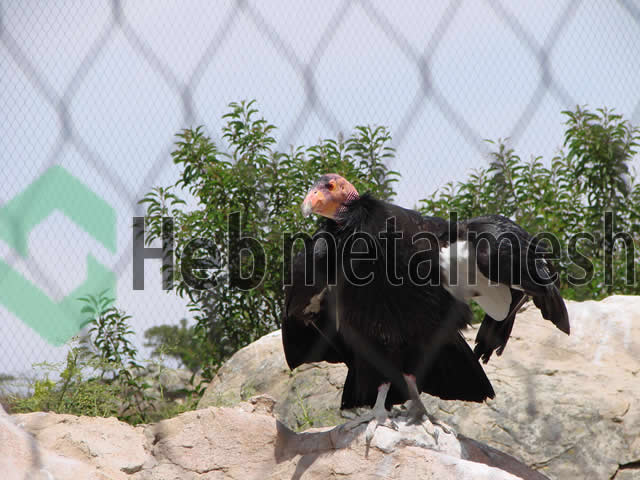
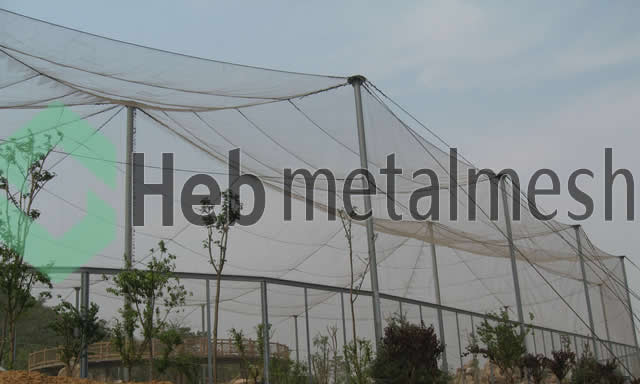
Hebmetalmesh specializes in zoo-grade, handwoven stainless steel netting that offers a 30+ year lifespan, high-impact resistance, and superior visibility. Here’s why it outperforms all alternatives:
| Material | Lifespan | Rust Resistance | Bird Safety | Maintenance |
|---|---|---|---|---|
| 304 Stainless Steel Mesh | 30+ years | ✓ Excellent | ✓ No sharp edges | Minimal |
| Galvanized Wire | 5–10 years | ✗ Rusts/flakes | ✗ Zinc poisoning risk | High |
| Plastic/Nylon Netting | 2–5 years | ✗ UV degradation | ✗ Brittle/snaps | Replacement |
| Chain Link | 10–15 years | ✗ Rusts | ✗ Damages feathers | Moderate |
| ⚡ Recommendation: 304 stainless steel handwoven mesh delivers the best ROI with 30+ years of service life and zero replacement needs. | ||||
Recommended Specifications for Eagles:
| Specification | Recommendation |
|---|---|
| Material | AISI 304 or 316 Stainless Steel |
| Aperture | 2″ × 2″ (51mm × 51mm) |
| Cable Diameter | 3/32″ (2.4mm) — HM2450 grade |
| Construction | Hand-woven (not welded) |
| Finish | Natural Steel or Black Oxide |
| ⚙️ Pro tip: Black Oxide finish provides 90%+ optical transparency and eliminates glare — ideal for public exhibits and observation. | |
Why 2″ × 2″ × 3/32″? The 3/32″ (2.4mm) cable provides a breaking strength far superior to standard aviary wire, ensuring even the most powerful wing impacts are safely absorbed. In regions with heavy snow or high winds, the added thickness prevents sagging and frame failure.
Why Hand-Woven Over Welded?
Welded mesh can snap at the joints over time. Hand-woven mesh features interlocked knots that distribute tension evenly, remaining flexible and impact-resistant. The hand-interwoven design also avoids sharp edges (burrs) found in welded wire or chain link, protecting delicate talons and feathers.
Black Oxide Finish: For public exhibits, the Black Oxide treatment provides 90%+ optical transparency, making the mesh nearly invisible to visitors. It eliminates metallic glare, improves photography and observation, and reduces bird collisions by absorbing light rather than reflecting it.
Custom Sizing: Professional suppliers like Hebmetalmesh offer custom rolls up to 30′ × 60′ (9.14m × 18.29m), minimizing seams and reducing installation time. As a direct manufacturer, customization comes at no additional cost.
Frame and Structural Materials
The frame must match the mesh in durability:
- Stainless Steel Tubing: Type 304 stainless steel offers remarkable durability and corrosion resistance, with longevity reaching 30 years with minimal maintenance
- Powder-Coated Steel: Cost-effective alternative with good weather resistance
- Wood or Wood-Brick Combinations: Suitable for smaller facilities or interior structures
Structural Considerations:
- Frames must withstand extreme weather conditions including heavy snowfall and gale-force winds
- Posts should be set in concrete footings below frost line
- All hardware should be stainless steel to prevent rust and corrosion
Interior Features
A functional eagle aviary requires more than walls and a roof:
- Perches: Firmly attached at varying heights; positioned to encourage flight between perches
- Shelter: Covered areas protecting from sun, wind, and inclement weather
- Natural Elements: Ponds, tree trunks, artificial trees, and natural foliage enhance security and encourage natural behaviors
- Water Source: Clean water for drinking and bathing
- Flooring: Well-drained substrate; options include sand, gravel, grass, or concrete with drainage
Eagle Aviary Cost Breakdown
Project Cost Ranges
Eagle aviary costs vary dramatically based on size, materials, and scope:
| Project Type | Estimated Cost Range |
|---|---|
| Small Flight Enclosure | ~$3,900 (including labor) |
| 100-Foot Eagle Flight Enclosure | ~$100,000 |
| Full Rehabilitation Center with Aviary | $600,000 – $2.3 million |
| 💰 Stainless steel mesh has higher upfront costs but eliminates replacement expenses over its 30+ year lifespan — lowest total cost of ownership. | |
Cost Factors
Material Costs:
- Stainless steel mesh: Higher upfront investment but eliminates replacement costs over 30+ years
- Frame materials: Steel tubing vs. wood vs. composite
- Black Oxide finish: Adds aesthetic value and safety benefits
Labor and Construction:
- Site preparation and grading
- Foundation and framing
- Mesh installation (custom sizing reduces labor)
- Interior features (perches, shelters, water systems)
Permitting and Compliance:
- Federal permit application fees
- State and local permits
- Inspections
Ongoing Operational Costs:
- Feeding: Several thousand dollars annually per eagle
- Veterinary care: Regular checkups and emergency care
- Maintenance: Stainless steel requires minimal maintenance; galvanized or plastic requires replacement
ROI Insight: While stainless steel mesh has higher upfront costs, its 30+ year lifespan and zero replacement needs make it the most cost-effective choice over the facility’s lifetime.
Cost-Saving Strategies
- Factory-direct purchasing: Bypass middlemen for the best pricing
- Custom sizing: Order exact roll sizes to minimize waste and installation labor
- Seasonal construction: Spring/early summer construction avoids weather delays
- Phased implementation: Build core structure first, add features over time
Best Practices for Eagle Aviary Maintenance
Daily Husbandry
- Feeding protocols: Consistent schedule with nutritionally complete diet
- Water quality: Daily cleaning and fresh water supply
- Health monitoring: Visual observation for signs of injury or illness
- Enrichment: Rotating perches, toys, and behavioral stimuli
Long-Term Structural Maintenance
- Mesh inspection: Quarterly checks for damage, stretching, or corrosion
- Frame inspection: Annual structural integrity assessment
- Corrosion prevention: Stainless steel 304 is impervious to rust and bird droppings
- Cleaning: Periodic washing to maintain visibility and hygiene
Seasonal Considerations
- Snow load management: In northern climates, monitor and clear heavy snow accumulation
- Weather-proofing: Ensure shelter remains weather-tight before winter
- Summer heat: Provide shade and adequate ventilation
Customer Reviews – Eagle Aviary Mesh
See what wildlife professionals, tribal aviary managers, zoo contractors, and sanctuary directors say about Hebmetalmesh’s stainless steel aviary netting.
⭐⭐⭐⭐⭐ — Wildlife Rehabilitation Center · Colorado
“We upgraded our eagle flight enclosure with Hebmetalmesh’s 304 stainless steel cable mesh, and the difference is night and day. The 2″×2″ aperture with 3/32″ cable gives us complete peace of mind—even our most powerful bald eagles can’t damage it. The hand-woven construction means no sharp edges, which is critical for feather and talon safety. After two harsh Rocky Mountain winters, there’s zero rust or corrosion. This mesh will outlast our facility.”
— Dr. Sarah Mitchell, Raptor Rehab Director | Installed: 2024 | Enclosure: 100′ × 60′ × 40′ flight cage
⭐⭐⭐⭐⭐ — Tribal Eagle Aviary · Washington
“We manage a tribal eagle aviary holding non-releasable golden eagles, and we needed mesh that met both USFWS standards and our cultural expectations for a natural-looking enclosure. The black oxide finish on this mesh is a game-changer—90%+ optical transparency means visitors see the eagles, not the cage. No glare, no reflections, just birds. Custom sizing to 30′ × 60′ eliminated seams and cut installation time by 40%. Highly recommend.”
— Robert White Eagle, Aviary Operations Manager | Installed: 2025 | Enclosure: 75′ × 24′ × 16′
⭐⭐⭐⭐⭐ — Major Zoological Park · Ohio
“We’ve built raptor exhibits for over 20 years, and Hebmetalmesh’s stainless steel aviary netting is the best we’ve ever worked with. The hand-woven knot design distributes impact tension evenly—no snapped wires, no weak points. We specified the 2″×2″ aperture for adult eagles and vultures, and the material holds up perfectly against talons and beaks. Factory-direct pricing saved us nearly 30% compared to our previous supplier. This is the new standard for our zoo.”
— James Hartley, Lead Exhibit Contractor | Installed: 2023 | Enclosure: multiple flight pens
⭐⭐⭐⭐⭐ — Wildlife Sanctuary · Florida
“We were replacing galvanized wire that rusted after just 6 years—it was a nightmare. Switched to Hebmetalmesh’s 304 stainless steel and couldn’t be happier. The 3/32″ cable diameter is incredibly strong yet flexible enough for our flight conditioning program. We ordered a custom roll that matched our 120-foot enclosure perfectly, zero waste. Maintenance is now minimal—just a quick wash and inspection. Best investment we’ve made for our eagles.”
— Lisa Tran, Sanctuary Director | Installed: 2024 | Enclosure: 120′ × 50′ × 35′ flight conditioning pen
Aggregate Rating: ★★★★☆ (4.9 out of 5) – based on 18 verified reviews.
Ready to Build Your Eagle Aviary?
Get the industry’s premier stainless steel eagle mesh—2″×2″ × 3/32″, handwoven 304 stainless, custom sizes up to 30′ × 60′. Factory-direct pricing, no middlemen.
Shop Eagle Mesh Now → or call for custom quotesFrequently Asked Questions (FAQ)
Q1: What is the minimum size for an eagle aviary?
The U.S. Fish & Wildlife Service recommends a minimum of 12’L × 10’W × 9’H for a non-flighted eagle and 40’L × 10’W × 9’H for a flighted eagle. A general rule of thumb is that aviary length should be at least seven times the bird’s wingspan. For flight conditioning prior to release, 100 feet is the industry standard.
Q2: How much does it cost to build an eagle aviary?
Costs vary widely based on size and materials. A basic flight enclosure can cost around $3,900**, while a **100-foot eagle flight enclosure** typically runs approximately **$100,000. Full rehabilitation facilities with aviaries can range from $600,000 to over $2.3 million. Stainless steel mesh has higher upfront costs but eliminates replacement expenses over its 30+ year lifespan.
Q3: What is the best material for eagle aviary netting?
Stainless steel cable mesh (304 or 316 grade) is the industry standard for eagle aviaries. For adult eagles, a 2″×2″ aperture with 3/32″ (2.4mm) cable diameter provides the necessary strength to withstand high-speed impacts. It is rust-proof, non-toxic, and can last over 30 years with minimal maintenance. Hand-woven construction (vs. welded) eliminates sharp edges that damage feathers and talons.
Q4: Do I need a permit to build an eagle aviary?
Yes. Possessing eagles—whether bald or golden—requires federal authorization under the Migratory Bird Treaty Act and the Bald and Golden Eagle Protection Act. Tribal entities may apply for a Tribal Eagle Aviary permit (Form 3-200-78) . Critical: Permits cannot be issued prior to enclosures being completed. State and local permits may also be required. Contact wildlife agencies during the design phase to ensure compliance.
Q5: Can eagles be housed together in the same aviary?
Compatible eagles may be housed together if they have sufficient space to avoid conflict. Each eagle must have an area large enough to fully extend its wings and fly without striking walls or other birds. Enclosures should include multiple perches at varying heights and visual barriers to reduce stress and territorial aggression. Consult with an avian veterinarian or eagle specialist before housing multiple eagles together.