1. Hero / Introduction: Choosing the Best Fence Mesh for Your Primate Exhibit
Selecting the right fence mesh is arguably the single most important safety decision you will make for a primate exhibit. The integrity of your barrier determines not only the security of your animals and the safety of the public but also the long-term maintenance costs and the overall quality of the habitat.
However, there is no universal “best” mesh. The optimal choice is determined by a precise balance of factors, including the primate species, local climate conditions, and the required balance between high-security containment and aesthetic visibility. Whether you are aiming for a high-traffic zoo exhibit or a private wildlife sanctuary, finding the right material is essential to creating a secure, thriving environment.
Not sure which mesh fits your project?
Our engineering team is here to help. Get expert guidance on selecting the right gauge, aperture, and finish for your specific enclosure requirements.
Consult with Our Experts for Free2. Why Stainless Steel is the Gold Standard for Fencing
When it comes to fencing, there is no substitute for the structural performance of stainless steel. While standard netting serves various containment purposes, “Fence Mesh” used for structural barriers must meet a much higher standard of performance.
Superior Material Performance
Stainless steel is the industry-preferred material because it addresses the core challenges of animal containment in one robust package:
- Ultimate Durability: It resists the constant wear, biting, and pulling associated with active primate exhibits.
- Non-Toxic Safety: Unlike wood or coated materials that may degrade or chip, high-grade stainless steel is safe for curious primates that may chew on their surroundings.
- Weather-Resistant Resilience: Designed to handle extreme temperature fluctuations, high humidity, and direct UV exposure, it maintains its integrity without the rot or corrosion seen in traditional fencing materials.
Why Fence Mesh Requires Higher Tensile Strength
It is important to distinguish between general netting and dedicated Fence Mesh. Because a fence acts as a primary structural barrier rather than just a secondary enclosure, it experiences different physical forces:
- Dynamic Loading: Fences are often used as climbing structures. They must withstand the sudden, high-force impact of active primates leaping onto or pulling against the barrier.
- Tensioned Stability: Fence mesh is designed to be tensioned across frames, requiring a specific high-tensile strength to remain rigid and secure without sagging over time.
- Rigidity Under Stress: While netting might be designed for flexibility, fence mesh is engineered to hold its shape under continuous physical interaction, ensuring that structural boundaries—and the security they provide—never falter.
While selecting the right mesh is crucial, the success of your project begins in the design phase; see how to align your goals with local standards in our step-by-step guide to planning your monkey habitat.
3. Categorizing the “Best” Mesh by Enclosure Type
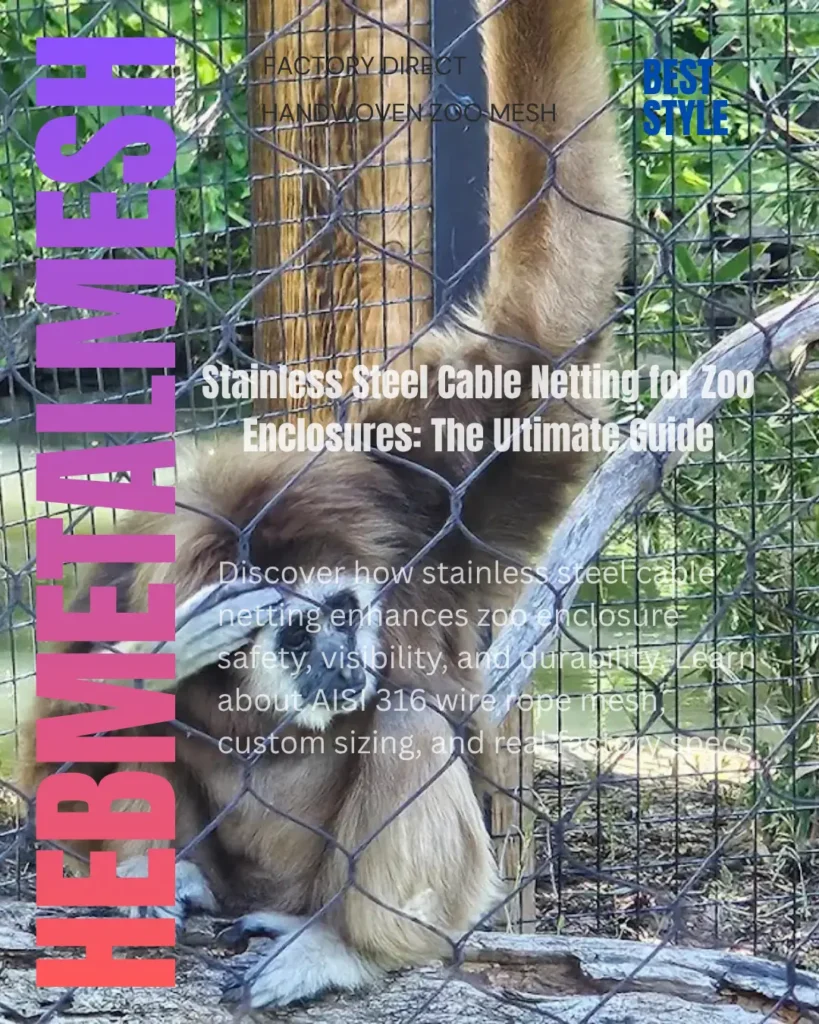
The definition of “best” changes based on your specific operational goals. We categorize our fence mesh solutions to match the unique requirements of your environment, to see how stainless steel fencing fits into a complete zoo enclosure strategy, explore our full monkey enclosure zoo resource.
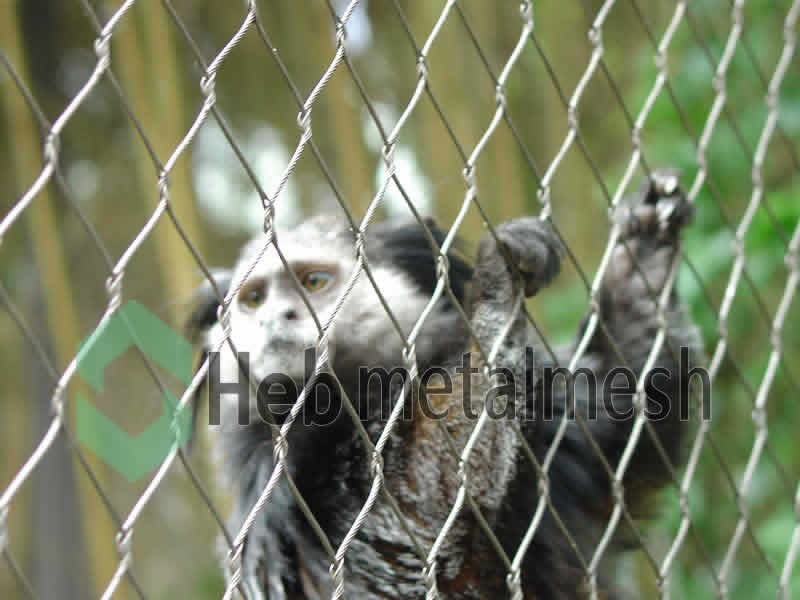
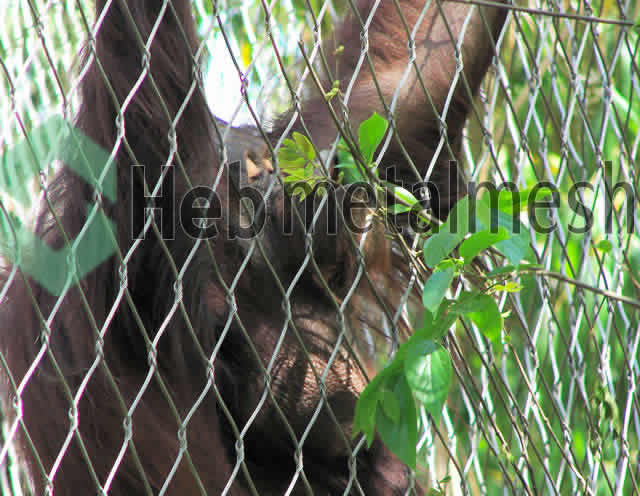
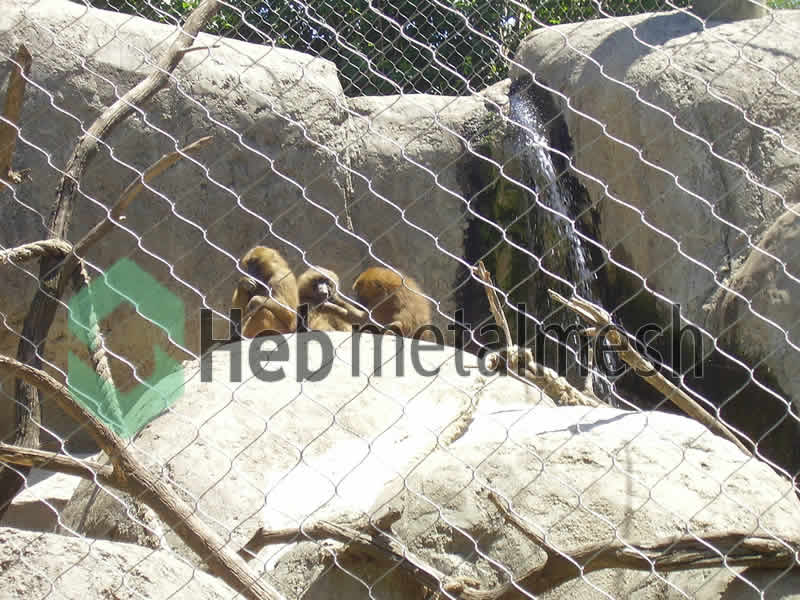
- For Zoo Exhibits: The priority here is the visitor experience without compromising safety. The “San Diego Zoo” standard focuses on aesthetic transparency; our mesh is designed to be virtually invisible to the naked eye. We recommend configurations that provide maximum visibility while incorporating anti-climb properties to ensure monkeys stay within their designated zones, creating an immersive, naturalistic display.
- For Research & Sanctuaries: In these settings, security and longevity are paramount. We provide high-security, heavy-duty mesh designed to withstand years of rigorous use. These solutions prioritize long-term, maintenance-free operation, ensuring that facilities can focus on animal rehabilitation and research without the constant need for structural repairs or fencing replacements.
- For Private & Garden Enclosures: If you are building a habitat in a residential or private setting, the mesh must be as functional as it is beautiful. We focus on ease of installation and aesthetic integration, allowing the enclosure to blend seamlessly into your existing landscaping. These designs are highly customizable, ensuring a perfect fit for unique garden dimensions while maintaining a high-end, polished look.
For a deeper dive into primate enrichment, verticality, and general habitat welfare, please refer to our comprehensive guide to monkey enclosure requirements.
4. How to Compare Fence Mesh Specifications
Selecting the right technical specifications is vital for both containment effectiveness and structural longevity. Use this guide to compare your options:
Aperture Size (Hole Size)
The aperture must be calibrated to the physical characteristics of your primates to ensure safety:
- Small Primates: Require a tighter aperture (typically 1″ x 1″) to prevent paws or limbs from getting stuck or passing through the mesh.
- Large Primates: Benefit from a slightly wider aperture (up to 2″ x 2″) which provides the necessary strength to support their weight during climbing while preventing them from biting the wire or manipulating the knots.
Wire Gauge (Thickness)
In fencing, thickness equals structural support. A higher wire gauge provides the necessary rigidity for fence applications, ensuring the barrier remains taut under tension. Thicker wire is essential for larger primates that exert significant force on the barrier, preventing the mesh from sagging or deforming over time.
Finish Types: Natural vs. Black Oxide
Visual clutter is a major consideration for fence lines, especially in zoo or natural settings:
- Natural Stainless Steel: Provides a bright, clean look that is exceptionally durable and corrosion-resistant.
- Black Oxide Finish: The superior choice for reducing visual clutter. By minimizing light reflection and glare, the black finish makes the mesh appear almost transparent against the background, allowing the animals—not the fence—to be the center of attention.
Now that you have identified the right specifications for your habitat, you can browse our full range of stainless steel rope mesh netting here to find the perfect fit for your project.
5. Installation & Structural Best Practices
Proper installation is the final key to ensuring a long-lasting and secure enclosure. Even the highest-quality mesh requires correct mounting to perform effectively in a fencing application.
Frame Stability: Mounting & Tensioning
- Tensioning: When installing fence mesh, achieving the correct tension is critical to prevent sagging. Ensure your frame is rigid enough to support the tensioning process without bowing under the stress.
- Frame-to-Mesh Hardware: Use professional-grade stainless steel ferrules and tensioning hardware. Always ensure that fasteners are spaced consistently to distribute the load evenly across the entire surface area of the mesh.
Security Details
- Anti-Climb Top Rails: To prevent primates from climbing over the top of the fence, integrate angled or curved top rails that make the barrier inaccessible from the inside.
- Base-Locking Techniques: To prevent digging or lifting at the bottom of the enclosure, anchor the base of the mesh securely into concrete footings or a heavy-duty sub-frame. This creates a seamless, gap-free perimeter that maintains its structural integrity against direct physical pressure.
6. Product Selection & How to Buy
Our stainless steel fence mesh is engineered to meet the demanding requirements of primate containment, combining industry-leading durability with precision design.
Quick Specifications
- Material Grades: Available in 304 Stainless Steel (standard outdoor use) or 316 Stainless Steel (premium corrosion resistance for high-humidity or coastal environments).
- Aperture Range: Customizable options from 1″ x 1″ to 2″ x 2″ to accommodate different species’ safety needs.
- Finish Options: Choose between the classic Natural stainless steel look or a glare-reducing Black Oxide finish for superior exhibit visibility.
Why Buy from Us?
We go beyond selling materials; we provide custom-engineered solutions for your specific project.
- Custom Engineering: Our team calculates the precise mesh gauge and aperture required for your primate species, ensuring the highest safety standards.
- Worldwide Shipping: We support projects globally, delivering premium-grade mesh to zoos, sanctuaries, and private facilities wherever they are located.
Ready to get started?
See our projects in action or reach out for a custom-engineered solution tailored to your habitat.
Frequently Asked Questions about Primate Fence Mesh
Yes, our stainless steel mesh is highly versatile. It can be tensioned and secured to existing steel or wood framing, provided the structure is rigid enough to handle the required tensioning. We recommend a consultation to ensure your current frame can support the necessary safety standards for your specific primate species.
Proper tensioning is crucial for fence stability. We recommend using stainless steel tension cables along the perimeter of the mesh, combined with specialized tensioning hardware. This ensures the mesh remains taut and wrinkle-free, maintaining both its structural integrity and its aesthetic transparency.
The mesh itself is climbable, which is natural for arboreal primates. However, when paired with our anti-climb top rails or angled barrier designs, the system becomes highly effective at preventing escapes. We work with you to design the configuration that keeps your primates safely within their zone.
Our Black Oxide finish is specifically engineered for longevity. It is chemically bonded to the stainless steel, meaning it will not flake or peel, even under constant UV exposure and rain. It is the premier choice for reducing light reflection and providing an unobstructed view of your enclosure.
Post spacing depends on the wire gauge and the tension requirements of your enclosure. Generally, closer post spacing provides greater structural rigidity. Our engineering team provides custom layout recommendations based on your specific enclosure size and the activity level of the primates housed within.
Yes. Upon purchase, we provide comprehensive technical guidelines and support to ensure your installation team can properly mount, tension, and secure the mesh. For complex or large-scale zoo projects, we are available for ongoing technical consultation.