
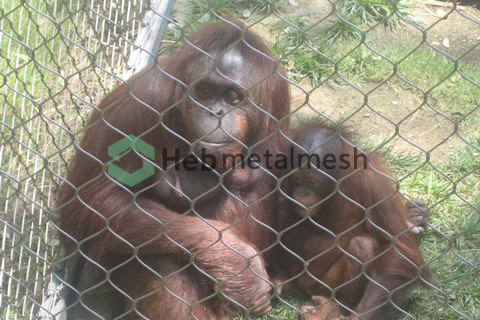
Introduction: Why Gorilla Enclosure Design is Critical
The gorilla. A creature of profound intelligence, complex social structures, and immense physical power. Housing these magnificent primates responsibly represents one of the most critical challenges in modern zoological park design. It demands more than just a large space; it requires an enclosure that is fundamentally impenetrable, aesthetically pleasing, and, most importantly, conducive to the animal’s psychological and physical well-being.
The core problem, historically, has been the failure of traditional materials. Whether it was heavy-duty rope, rigid bars, or less durable metal alloys, these materials inevitably succumb to the combination of a gorilla’s raw strength and remarkable ingenuity. Gorillas actively test their environment, exploiting weak points, chewing through inferior materials, or prying open poorly sealed joints. This leads not only to catastrophic safety risks—for both the animals and the public—but also to debilitatingly high maintenance costs and constant enclosure downtime.
The modern solution, universally adopted by leading institutions, is specialized, handwoven stainless steel zoo mesh, which forms the definitive standard for modern gorilla nets. This material represents a paradigm shift, moving from restrictive caging to creating near-invisible, flexible, and utterly robust barriers.
As specialists in large-scale zoo barrier solutions, Shijiazhuang Netting Trading Co., Ltd. (Hebmetalmesh) has spent decades developing, manufacturing, and supplying this advanced primate netting to zoos and wildlife parks across the globe. Our expertise is rooted in understanding the biomechanics of large primates and translating that knowledge into engineering specifications that guarantee a lifetime of safety and compliance. We are not simply selling a product; we are providing expert guidance necessary to build the ultimate gorilla habitat.
Chapter 1: Understanding the Need for Specialized Gorilla Nets
A common error in enclosure design is underestimating the true capability of the resident species. When dealing with gorillas, this error can have disastrous consequences.
1.1. The Gorilla’s Strength and Behavior
The Western Lowland Gorilla, the most common species in zoological settings, possesses physical attributes that far surpass human capability:
- Immense Physical Power: Adult silverbacks can weigh up to 450 lbs (205 kg) and possess pulling and lifting strength estimated to be 4 to 9 times that of a well-conditioned human. They can exert massive force on tension points, rapidly degrading standard fencing.
- Bite Force: While often used for vegetation, a gorilla’s bite force is significant. Inferior wire meshes or rope nets can be compromised through concentrated biting and chewing, particularly at connection points or knots.
- Dexterity and Problem-Solving: Gorillas are highly intelligent and possess exceptional manual dexterity. They are not simply looking for a weak spot; they are actively testing latches, knots, and joins. Any component that relies on a simple, predictable mechanical connection—like a welded joint—is a potential target for failure.
- Testing and Repetition: Gorillas are persistent. They will repeatedly interact with the netting, using it as a climbing structure, a resting hammock, and a challenging toy. The enclosure must withstand this continuous, high-load interaction without showing fatigue or deformation.
This combination of strength and cognitive ability makes standard perimeter fencing completely inadequate. Only a purpose-built, highly durable material, often referred to as gorilla enclosure netting, can meet this unique challenge.
1.2. The Three Pillars of a Successful Gorilla Enclosure
Effective design balances three equally critical priorities, all of which rely directly on the integrity and specification of the gorilla nets used.
A. Animal Safety
The primary concern must be the prevention of injury. This includes:
- Preventing Entrapment: Mesh size must be meticulously calculated to prevent fingers, toes, or limbs from becoming caught, which can lead to serious trauma.
- Eliminating Sharp Edges: Manufacturing must be seamless. Any burrs or sharp points created during welding or cutting pose an immediate laceration risk during climbing or play.
- Non-Toxicity: The material must be non-reactive and non-toxic, preventing harm if an animal chews on or ingests small fragments.
B. Visitor Safety & Viewing
The barrier must offer absolute containment while enhancing the educational and viewing experience.
- Unobstructed Visibility: Stainless steel cable mesh, due to its thin profile and open structure, becomes virtually invisible from a short distance, offering a panoramic viewing experience that solid bars or thick wire cannot match.
- Guaranteed Containment: The sheer breaking strength of the stainless steel ensures that even under repeated, powerful impact, the integrity of the barrier is never compromised.
C. Animal Welfare & Enrichment
Modern primate netting should be an integral part of the enrichment plan, not merely a barrier.
- Three-Dimensionality: The flexibility of the mesh allows architects to design soaring, complex, three-dimensional spaces, including vertical climbing walls, suspension bridges, and tensioned resting platforms, mimicking the natural forest canopy.
- Thermal and Light Comfort: The open structure allows for maximum natural light and optimal air flow, contributing to a healthier environment.
[Image: Three gorillas relaxing on a large, suspended mesh hammock in a naturalistic habitat]
Chapter 2: Why Stainless Steel is the Unbeatable Material for Gorilla Nets
When investing in a permanent, safety-critical enclosure for animals of this caliber, material choice is paramount. Experience has proven that no other material rivals stainless steel for gorilla enclosure netting.
2.1. The Failure of Alternatives
The lessons learned from previous generations of enclosure design underscore the necessity of high-grade stainless steel.
- Rope Nets: These were an early attempt at flexible barriers but pose multiple dangers. They are highly susceptible to chewing and eventual breakage by gorillas. Furthermore, they degrade rapidly due to UV exposure, rot, and mildew, requiring costly, cyclical replacement and creating significant security lapses between maintenance periods.
- Galvanized Steel Nets: While strong, galvanized steel relies on a zinc coating for corrosion protection. Once the protective layer is scratched or compromised—an inevitability with powerful primates—the underlying steel rusts rapidly. The flaking zinc is also toxic if ingested, posing a serious health risk to the gorillas.
- Heavy Chain-Link Fencing: This material is too rigid, creating harsh, angular lines that detract from the natural aesthetic. More dangerously, the sharp twisted ends of chain-link are easily exposed when tensioned or deformed, presenting a severe risk of laceration.
2.2. The Superiority of Stainless Steel
The handwoven stainless steel zoo mesh fabricated by Hebmetalmesh is specified specifically for its inherent material advantages. We primarily use AISI 304 and the marine-grade AISI 316 for demanding environments.
- Unmatched Tensile Strength: Stainless steel cable systems are engineered to absorb and distribute extremely high forces without failing. This is the only way to guarantee a permanent barrier against the power of a silverback.
- Total Corrosion Resistance: Unlike galvanized steel, stainless steel’s resistance to corrosion is inherent to the alloy itself. It is impervious to rain, extreme humidity, animal waste (which is highly acidic), and de-icing chemicals. This ensures the structural integrity remains absolute for decades.
- Non-Toxic and Hygienic: Both 304 and 316 grades are non-leaching, non-reactive, and completely safe for animal contact. Their smooth, non-porous surface is easy to clean and disinfect, helping maintain optimal hygiene standards within the primate netting structure.
- UV Resistance and Durability: Stainless steel does not break down or become brittle under direct sunlight, a critical factor for large, open-air habitats. This resilience is what makes gorilla nets a true “install-and-forget” solution.
Chapter 3: The Hebmetalmesh Difference: Handwoven vs. Machine-Made Nets
The quality of the material is only half the equation; the method of fabrication is equally, if not more, critical to the enclosure’s long-term security. Our commitment to specialized handwoven fabrication is the primary reason why Hebmetalmesh gorilla nets stand apart.
3.1. The Critical Importance of the “Handwoven” Technique
The method involves skilled artisans carefully weaving individual stainless steel cables, strand by strand, into the final mesh structure. This painstaking technique achieves crucial structural properties that machine-welding simply cannot replicate.
Key Benefit: No Weak Points
The single greatest failure point in any machine-made wire product is the joint.
- Welded Joints (The Flaw): When two wires are machine-welded together, the heat process locally changes the crystalline structure of the metal, creating a stress riser—a point of weakness. Under the high, dynamic loads exerted by a gorilla, these brittle welds are the first to fracture.
- Handwoven Joints (The Strength): In the handwoven technique, the cables cross, interlock, and wrap around each other without welding. This creates a flexible, dynamic node. The net distributes stress and load evenly across the entire mesh structure, not just at one brittle point. When a gorilla pushes against the net, the structure flexes, absorbs the energy, and returns to form.
[Diagram: Handwoven vs. Welded Joint showing stress distribution comparison]
Key Benefit: Flexibility & Drape
Our handwoven mesh possesses an extraordinary tensile flexibility, meaning it conforms effortlessly to any architectural vision.
- It drapes naturally over complex structures—domes, cantilevered viewing tunnels, and irregular vertical surfaces—without requiring excessive, difficult-to-manage tension.
- This flexibility minimizes the risk of creating dangerous high-tension points on the supporting structure, ensuring a safer overall installation.
Key Benefit: Damage Containment
The weaving pattern ensures maximum system resilience.
- If a single strand of cable is ever compromised (for example, by extreme wear or an unforeseen external impact), the localized damage is contained. The surrounding interwoven strands hold the compromised section securely in place, preventing a catastrophic cascade failure or unraveling that could breach the enclosure.
3.2. Our Factory’s Commitment to Quality
Shijiazhuang Netting Trading Co., Ltd. (Hebmetalmesh) ensures that every square meter of primate netting shipped adheres to the highest international standards. We use only traceable, certified stainless steel and maintain rigorous quality control over the weaving process. Every mesh panel is custom-fabricated to the architect’s exact drawings, arriving on-site ready for installation, which significantly reduces labor time and on-site errors.
Ready to design your Gibbon habitat, read out guide on Best Materials for Large Primate Habitat Construction | Engineering Guide
Chapter 4: Key Specifications for Your Gorilla Net Project
Designing a safe gorilla enclosure netting system requires precise engineering specifications. The following are the variables we work with engineers and architects to optimize.
4.1. Material Grade: AISI 304 and 316 Stainless Steel
While both grades offer exceptional strength and corrosion resistance, the choice depends on the site environment:
- AISI 304: The standard, general-purpose stainless steel. It offers excellent tensile strength and superb resistance to atmospheric corrosion. It is suitable for most inland, temperate climates.
- AISI 316: Known as marine-grade stainless steel. It contains molybdenum, which provides superior resistance to chlorides and salts. This is mandatory for enclosures near coastlines, in high-salinity environments, or areas that use road salt extensively. The minimal increase in cost is a prudent investment for a 30-year life cycle.
4.2. Wire Diameter
The wire diameter dictates the ultimate breaking strength of the mesh. It is selected based on the size of the enclosure, the weight and expected load from the animals, and the overall tensioning requirements.
- 2.0mm and 2.5mm: Common for general containment and smaller habitats. Provides high strength while maintaining superb visibility.
- 3.0mm and 3.2mm: Recommended for large silverback enclosures, high-load suspension elements (like massive gorilla hammocks), or enclosures with very wide spans between support columns. While stronger, the thicker wire slightly reduces overall transparency.
4.3. Mesh Size (Mesh Opening)
Mesh size is measured diagonally (knot-to-knot) or aperture size (distance between parallel wires). The goal is to maximize visibility while preventing the smallest part of the animal’s anatomy from becoming lodged or stuck.
- 50mm x 50mm (2-inch aperture): This is often the optimal size for large adult gorillas. It offers near-perfect transparency and prevents hand or wrist entrapment.
- 25mm x 25mm (1-inch aperture): Recommended for infant gorilla areas or if the netting is used for multi-species enclosures (e.g., small monkeys or larger birds of prey) where smaller animals are present. It offers the highest protection but slightly less visibility.
4.4. Breaking Strength
Our standard mesh configurations are tested to rigorous standards. A typical 3.0mm wire diameter mesh with a 50mm aperture provides a breaking strength of approximately 3.5 kN per meter width—far exceeding the necessary safety margin for a dynamic gorilla load. This data is critical for structural engineers calculating the necessary strength of the perimeter support system.
4.5. Custom Fabrication
A major advantage of using handwoven stainless steel zoo mesh is the ability to fabricate precisely customized panels. We do not require clients to use standard roll widths. Instead, we work directly from your architectural plans, producing panels of any non-standard size or irregular shape, complete with tailored border edges and termination hardware, ensuring a clean, perfect fit on site.
Chapter 5: The Installation Process: Ensuring Long-Term Success
The highest quality gorilla nets will fail if the installation process is flawed. We emphasize a collaborative approach to ensure the system’s longevity.
5.1. Professional Collaboration
Installation is not a typical construction task; it requires specialized knowledge of tensioned cable systems. We strongly advise that you work with structural engineers experienced in zoo habitat design and certified installation teams who understand the unique requirements of primate netting.
- Load Calculations: The net itself is strong, but the supporting structure (columns, beams, foundations) must withstand the cumulative tension load of the system plus the dynamic load of a full-sized gorilla. Our team provides precise load data to assist your structural analysis.
- Architectural Integration: The installation must integrate seamlessly with rockwork, glass viewing areas, and water features, ensuring zero access points and maintaining aesthetic integrity.
5.2. Proper Attachment Hardware
The perimeter hardware is the essential connection between the mighty gorilla nets and the static support system. A chain is only as strong as its weakest link.
- Material Match: All attachment hardware—ferrules, clamps, thimbles, eye bolts, and perimeter cables—must be made from the same high-grade stainless steel (304 or 316) as the mesh. Using galvanized or lower-grade metal for hardware will introduce a premature corrosion point and ultimately cause system failure.
- Secure Fastening: Custom-designed clamping systems are used to evenly distribute the tension load around the perimeter cable, eliminating localized stress points that a gorilla could exploit.
[Image: Close-up of stainless steel clamping hardware attaching mesh to a perimeter cable]
5.3. Tensioning and Load Distribution
Tensioning must be executed precisely.
- Optimal Tension: The mesh must be tensioned enough to be secure and prevent sag, but not so tightly that it puts undue, continuous stress on the support columns or risks deforming the steel. Our installation guidelines provide specific tensioning ranges.
- Even Distribution: Tension must be applied evenly across the entire surface. Uneven tensioning leads to pockets of slack that can be exploited by the gorillas, or areas of excessive load that compromise the structural integrity.
5.4. Post-Installation Inspection and Maintenance
One of the great advantages of high-quality stainless steel zoo mesh is the minimal maintenance required.
- Annual Visual Check: Zoo staff should conduct an annual visual inspection of the entire net, focusing only on the perimeter attachment points (clamps, thimbles, bolts). Look for any signs of abrasion or loose hardware.
- Cleaning: The mesh can typically be cleaned simply with high-pressure water spray, ensuring the habitat remains hygienic. No specialized chemicals are needed, as stainless steel is inherently resistant to biological agents.
Chapter 6: Beyond Gorillas: Versatility of Our Zoo Mesh
While our reputation is built on providing the most reliable gorilla nets, the inherent strength, flexibility, and longevity of the handwoven stainless steel mesh make it the superior choice for numerous other applications in zoological design.
- Other Large Primates: It is the standard for housing orangutans, chimpanzees, and mandrills, all of whom possess significant strength and dexterity.
- Big Cats: Used frequently as safety fall protection nets beneath climbing structures or as secondary safety barriers within lion and tiger enclosures.
- Aviaries: The thin, strong wire is ideal for large, walk-through aviaries, providing an almost invisible ceiling barrier that safely contains large birds while maximizing natural light and guest immersion.
- Reptile Enclosures: Used for strong mesh lids and vertical barriers for large, powerful snakes or crocodilians.
This versatility establishes Hebmetalmesh as a full-service provider for high-security, low-visibility zoo barriers.
Chapter 7: Cost-Benefit Analysis: Why Hebmetalmesh Gorilla Nets are a Smart Investment
The initial quotation for high-grade, handwoven stainless steel zoo mesh often represents a higher upfront investment compared to traditional materials. However, a responsible analysis must move beyond the initial acquisition cost to examine the Total Cost of Ownership (TCO) over the expected life cycle of the enclosure.
Addressing the Initial Cost Concern
We acknowledge that premium materials command a premium price. This cost reflects:
- Material Purity: The use of certified, non-recycled AISI 304 or 316 stainless steel cable.
- Specialized Labor: The intense, skilled labor required for the proprietary handwoven fabrication process.
- Engineered Customization: The custom manufacturing and edging of panels to zero tolerance.
The True Cost of Ownership
When calculated over a 25-to-30-year operational period, the investment in Hebmetalmesh gorilla enclosure netting consistently proves to be the most cost-effective and responsible choice.
Longevity: Install Once, Last a Lifetime
- An inferior rope or plastic net may need full replacement every 3 to 7 years.
- Galvanized wire often requires repair or full replacement within 10 to 15 years due to corrosion.
- A properly specified and installed Hebmetalmesh stainless steel net has a demonstrated lifespan exceeding 25 years, effectively lasting the entire operational life of the habitat. This eliminates the need for expensive, cyclical capital expenditure.
Reduced Maintenance
- The material’s inherent resistance to corrosion, UV light, and biological damage virtually eliminates annual maintenance labor costs associated with inspection, repair, and replacement of degraded material. Your staff’s time is freed up for animal care and enrichment, not infrastructure repair.
Risk Mitigation: The Highest Return on Investment
This is the most critical factor. The cost of a containment breach—including emergency response, loss of reputation, potential public danger, and the enormous stress on the animals and staff—is astronomical and immeasurable.
By installing the most robust and secure barrier available, you are purchasing the ultimate risk mitigation policy. Choosing anything less than specialized, handwoven gorilla nets is a false economy.
Frequently Asked Questions (FAQ) Section
A: Properly specified and installed, our stainless steel gorilla nets have a proven operational lifespan exceeding 25 years, even in harsh outdoor conditions and high-load environments. The material does not degrade from UV exposure or corrosion.
A: Absolutely. We specialize in custom fabrication. Our process involves taking your specific architectural plans, calculating the necessary wire diameter and mesh opening, and then engineering and hand-weaving the nets to your exact, required panel dimensions. We provide a tailored, engineered solution, not off-the-shelf rolls.
A: There is no comparison. Our primate netting is vastly superior. Standard rope is prone to chewing, rapid UV and weather degradation, and requires constant replacement. Our steel mesh is non-chewable, weatherproof, requires virtually no maintenance, and offers exponentially higher tensile strength and guaranteed longevity.
A: Lead times vary based on the total surface area, wire diameter, and complexity of the shapes required. After receiving your design specifications, we will provide a precise, itemized quote and manufacturing timeline. We recommend contacting us early in your project development phase for the best results.
A: We are a world-class factory and manufacturer. We provide the fully fabricated mesh and comprehensive technical guidance and documentation. While we do not perform the installation ourselves, we can recommend experienced, qualified installation partners who specialize in tensioned stainless steel zoo mesh systems if needed.
Conclusion: Building a Better Future for Gorilla Conservation
Ethical zoological practice demands the highest standards of safety and welfare. The enclosure is the single most important structure governing both of these critical areas. By choosing premium, handwoven gorilla nets from Hebmetalmesh, you are investing in a future where animal containment is absolute, maintenance costs are minimal, and the aesthetic barrier is so transparent that visitors feel intimately connected to the powerful, intelligent animals within.
Strong Call to Action:
Ready to design the ultimate gorilla habitat? Stop compromising on inferior materials and future-proofing your facility. Contact our expert engineering team at Hebmetalmesh today for a free, no-obligation quote and technical consultation. Let us help you build an enclosure that is as resilient and magnificent as the animals it protects.