As a parrot owner, your primary responsibility is providing a habitat that balances freedom, security, and health. When building a custom enclosure or a large-scale walk-in aviary, the most critical decision you will make isn’t the size or the perches—it’s the parrot cage wire mesh.
In this guide, we explore why professional zoos and serious avian enthusiasts are moving away from traditional rigid fencing and opting for hand-woven stainless steel rope mesh.
Key Takeaways for Parrot Owners:
- Safety First: Always use AISI 304 or 316 stainless steel to prevent heavy metal poisoning.
- Elasticity Matters: Hand-woven rope mesh provides a “soft” landing to prevent flight injuries.
- Optimal View: Use Black Oxide finishes for the best transparency and photography.
- Customization: Save on labor and waste by ordering custom-sized panels directly from the factory.
Protect your feathered companions with the same materials used by the world’s leading zoological parks.
1. The Danger of Toxic “Heavy Metal Poisoning”
Many bird owners unknowingly put their parrots at risk by using galvanized wire. Galvanized mesh is coated with zinc to prevent rust. However, parrots are “hookbills”—they use their beaks to climb and explore. When a parrot chews on galvanized wire, they ingest microscopic particles of zinc, leading to heavy metal poisoning (New Bird Disease).
Symptoms of zinc poisoning include lethargy, feather plucking, and even organ failure. Because parrots explore their world with their tongues, even a mesh that “looks” clean can be deadly if it is galvanized.
Hebmetalmesh Solution: Our stainless steel wire mesh is 100% non-toxic. It contains no zinc, no lead, and no chemical coatings, making it the safest choice for species like Macaws, African Greys, and Cockatoos who love to chew.
2. Why Hand-Woven Rope Mesh Over Welded Wire?
Traditional welded wire mesh is rigid. If a bird gets spooked and flies into a rigid wall, the impact can cause broken wings or neck injuries. This is a common issue in smaller, high-energy parrot species.
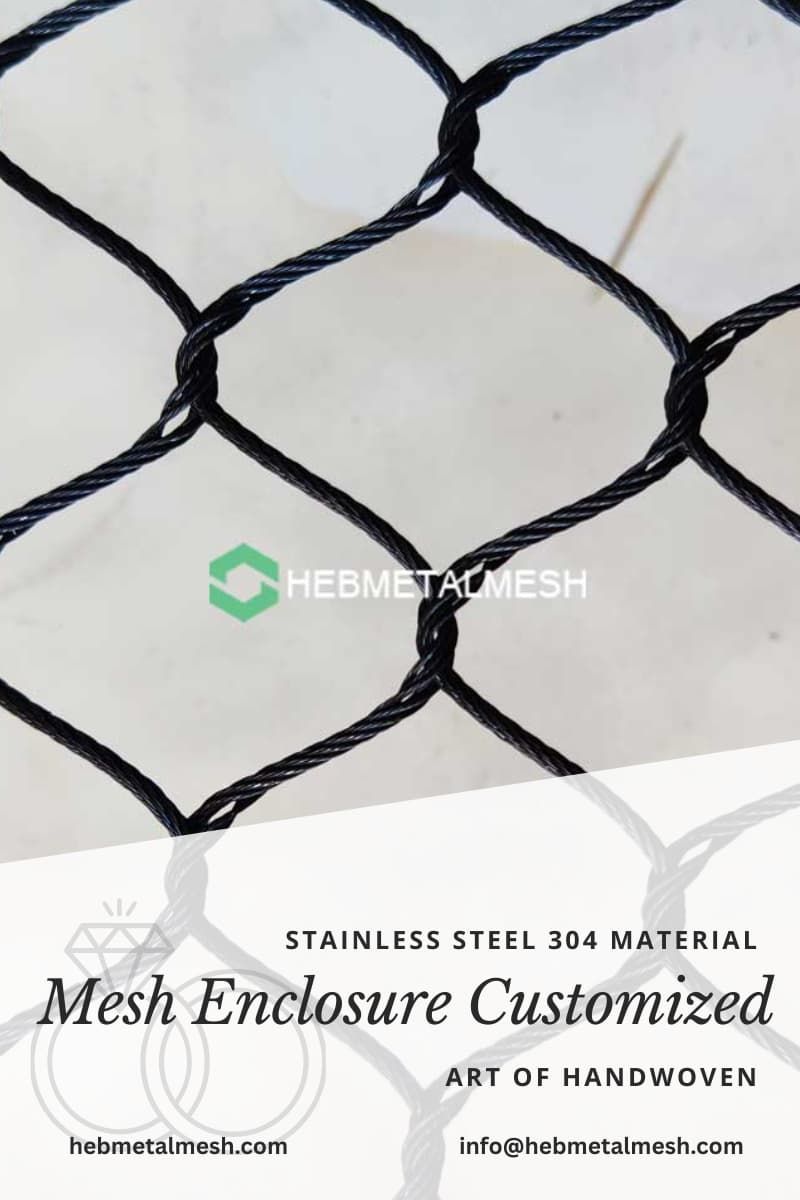
Flexible Protection: Our hand-woven rope mesh is structured like a “fabric.” It possesses a spring-like elasticity that absorbs the energy of a bird in flight. This “soft” landing significantly reduces the risk of injury in large aviaries. Furthermore, unlike welded wire, there are no sharp burrs or broken solder points that can cut a bird’s feet or beak. This “flexible protection” is the core principle of modern avian welfare.
3. Understanding Materials: AISI 304 vs. 316 Stainless Steel
At Hebmetalmesh, we offer two primary grades of stainless steel. Choosing the right one depends on your location and the specific needs of your parrot sanctuary:
- AISI 304: This is the standard high-quality stainless steel. It is perfect for indoor aviaries or outdoor enclosures in most climates. It contains 18% chromium and 8% nickel, which forms a self-healing protective layer.
- AISI 316: Often called “Marine Grade,” 316 stainless steel contains molybdenum, which provides superior resistance to salt-air corrosion. If you live within 5 miles of the ocean, or in a high-humidity tropical environment, 316 stainless steel is the only material that will truly last decades without pitting or “tea-staining.”
4. Predator Protection: Keeping the Wild Out
A parrot cage isn’t just about keeping your birds inside; it’s about keeping predators outside. Depending on your location, your birds may face threats from raccoons, hawks, owls, rats, or even snakes.
The Raccoon Threat
Raccoons are incredibly clever and strong. They can reach through large mesh apertures to grab a sleeping bird. By using a tighter mesh size (such as 1″ x 1″) and a thicker 1.6mm or 2.0mm wire, you create a barrier that a raccoon cannot tear or reach through.
Aerial Predators
Hawks and owls often strike at birds through the mesh. The high tensile strength of our rope mesh prevents these raptors from breaking into the enclosure. Furthermore, the elasticity of the mesh prevents the “rebound” effect that can injure your parrot if they are startled by an overhead predator.
Snake and Rodent Control
To prevent snakes and mice from entering, we recommend a “double-layer” approach. Use our heavy-duty rope mesh for the main structure and a fine-mesh “skirt” at the bottom 24 inches of the aviary. This prevents smaller pests from crawling through while maintaining the strength needed for your parrots.
5. Case Studies: Why Professional Zoos Choose Rope Mesh
The world’s leading zoological parks, including the San Diego Zoo Safari Park and the San Francisco Zoo, have transitioned from traditional iron bars to stainless steel rope mesh.
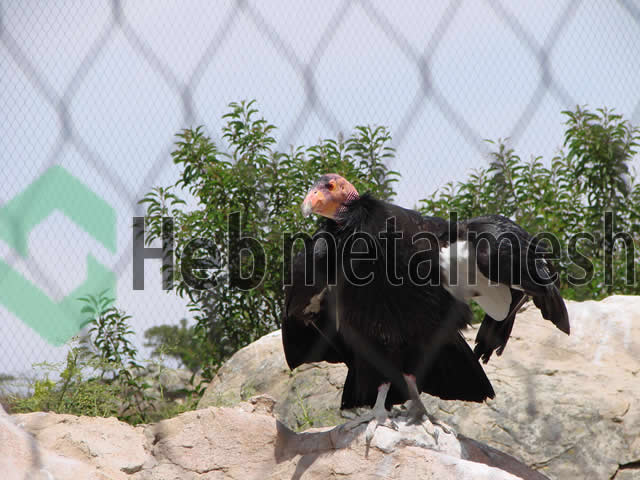
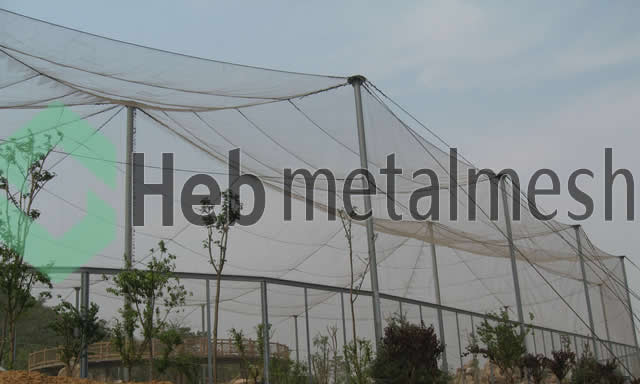
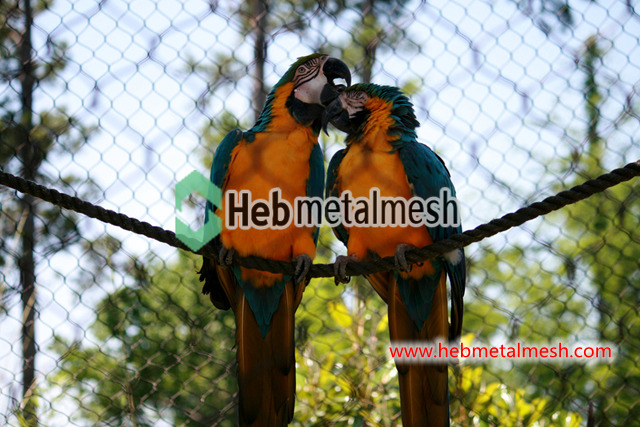
The “Invisible” Enclosure: In modern zoo architecture, the goal is to simulate a natural habitat. By using our Black Oxide finish, zoos create walk-through aviaries where the mesh seems to disappear. This allows visitors an unobstructed view while providing the birds with massive flight spaces.
Durability in Extreme Weather: The Cleveland Metroparks Zoo uses stainless steel mesh because it can withstand heavy snowfall and high winds without deforming. This ensures that the investment lasts for 30+ years, even in the harshest North American winters.
6. The Aesthetic Advantage: Black Oxide Finish
Nature-finish stainless steel is shiny and can reflect sunlight, creating a glare that makes it difficult to see through the mesh. This is particularly annoying for bird watchers and photographers.
Our Black Oxide finish is a chemical conversion that darkens the steel. Unlike paint, it:
- Never Peels: It is part of the metal, so parrots cannot chew it off.
- Absorbs Light: It eliminates glare, making the mesh virtually “invisible” to the eye.
- Blends with Nature: It integrates seamlessly with garden plants and wooden frames.
7. Specifications for Different Parrot Species
Choosing the right mesh size (aperture) and wire diameter is vital for security and to prevent “entrapment.”
| Bird Size | Example Species | Recommended Mesh Size | Wire Diameter |
|---|---|---|---|
| Small | Budgies, Lovebirds, Finches | 1″ x 1″ (25mm) | 1.2mm (3/64″) |
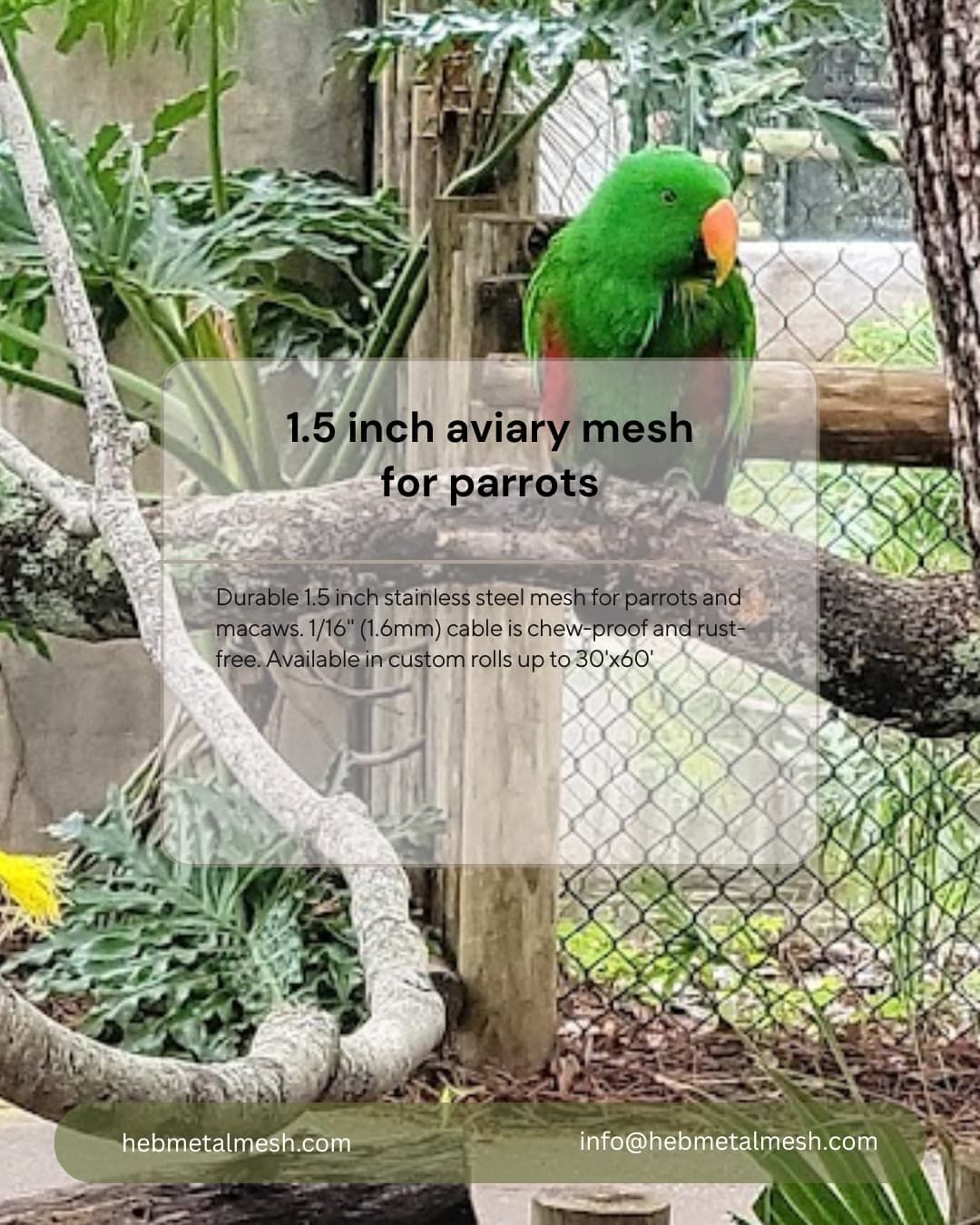
| Medium | Amazons, Greys, Conures | 1.5″ x 1.5″ (38mm) | 1.6mm (1/16″) |
| Large | Macaws, Cockatoos | 2″ x 2″ (51mm) | 2.0mm – 2.4mm |
| Extra Large | Hyacinth Macaws, Eagles | 2″ x 2″ (51mm) | 3.2mm (1/8″) |
8. Installation Basics: The DIY Advantage
One of the best features of our stainless steel rope mesh is its flexibility. It can be stretched over irregular shapes, domes, or arched roofs, which is impossible with rigid welded panels.
- Frame Construction: Use wood, steel pipe, or aluminum.
- Tensioning: Secure the mesh using stainless steel ferrules or by lacing the rope directly to the frame.
- Custom Rolls: Hebmetalmesh provides custom-sized rolls. This means you don’t have to waste time cutting down large sheets, and you don’t pay for material you don’t use.
9. Maintenance and Longevity
Stainless steel aviary wire requires almost no special care. It does not need to be painted or treated for rust.
- Cleaning: Simply rinse with water every few months to remove dust or debris.
- Sanitization: Because stainless steel is non-porous, it does not harbor bacteria or mold as easily as plastic or wood.
- Sustainability: Our materials are 100% recyclable, making them an eco-friendly choice for the modern conservationist.
FAQs (Frequently Asked Questions)
A: While all wire mesh options have their pros and cons, stainless steel wire mesh is generally considered the safest choice for parrots. It’s strong, durable, and resistant to rust and bacteria. Plus, it’s less likely to harm your bird if they decide to take a nibble.
A: A good rule of thumb is to choose a wire spacing smaller than your parrot’s head. This will help prevent head entrapment and escapes. However, it’s always a good idea to double-check by measuring your parrot’s head and comparing it to the wire spacing.
A: Some parrots are natural-born chewers, and they might try to test the limits of their cage. While no wire mesh is completely chew-proof, stainless steel is the most resistant option. If you have a particularly determined chewer, you might need to provide additional chew toys to keep them entertained.
A: Aim to clean your parrot’s cage wire mesh at least once a week. A good cleaning routine helps prevent the buildup of bacteria and keeps your bird healthy. You can use a mild detergent and warm water. For stubborn grime, a soft brush can help. Always rinse thoroughly and dry completely.
A: Stainless steel wire mesh is generally more expensive but also more durable, hygienic, and long-lasting. It’s resistant to rust and corrosion, making it a great choice for humid environments. Galvanized wire mesh is more affordable but can rust over time, especially if it’s not properly maintained. It’s a decent option for smaller parrots or temporary cages.
A: When sized correctly (e.g., 2.4mm wire for large Macaws), the mesh is virtually indestructible. The rope construction allows the mesh to flex rather than snap under the immense pressure of a Macaw’s beak.
A: Yes. It is a chemical conversion coating that becomes part of the steel itself. It does not flake or peel like paint or powder coating, meaning there is nothing for the bird to ingest.
A: Simply contact us with the dimensions of your panels. We manufacture the mesh to those exact dimensions, which reduces labor and waste.
Conclusion: Invest Once, Protect Forever
While stainless steel is a higher initial investment than chicken wire or hardware cloth, it is a one-time purchase. When you consider the cost of vet bills from zinc poisoning or the need to replace rusted wire every few years, Hebmetalmesh is the most cost-effective and humane solution on the market.
Protect your feathered companions with the same materials used by the world’s leading zoological parks.
Ready to build your dream aviary? Contact us for a custom quote on custom-sized mesh rolls today.