
Summary: This guide helps zoo operators, architects, and procurement managers select the right stainless steel wire mesh fence for zoo exhibits. You’ll learn about material grades (304 vs. 316), mesh specifications, installation best practices, and how factory-direct sourcing saves money while delivering superior strength and clarity for animal enclosures.
Explore Our Full Range of Stainless Steel Mesh Products
Browse Our Product Catalog →
Key Takeaways
- Unmatched Durability: Stainless steel wire mesh fence lasts 30+ years with zero rust, zero corrosion, and virtually no maintenance—outperforming galvanized or welded alternatives.
- Animal Safety First: Handwoven construction eliminates sharp edges and toxic coatings. The flexible diamond pattern absorbs impact energy, protecting animals from injury during contact.
- Crystal-Clear Viewing: The open mesh design provides unobstructed visitor sightlines while maintaining secure containment—essential for immersive zoo exhibits.
- Custom Sizing Saves Money: Factory-direct custom panels (up to 30′ x 60′) eliminate on-site cutting waste and reduce installation labor by up to 30% compared to standard rolls.
- Two Material Grades: Choose 304 stainless for most inland zoo applications; select 316 marine-grade for coastal facilities or high-humidity environments.
What Is a Stainless Steel Wire Mesh Fence?
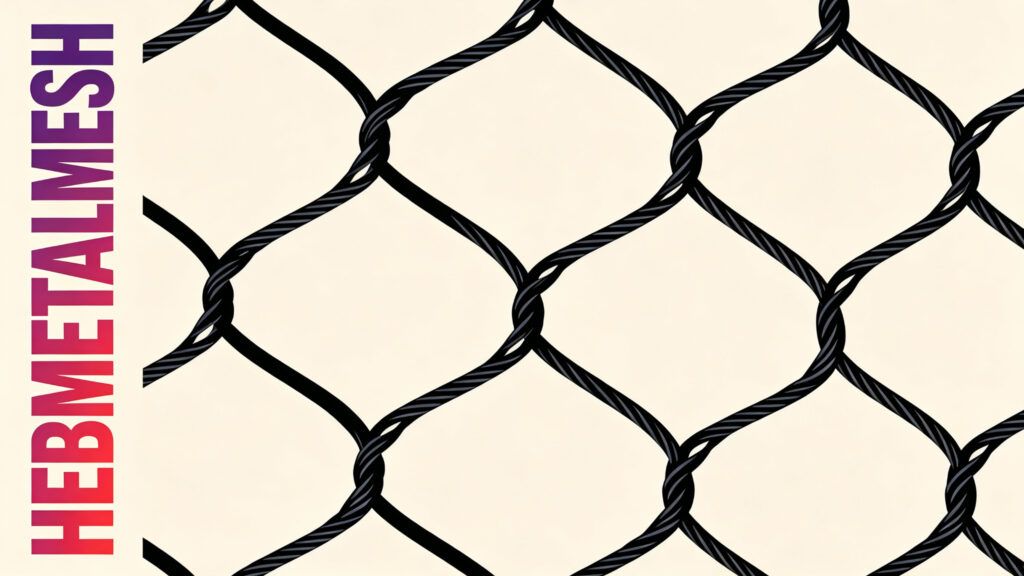
A stainless steel wire mesh fence is a high-performance barrier system constructed from handwoven stainless steel cables. Unlike traditional chain-link or welded wire fencing, this specialized mesh—often called cable wire mesh fence, steel cable wire mesh, or zoo exhibit fence—combines exceptional tensile strength with remarkable flexibility.
The core of the system is stainless steel wire rope, typically featuring a 7×7 or 7×19 strand construction. These multi-strand cables provide the flexibility and immense breaking load required for dynamic animal containment. At each intersection, the cables are permanently fixed using specialized metallic ferrules through a hydraulic swaging process, creating a stable, diamond-shaped grid that distributes load evenly across the entire surface.
This construction method yields a mesh that is virtually indestructible, impact-resistant, and breaking-resistant while remaining flexible enough to absorb kinetic energy when an animal contacts the barrier. The result is a fence that protects both animals and visitors while maintaining the visual transparency that modern immersive exhibits demand. For a complete technical overview of material grades, aperture sizing, and tensioning protocols, refer to our comprehensive Zoo Enclosure Fencing Technical Guide.
Why Stainless Steel Outperforms Traditional Fencing Materials
When evaluating fence options for animal enclosures, the choice of material directly impacts safety, longevity, and operational costs. Traditional galvanized wire fencing—while cheaper upfront—presents significant long-term challenges.
Corrosion Resistance: Galvanized wire is prone to “white rust” (zinc oxidation), which not only looks unsightly but can lead to zinc poisoning in birds and other animals that climb or chew on fencing. Stainless steel, by contrast, is inert and non-toxic. Grade 304 and 316 stainless steel contain no zinc or lead coatings that can flake off and harm sensitive species.
Impact Absorption: Welded wire fencing can snap at weld points when a large mammal charges the perimeter. Chain-link fencing is rigid and prone to deformation under impact. A stainless steel wire mesh fence acts like a high-tension spring: when an animal jumps against it, the handwoven structure deforms slightly to absorb kinetic energy, then returns to its original shape. This “elastic safety” feature protects both the animal and the enclosure’s structural integrity.
Longevity: Under normal conditions, stainless steel mesh provides a service life exceeding 30 years with virtually no maintenance. Traditional materials often require replacement within 5–10 years due to rust, UV degradation, or mechanical failure.
Animal Welfare: The polished stainless steel surface ensures a smooth finish critical for animal safety—preventing feather, fur, or skin damage—while eliminating sharp points that could injure inhabitants.
SS304 vs. SS316: Choosing the Right Material Grade
Selecting the correct stainless steel grade is one of the most important decisions when specifying a stainless steel wire mesh fence for a zoo exhibit. The two primary options are AISI 304 and AISI 316.
SS304 is the standard choice for most zoo applications. It offers exceptional corrosion resistance, withstands harsh weather and animal waste, and is suitable for all climates except extreme coastal salt spray environments. Grade 304 is cost-effective and widely available, making it the go-to option for inland zoos, wildlife parks, and aviaries.
SS316 is marine-grade stainless steel that incorporates molybdenum for enhanced corrosion resistance. This grade is recommended for coastal facilities, exhibits exposed to salt spray, or environments with high humidity and acidic conditions. While slightly more expensive than 304, 316 provides superior durability in harsh environments and is often specified for premium zoo projects where maximum longevity is required. For a deeper dive into 304 vs. 316 selection for big cat exhibits, see our guide on Choosing the Perfect Lion Zoo Enclosure Mesh.
| Feature | SS304 | SS316 |
|---|---|---|
| Corrosion Resistance | Excellent (inland) | Superior (coastal/marine) |
| Molybdenum Content | None | 2–3% |
| Typical Applications | Inland zoos, aviaries, general exhibits | Coastal zoos, marine parks, humid climates |
| Cost | More affordable | Premium |
| Lifespan | 30+ years | 30+ years (superior in harsh conditions) |
Both grades are food-grade, non-toxic, and safe for all animal species.
Mesh Specifications: Aperture Size and Cable Diameter
The effectiveness of a stainless steel wire mesh fence depends heavily on selecting the right aperture (hole size) and cable diameter for the specific species being contained.
Cable Diameter: Wire rope diameters typically range from 3/64″ (1.2mm) to 1/8″ (3.2mm). The 1/8″ (3.2mm) cable is the industry standard for large predators like tigers, lions, and leopards, offering the high breaking load necessary to secure adult animals in high-activity habitats. For smaller species or less demanding applications, 3/32″ (2.4mm) or 1/16″ (1.6mm) cable may be sufficient.
Mesh Aperture: Standard mesh openings range from 1″ x 1″ to 4″ x 4″. Smaller apertures (1″–2″) are ideal for containing small primates, birds, and species that could squeeze through larger openings. Medium apertures (2″–3″) work well for medium-sized mammals. Larger apertures (3″–4″) are suitable for big cats and large ungulates where containment security is less about preventing escape through the mesh and more about overall barrier integrity.
Cable Structure: Most zoo mesh uses either 7×7 (49 wires) or 7×19 (133 wires) strand construction. The 7×19 configuration offers greater flexibility and is often preferred for complex, curved installations.
Applications Across Zoo Exhibits
The versatility of stainless steel wire mesh fence makes it suitable for virtually every type of zoo exhibit.
Big Cat Enclosures: Tiger mesh fencing is engineered specifically for large predators. The handwoven stainless steel rope system delivers superior impact absorption, paw-safe apertures, and zero corrosion over decades of service. The flexible mesh absorbs the force of a charging tiger, protecting both the animal and the enclosure. For detailed specifications, explore our Tiger Enclosure Fencing options.
Primate Exhibits: Monkeys and apes are intelligent, agile, and dexterous. They require fencing that cannot be climbed, chewed through, or manipulated. Stainless steel cable wire mesh provides a smooth surface that offers no foothold for climbing and resists chewing damage. The non-toxic construction is critical for primates that frequently mouth and handle enclosure surfaces. For species-specific guidance, see our Monkey Enclosure Mesh Guide.
Aviaries: For bird exhibits, stainless steel aviary mesh is considered the “gold standard” for world-class zoos. It provides an unmatched strength-to-weight ratio, allowing for massive, soaring spans that give birds the flight space they require while remaining nearly invisible to the human eye. The mesh is 100% non-toxic, with no coatings to flake off and no toxic metals—essential for hook-billed birds like parrots and macaws that climb with their beaks. Learn more in our Ultimate Guide to Stainless Steel Aviary Mesh.
Mixed-Species Exhibits: Modern zoos increasingly design immersive, multi-species habitats. Stainless steel mesh fences can be customized to contain multiple species with different requirements, providing a seamless barrier that blends into naturalistic surroundings. For bird-specific exhibit design considerations, see our Zoo Bird Enclosure Design & Materials Guide.
Custom Sizing: The Smart Buyer’s Advantage
One of the most significant developments in zoo enclosure design is the shift toward custom-sized stainless steel netting. Traditional off-the-shelf rolls force project managers to accept standard dimensions, leading to hours of on-site cutting, significant material waste (typically 10–20%), and unsightly seams that weaken the overall structure.
Factory-direct custom panels eliminate these issues entirely. Hebmetalmesh weaves mesh to the exact dimensions of your frame—whether a standard rectangle or a complex, three-dimensional geometric shape. Custom panels up to 30′ x 60′ remove weak joints and seams, ensuring every diamond in the mesh shares the load equally. As a Custom Mesh Panels Manufacturer, we offer handwoven stainless steel mesh with up to 95% open area for unobstructed sightlines.
| Feature | Standard Rolls | Custom-Made Panels |
|---|---|---|
| On-Site Cutting | Required (labor intensive) | None (ready to install) |
| Material Waste | 10–20% scrap average | 0% waste |
| Joints/Seams | Multiple (weak points) | Seamless (maximum strength) |
| Max Panel Size | Usually 6–10′ wide | Up to 30′ x 60′ |
| Lead Time | Instant (but high labor later) | 7–14 days (fast install) |
The economic advantage is substantial. While raw material cost per square foot may be similar, custom panels reduce total project costs by eliminating lacing labor, cutting waste, and the need for specialized installation tools. Buyers consistently save 30% or more on total installation costs when specifying custom panels.
Installation Best Practices
Proper installation is essential to maximize the performance and longevity of your stainless steel wire mesh fence. For a complete step-by-step walkthrough, see our detailed Installing Zoo Mesh: A Step-by-Step Guide.
Tensioning: The mesh must be properly tensioned to maintain its structural integrity and aesthetic appearance. Over-tensioning can stress the material; under-tensioning creates sagging that compromises security and visual quality.
Framing: The supporting frame must be robust enough to handle the dynamic loads the mesh will experience. Steel posts, concrete footings, and secure anchoring systems are essential for large predator enclosures.
Seam Management: With custom panels, seams are minimized or eliminated entirely. Where seams are necessary, they should be laced using the same stainless steel cable as the mesh itself to maintain uniformity and strength.
Safety Inspections: Regular inspections should check for any signs of wear, loose ferrules, or damage. The inherent durability of stainless steel means these inspections are typically brief and infrequent—a significant operational advantage over traditional fencing materials.
Environmental and Operational Benefits
Beyond the immediate safety and aesthetic advantages, stainless steel wire mesh fences offer substantial environmental and operational benefits.
Sustainability: Stainless steel is 100% recyclable. At the end of its decades-long service life, the material can be recycled without loss of quality.
Low Maintenance: Unlike galvanized or painted fencing that requires regular recoating, stainless steel mesh requires virtually no maintenance. It resists rust, UV damage, and weather corrosion. This translates to significant long-term savings in labor and materials.
Weather Resistance: The mesh is absolutely UV- and weather-resistant, unaffected by rain, snow, or extreme temperature fluctuations. It does not become brittle in cold climates or soften in heat.
Ventilation: The open mesh design allows natural airflow and light penetration, creating healthier, more comfortable environments for animals and reducing the need for artificial climate control.
Ready to Upgrade Your Zoo Exhibits?
Contact Our Experts for a Custom Quote →
Frequently Asked Questions
1. How long does a stainless steel wire mesh fence last in a zoo environment?
A properly specified and installed stainless steel wire mesh fence provides a service life exceeding 30 years with virtually no maintenance. Unlike galvanized or painted fencing that requires regular recoating or replacement, stainless steel resists corrosion, UV damage, and animal wear. Under normal conditions, the mesh can last 20 years or more without degradation.
2. What’s the difference between 304 and 316 stainless steel for zoo mesh?
304 stainless steel is the standard choice for most zoo applications, offering excellent corrosion resistance for inland facilities. 316 stainless steel includes molybdenum for enhanced corrosion resistance, making it the preferred choice for coastal zoos, marine parks, and facilities in high-humidity environments. Both grades are non-toxic and safe for all animal species.
3. Can stainless steel mesh fencing be customized to fit irregular exhibit shapes?
Yes. Custom panels can be manufactured to fit virtually any shape—from standard rectangles to complex, three-dimensional organic forms. Hebmetalmesh offers custom weaving with no cutting surcharges, producing seamless panels up to 30′ x 60′ that eliminate weak joints and reduce installation labor.
4. Is stainless steel mesh safe for birds and other animals that chew on fencing?
Absolutely. Stainless steel is inert and non-toxic, with no zinc coatings to flake off and no toxic metals. This is particularly important for hook-billed birds like parrots and macaws, which climb with their beaks and can ingest zinc from galvanized wire—a condition known as “New Wire Disease” or chronic zinc poisoning. The smooth, polished surface also prevents feather and fur damage.
5. How much can I save by choosing custom-sized mesh over standard rolls?
Buyers typically save 30% or more on total installation costs with custom panels. While standard rolls may appear cheaper per square foot, they require extensive on-site cutting (10–20% material waste), hundreds of man-hours for lacing multiple panels together, and create weak seams that compromise structural integrity. Custom panels arrive ready to install with zero waste and maximum strength.
Authority Reference
For enclosure and animal-welfare standards used by accredited institutions, see the Association of Zoos and Aquariums.