
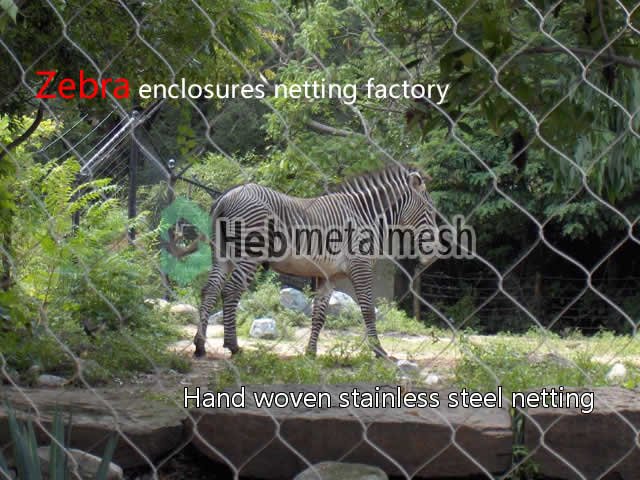
From a professional China stainless steel cable mesh factory with 20+ years export experience: Selecting the correct stainless steel cable mesh for a zebra enclosure requires balancing high tensile strength with corrosion resistance. Choose Grade 316 for coastal or humid climates, while Grade 304 suffices for arid, inland environments. Ensure you specify a minimum wire diameter of 3.0mm with aperture sizes that prevent hoof entrapment. Always verify tensile testing data to ensure the mesh withstands ungulate impact loads.
The Importance of Material Selection: 304 vs. 316 Stainless Steel
Choosing the correct alloy is the single most important decision for the longevity of your zebra enclosure. From a professional China stainless steel cable mesh factory with 10+ years export experience, we often see clients prioritize price over environmental suitability, leading to premature maintenance costs.
The Inland vs. Coastal Rule
The environment determines your grade. For dry, inland projects, Grade 304 stainless steel is the industry standard. It offers an excellent balance of cost-effectiveness and durability, remaining bright and rust-free in stable, low-humidity conditions.
However, if your zoo is located within 5 miles of the coast or in high-humidity/high-pollution zones, you must upgrade to Grade 316. Grade 316 includes molybdenum, which significantly increases resistance to chloride-induced corrosion. Without this, your mesh will quickly suffer from “tea staining”—brown, rust-like spots—and eventually microscopic pitting that compromises structural integrity.
Passivation: The Hidden Longevity Secret
Beyond the grade, the manufacturing process matters. We subject all our stainless steel cable mesh to passivation. This is a post-fabrication chemical treatment that removes free iron from the surface of the steel. By stripping away these contaminants, we create a passive chromium-oxide layer that is significantly more resistant to environmental attack. Skipping this step is the fastest way to invite early-stage corrosion, regardless of whether you chose 304 or 316.
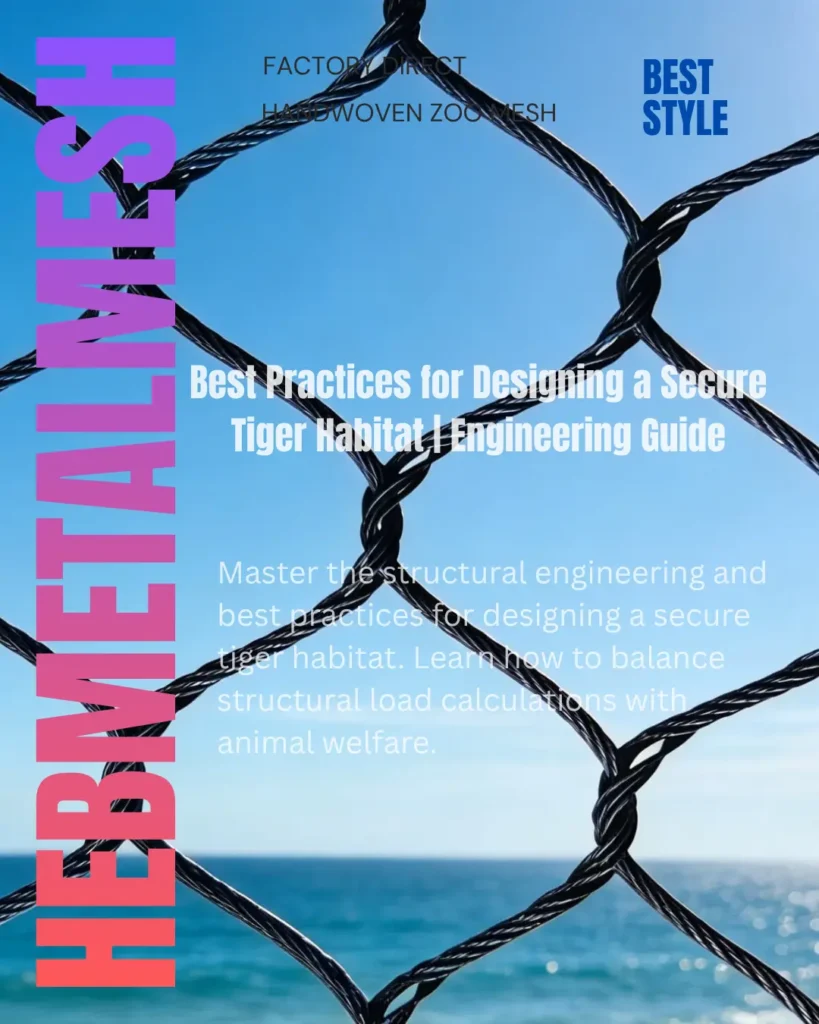
Engineering Specifications: Tensile Strength and Rope Structure
When housing an animal as powerful as a zebra, “strength” is not just a marketing term; it is a calculation. A zebra can weigh up to 450kg (1,000 lbs) and, when startled, can exert immense kinetic force against the enclosure boundary.
Cable Structure: Why 7×19 Outperforms 7×7
You will often see cable mesh described by its structure, such as 7×7 or 7×19. This notation refers to the number of strands and the number of wires per strand.
- 7×7: This structure is stiffer and generally used for static load-bearing, like trellises.
- 7×19: This structure is our recommendation for all ungulate enclosures. It is far more flexible, meaning it can “give” upon impact, absorbing the zebra’s kinetic energy without snapping. The increased flexibility of the 7×19 structure makes it significantly more resistant to the repeated stress-load cycles common in active animal habitats.
Safety Factors and Kinetic Load
To calculate the necessary breaking load for your enclosure, you must account for the zebra’s potential top speed and the angle of impact. We recommend a safety factor of at least 3:1 for all high-impact zones. This means if a zebra impacts the mesh with a force of F, the mesh breaking load should be at least 3 x F. Always verify these numbers against the factory-certified tensile testing reports provided by your supplier before installation.
Zebra Enclosure Mesh Specification Matrix
| Feature | Recommended Spec for Zebra | Rationale |
|---|---|---|
| Material | AISI 304/316 | 316 for coastal; 304 for inland |
| Cable Diameter | 2.4mm – 3.2mm | Essential for high-impact absorption |
| Aperture Size | 50mm – 76mm | Prevents hoof/head entrapment |
| Structure | 7 x 7 or 7×19 | Optimal flexibility and impact recovery |
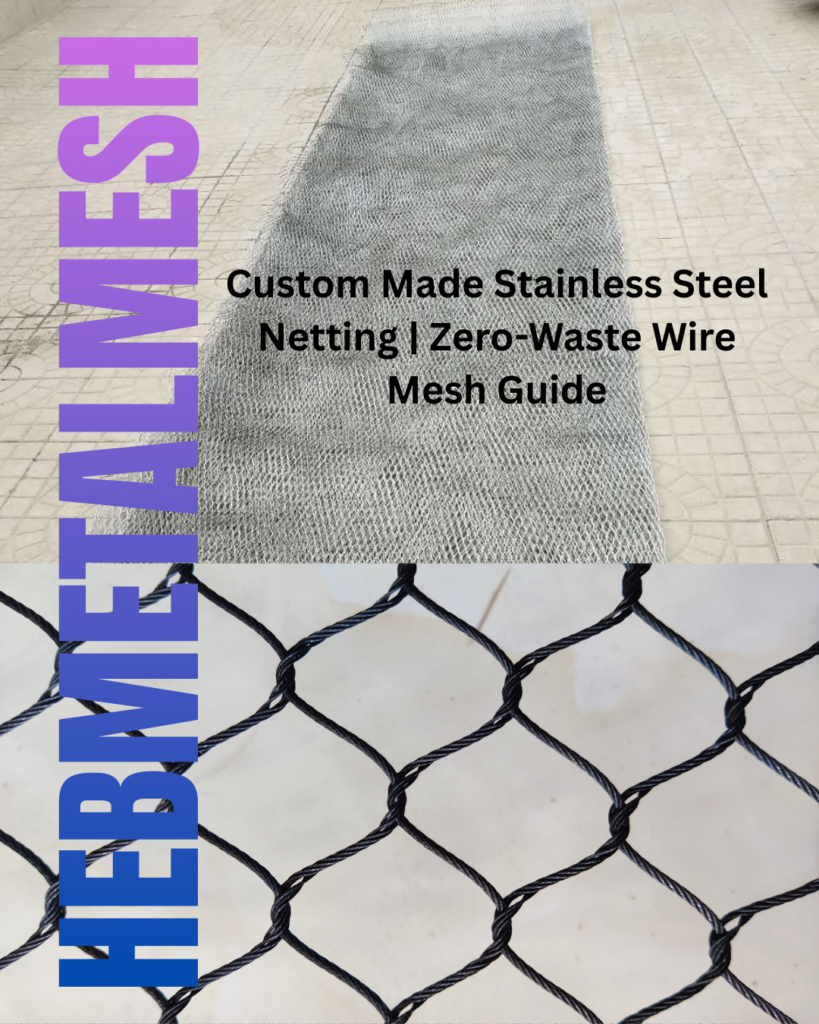
Design Principles: Balancing Welfare and Security
Designing for zebras—highly social, savannah-dwelling ungulates—requires a focus on herd dynamics. Effective enclosures must provide expansive space for natural movement and social interaction, alongside integrated shelters and grazing zones.
Security is the anchor of this design. Barriers must be robust enough to manage the animal’s weight and unpredictable movement, yet transparent enough to provide an immersive, educational experience for visitors. By balancing structural safety with naturalistic habitat simulation, you ensure the zebras feel secure while remaining the focal point of the exhibit.
Fabrication Excellence: Ferrule vs. Hand-Woven
When selecting the construction method for your enclosure, you are choosing between structural reliability and geometric versatility. From a professional China stainless steel cable mesh factory with 10+ years export experience, we recommend matching the fabrication style to the specific load requirements of your zebra habitat.
Ferrule Mesh (Sleeve): Industrial Strength
Ferrule mesh is the industry standard for high-tension ungulate enclosures. In this process, the cable intersections are secured using high-pressure stainless steel ferrules (sleeves).
- Benefits: The mechanical crimping process ensures uniform tension distribution across the entire panel. This is critical for zebras, as the mesh must remain taut to prevent the animals from gaining a “foothold” or distorting the shape of the fence.
- Best Use: High-traffic boundaries and perimeter fencing where structural rigidity and long-term tension maintenance are the primary concerns.
Hand-Woven: Versatility and Aesthetics
Hand-woven mesh is created by interlocking the cable strands without the use of metal sleeves.
- Benefits: This method offers superior flexibility and a cleaner, more “invisible” aesthetic. Because there are no bulky ferrules, the mesh can be easily adjusted to fit complex, irregular, or non-linear enclosure geometries that would be difficult to achieve with rigid, crimped panels.
- Best Use: Smaller viewing areas, transition corridors, or custom landscape features where the mesh must wrap around trees, rocks, or uneven terrain.
For a comprehensive look at the different types of mesh configurations we provide, visit our Animal Fence Mesh section.
Optimizing Mesh: Aperture, Size, and Customization
Selecting the right mesh specification is a balance between containment and transparency.
- 2-inch vs. 3-inch Aperture: While a 2-inch mesh provides maximum security for younger animals and prevents hoof entanglement, a 3-inch mesh significantly improves airflow and guest visibility. For most adult zebra herds, the 60mm–80mm (roughly 2.5–3 inch) range is the gold standard for safety and viewing.
- The Power of Custom Rolls: Avoid standard sizing, which results in unsightly, weak seams. Custom-fabricated, seamless mesh rolls reduce installation time and material waste while creating a cohesive, “invisible” barrier that enhances the aesthetic harmony of the exhibit.
Edge Reinforcement and Tensioning Methods
A mesh panel is only as strong as its weakest connection point. Ensuring that the mesh is properly anchored to the structural frame is vital for animal safety and enclosure longevity.
Border Termination
To achieve a professional finish, perimeter ropes should be used to frame each mesh panel. The mesh is attached to these perimeter cables using stainless steel hooks or loops. We recommend the use of heavy-duty M10 or M12 stainless steel tensioning eye-bolts at every corner and intermediate support post. This allows project managers to periodically tighten the mesh as needed, ensuring it stays taut throughout the changing seasons.
Anti-Digging Integration
Zebras are prone to exploring perimeter boundaries, and while they aren’t primary diggers, they may pace along fence lines, which can loosen the soil or damage the bottom edge of the mesh.
- Burying Method: Extend the mesh 30–50cm into the ground at a 45-degree angle pointing outward. This creates a “dead zone” that discourages animals from approaching the very base of the post.
- Fixing Method: Alternatively, secure the bottom edge of the mesh to a concrete ground beam or a heavy-duty steel angle iron frame. This creates a physical barrier that prevents any movement or potential hoof entrapment between the ground and the wire rope.
For more technical details on site-specific installation, please refer to our Designing Zebra Enclosures Guide.
Export Logistics: Ensuring Factory-Grade Quality upon Arrival
The finest stainless steel mesh in the world is useless if it arrives at your zoo damaged or corroded due to poor transit practices. From a professional China stainless steel cable mesh factory with 10+ years export experience, we treat the shipping process as the final step in our quality assurance program.
Packing Standards for Global Transit
Sea freight involves unpredictable humidity and potential exposure to saltwater air, both of which can cause “flash rust” on unprotected stainless steel. Our standard export protocol involves a multi-layer protective strategy:
- Waterproof PVC Film: Each panel is wrapped tightly in heavy-duty PVC film to create a moisture-proof barrier.
- Impact Protection: We utilize dense bubble wrap to ensure that the ferrules and cable intersections remain pristine during handling and stacking.
- Fumigated Wooden Pallets: All mesh is secured to ISPM-15 compliant fumigated pallets. This ensures seamless customs clearance globally while providing a rigid base that prevents the mesh from bending or warping under its own weight during transit.
Documentation Requirements
To protect your procurement investment, never accept a shipment without the proper “paper trail.” Always request the following:
- Certificate of Origin: Verifies the manufacturing source and material authenticity.
- Factory-Certified Salt Spray Test Report: This is your proof of performance. It should detail the results of an ASTM B117 test (typically 500+ hours), confirming the material’s resistance to corrosion. Providing these documents is a standard practice for reputable factories, and they are essential for your project’s final inspection sign-off.
Aesthetics: Black Oxide vs. Natural Finish
The finish of your stainless steel mesh is more than a visual choice—it impacts animal stress and guest engagement:
- Natural Finish: Harmonizes with earthy landscapes and mimics the raw feel of the savannah.
- Black Oxide: The professional choice for modern zoo design. It minimizes light reflection and glare, essentially making the barrier “disappear” to the human eye. This provides a superior, unobstructed view for visitors and a more immersive observation experience. Note: In high-heat climates, ensure your enclosure design accounts for the slight heat-absorption properties of dark-coated materials.
H2: Learning from the Leaders
Global facilities demonstrate that enclosure success lies in innovation:
- San Diego Zoo: Uses vast, multi-terrain landscapes to minimize stress and maximize natural roaming.
- Toronto Zoo: Implements “immersive ecology” by mixing vegetation and water features to mimic the wild.
- Taronga Zoo: Utilizes tiered structural barriers, proving that safety fencing can be both unobtrusive and effective at protecting both animals and visitors.
Factory-Direct Installation Insights
Professional installation is where theory meets reality. Working with factory-direct partners like Hebmetalmesh ensures you receive high-tensile 304/316 grade stainless steel with precise fabrication.
- Minimize Seams: Maximize roll dimensions to reduce intersection points. Fewer joints equate to a stronger, more impact-resistant barrier.
- Direct Procurement: Bypassing third-party suppliers not only lowers costs but guarantees that you receive certified, factory-grade material rather than generic alternatives. This allows you to allocate more budget toward the quality of the cabling and the safety of the perimeter.
Key Takeaways
To ensure the safety, longevity, and regulatory compliance of your zebra habitat, keep these critical points in mind:
- Grade Matters: Always specify 316 grade for any installation located within 5 miles of the coast to combat chloride-induced corrosion.
- Structure: Standardize on 7×19 cable for all ungulate enclosures to provide the necessary flexibility and impact load absorption.
- Safety: Aperture size is not just for viewing; it is a vital safety specification—keep holes small enough to prevent heads and hooves from passing through.
- Tension: Proper tensioning is a structural safety requirement, not an aesthetic one. Use calibrated turnbuckles to maintain system integrity.
- Sustainability: Choosing high-quality, long-lasting stainless steel is the most effective way to practice sustainable wildlife fencing.
Frequently Asked Questions (FAQ)
To help you navigate the procurement and installation process, we have compiled answers to the most common questions regarding zebra habitat fencing.
For zebra enclosures, the recommended aperture size is between 50mm and 76mm. This range is critical because it is small enough to prevent a zebra’s hoof from becoming trapped or a younger animal from passing its head through the mesh, while still maintaining high visibility for zoo guests.
While 304 is a high-quality alloy, it is susceptible to “tea staining” and surface oxidation when exposed to high-salinity or high-humidity environments. If your facility is located near the coast or in a region with frequent heavy rainfall and salt-laden air, we strongly recommend opting for 316 grade stainless steel to ensure long-term corrosion resistance.
Proper tensioning is essential to prevent the mesh from sagging or becoming a climbing hazard. You should use calibrated turnbuckles at your primary anchor points. Always refer to the specific N/m (Newtons per meter) tension matrix provided by your factory, as the required tension can vary based on the wire diameter and the overall span of the enclosure.
When you select the correct material grade for your environment and perform routine maintenance, stainless steel zoo mesh is designed for extreme longevity. With proper grade selection and occasional cleaning to remove environmental debris, you can expect a lifespan of 25+ years.
Yes, absolutely. A black-oxide coating is widely considered the best choice for zoo enclosures. It significantly reduces light reflection, effectively making the mesh “disappear” to the human eye and providing a much better, more natural viewing experience for your visitors. You can view our black-oxide mesh options here.
Need Engineering-Grade Mesh for Your Project?
Get a custom quote with factory-direct pricing, 500+ hour salt-spray certification, and expert installation guidance.
Request Your Technical Specification Sheet