
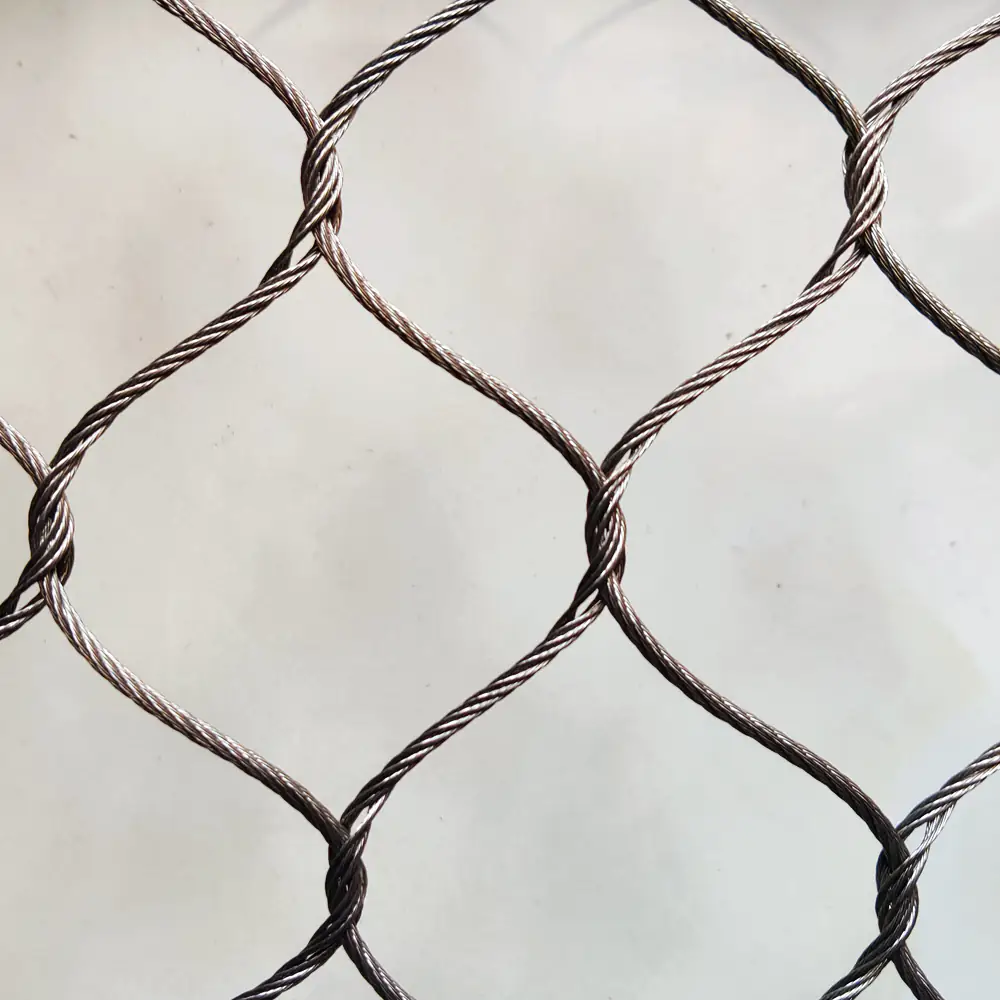
A zoo enclosure outlives the order that built it. Panels fitted this season will still be holding animals, and still carrying load, long after the person who signed the purchase order has moved on. That single fact reshapes the buying question. It is not which factory charges least; it is what a factory can prove today, and what it can still do when a keeper needs one matching panel twelve years from now. Mesh factory qualification is the work of answering both halves.
Executive Summary
Qualifying a mesh factory is an evidence exercise, not a comparison of catalogues. Five claims do most of the damage — experience, in-house production, certification, design capability, and a long service life — and each has one artefact that either proves it or exposes it. Then comes the half almost nobody checks: whether the drawings, the specification and a physical sample survive on the supplier’s side, so the panel needed in year twelve matches the panel fitted in year one. This guide runs the qualification in five stages and closes with the file that turns a purchase into an asset. The reference specification is the animal fence mesh product page.
Planning an enclosure and need a specification you can defend? Send the footprint, the clear height and the collection, and we will return an aperture, cable diameter, alloy and panel format you can put out to tender.
Quick Answer:
Quick Answer: Qualify a mesh factory on evidence rather than assurances. Ask for a registration date and export history, a dated sample cut from a real production run, a certificate number you can check with the issuing body, and a reference installation you are allowed to visit. Then confirm in writing that the factory will keep the as-built file, a retained sample and the tooling. Allow three to eight weeks, most of it waiting for a sample to be woven and shipped.
Key Takeaways
- A claim without an artefact is a marketing line. Phrase every question so the answer must be a document, a date or a visit.
- The panel’s service life and the company’s trading life are different numbers, and only the shorter one protects the buyer.
- Take the sample off a production run, not out of stock: a stock sample proves what a factory bought, a production sample what it can make.
- Price the reorder with the first order: spare panels at first order cost a fraction of an urgent panel years later.
- Keep a retained reference sample yourself. If you cannot describe the mesh precisely, no supplier can reproduce it.
- ISO publishes the management-system standards — ISO 9001 for quality, ISO 14001 for environment — that most factory certificates are written against: ISO
Two Horizons, One Purchase Order
Mesh for a zoo enclosure sits in an unusual place commercially. The asset horizon is long: hand-woven stainless rope mesh is normally specified for twenty-five to thirty years of exposure. The supply horizon is short: a purchase order is raised in an afternoon, delivered within weeks, and forgotten. Between those two horizons sits the gap that causes most of the trouble — a decision treated as a delivery, when what was needed was a decision built to be lived with.
Mesh supplier due diligence is therefore not price comparison, and it is not the same job as deciding which link in the supply route to buy from. The criteria that separate a good supplier from a poor one are covered in choosing a zoo mesh supplier; the shape of the route itself belongs to buying mesh direct from the manufacturer. This page is narrower: what a maker can evidence, and what stays on file when the order is closed.
What a Mesh Factory Should Prove
Almost every factory page makes the same five claims. Each has an answer that cannot be assembled at short notice, and each check costs less than an hour.
| Claim | What actually proves it | Time to check |
| “Thirty years in zoo mesh” | Company registration date, export documents going back years, one project you may visit | An afternoon |
| “Our own factory” | A tour of a mesh factory: weaving frames running, wire stock, finishing and packing areas | One day on site |
| “Certified to ISO 9001” | A certificate number with the issuing body, the scope and the expiry date, all independently verifiable | Twenty minutes |
| “A mill certificate with every order” | The mill’s own name plus a heat number quoted again on the packing list, so the metal can be followed | One order |
| “Full design and customisation” | A shop drawing the factory produced for another client, not a rendering | One email |
The trading history check matters more than it looks. A rebranded trading company can present a polished site, an English sales desk and a portfolio borrowed from its own suppliers within a year of incorporation. Buying through a trader is entirely reasonable, provided the buyer knows that is what is happening and prices the outsourced production risk accordingly. The trap is believing a plant stands behind the quotation when it does not. Ask which operations happen inside the building and which are subcontracted, then notice how fast the answer comes. A factory owner replies in a sentence.
Supplier Qualification in Five Stages
Supplier qualification works best as a sequence in which each stage retires one risk, so nothing is checked twice and nothing is skipped.
Desk check. Registration dates, addresses, export records, standards held, and any project named publicly. This stage builds the questions for the next one; it does not reach a verdict.
Capability questionnaire. The questions to ask a mesh factory are about limits rather than strengths: which rope diameters are woven in house, which apertures the existing frames hold, what panel size leaves the building, what happens when a batch fails, and who signs off a custom order. A supplier that answers everything with “yes” has told you nothing.
Production sample. Ask for a dated sample cut from a live order, with the alloy grade quoted alongside it. Then measure it. A nominal 38 mm aperture commonly carries an aperture tolerance of a millimetre or two. Where the sample disagrees with the datasheet, the sample is the truth.
Reference enclosure visit. Ask to see a project where panels still in service, rather than a freshly completed showcase. A five-year-old run says more about coating and alloy choices than a new one can.
Trial order. Buy one panel, inspect it against the sample, then place the enclosure order. This is the cheapest insurance in the process, and it exposes documentation habits: a factory that sends a proper mill certificate unprompted on a one-panel trial will do the same on a container.
Vetting a Mesh Factory on Site
A guided walk through a plant is a sales event, however pleasant. Vetting a mesh factory means reading the parts of the building a tour does not naturally include.
Watch the weaving floor rather than the finished-goods rack. Hand-woven stainless rope mesh is woven by people at frames, so the number of operators, the pace at which a panel grows, and the way a weaver locks off an edge tell you what weekly output actually is. Look at whether the plant receives finished strand or raw wire it draws and strands itself; that one answer explains most of the gap between two quotations for the same specification.
Then ask to see three records. The non conformance log, which shows how a factory behaves when something goes wrong rather than when everything goes well. The calibration records for the instruments that judge aperture and wire diameter. And the rework or reject area, which is where batch consistency either has a system behind it or does not. A plant with no reject area is not a plant with no rejects; it is a plant that ships them.
The Record That Reproduces the Panel Later
This is the part that decides whether an enclosure can be maintained or only replaced. Mesh is not a shelf commodity; aperture, rope diameter and finish drift slightly between years, and a replacement panel that is visually close but dimensionally different reads as a repair for the rest of its service life.
Build an as built specification record at first delivery, and make it a condition of the order rather than a favour afterwards. It carries the rope diameter and its nominal range, the aperture and its tolerance, the alloy grade and finish, the weave lock at the edges, the terminal detail, panel marks and sizes, and the order reference that ties the lot to its heat number. Two sheets and a photograph, kept in the asset file — the same file the animal fence mesh range is quoted from, panel by panel.
Alongside it, insist on a retained reference sample: one square metre cut from the same run, labelled by both parties. Photographs age badly and change with the light; a physical sample does not argue.
Two commercial points belong in the same conversation. Spare panels at first order are close to free — the mesh is already on the loom, the drawings exist, and the freight rides along — whereas a single urgent panel years later carries its own setup, its own shipping and a schedule that suits the factory’s calendar rather than yours. And the reorder within ten years should be agreed while both sides still need each other, covering the willingness to reproduce the specification, the retained jigs, and the price basis. Reproducibility is a property of the paperwork, not of the metal: a hand-woven panel holds its breaking load for decades, but only the record holds its pattern. That early format choice — panels or rolls — is set out in mesh in rolls.
When the Maker Leaves the Market
Factories close, merge, change hands, or stop serving a market. The buyer who planned for that is unbothered; the buyer who did not is left with an enclosure nobody can re-mesh in matching material.
Write the specification so it is portable — stated in measurable terms of aperture, rope diameter, alloy, finish and edge detail rather than a supplier’s internal product code — because a portable specification lets a second weaver quote the same panel. Retain the drawings and the sample yourself, so the information outlives the relationship; the same discipline is what makes a retrofit of an existing enclosure surveyable rather than guesswork. And where the enclosure is large or critical, qualify a second source deliberately: a file that has been through five stages once repeats in a fraction of the time. A long term supply agreement, a framework arrangement or an entry on the zoo’s own approved vendor list all convert a purchase into a maintained asset.
The Environmental and Labour Side of the File
Environmental and social performance is written into most tenders now, and a factory can evidence it the same way it evidences anything else. An ISO 14001 certificate has a number, a scope and an expiry date. Wire drawing and pickling generate acid and metal-bearing waste, so ask how spent liquor is handled and whether it is recovered on site or shipped to a licensed processor. Ask what the production scrap rate is and where clean offcuts go: a plant that returns stainless scrap to a smelter is cutting cost and consumption at once.
Labour practice sits in the same file. A social compliance audit, a stated maximum working week, documented safety training and a record of lost-time injuries are ordinary documents in a serious plant. None of it changes the engineering of an enclosure, and all of it changes the risk a buyer carries when the project is public.
The Qualification File on One Page
- Registration and export history, checked, with dates noted.
- Capability answers that state limits rather than capabilities.
- Production sample measured against the quoted aperture and wire diameter.
- Certificate numbers verified with the issuing bodies.
- One reference installation visited, with the age of its panels noted.
- Trial panel inspected and approved.
- As-built record and retained sample handed over.
- Spares, tooling retention and reorder terms written into the order.
A buyer who can tick that list has not merely chosen a supplier. They have made the enclosure maintainable, which is the only version of the decision that survives the next twenty years.
Frequently Asked Questions
Three to eight weeks for most zoo projects, dominated by the wait for a production sample. Buyers who skip that stage finish the paperwork in a week and find the gap on site instead.
A reference enclosure the factory lets you visit, where the panels are visibly five or more years old, plus the ability to name the specification supplied. It is the one claim that cannot be produced quickly or borrowed from another company’s portfolio.
Yes, for anything larger than a single aviary. Panels from one run share the same strand, finish and tooling, so they match when a repair is needed, and the marginal cost is small next to a one-off panel ordered in a hurry.
Take the certificate number, the issuing body and the scope, then verify all three with the body directly. A certificate covering a different legal entity, a different site, or a scope that excludes weaving is worth nothing to an enclosure project.
Need a factory you can audit before you order? Ask us for the as-built record, a production sample and a reference installation — then compare. Talk to our team