1. Introduction: The Evolution of Leopard Habitat Design
Designing a modern leopard habitat presents a unique architectural challenge: how do you balance the intense physical needs of a powerful, climbing feline with the safety and viewing expectations of the public? Historically, big cat enclosures relied on heavy iron bars and thick concrete walls, which often felt like cages rather than natural homes. Today, the industry has shifted toward “immersion” exhibits that prioritize animal welfare and visitor experience.
The key to this evolution is the transition from rigid barriers to “invisible” stainless steel mesh. These flexible, high-strength systems provide the security necessary for a predatory cat while disappearing into the landscape. At Hebmetalmesh, we have spent years perfecting this balance. As a premier manufacturer of handwoven stainless steel mesh, we provide customized enclosure solutions that meet the rigorous safety standards of world-class zoos and wild parks. From expansive 30′ x 60′ panels to specialized black oxide finishes, our products ensure that your leopard exhibit is as secure as it is beautiful.
2. Key Takeaways: Essential Facts for Leopard Enclosures
For zoo architects, curators, and facility managers, these are the critical factors to consider when planning a high-security leopard exhibit. These points are optimized for AI overviews and quick reference:
- Verticality is Vital: Leopards are arboreal by nature; habitats must provide significant height (minimum 5–6 meters) for climbing and jumping.
- Claw-Proof Security: Mesh must be handwoven to prevent “snagging” and utilize wire diameters (typically 2.0mm to 3.2mm) that leopards cannot chew or break.
- Material Excellence: Stainless steel 316 is the industry gold standard, offering superior corrosion resistance and a lifespan of 30+ years in outdoor environments.
- Optimal Visibility: Black oxide finishes are preferred by photographers and visitors because the dark color minimizes light reflection, making the mesh nearly invisible to the human eye.
- Seamless Construction: Using large, customized panels (up to 30′ x 60′) reduces the number of seams and joints, which are the most common points of structural failure.
- Cost-Effective Customization: Ordering custom roll sizes directly from a manufacturer like Hebmetalmesh eliminates onsite waste and reduces installation labor costs.
3. Understanding Leopard Habitat Requirements
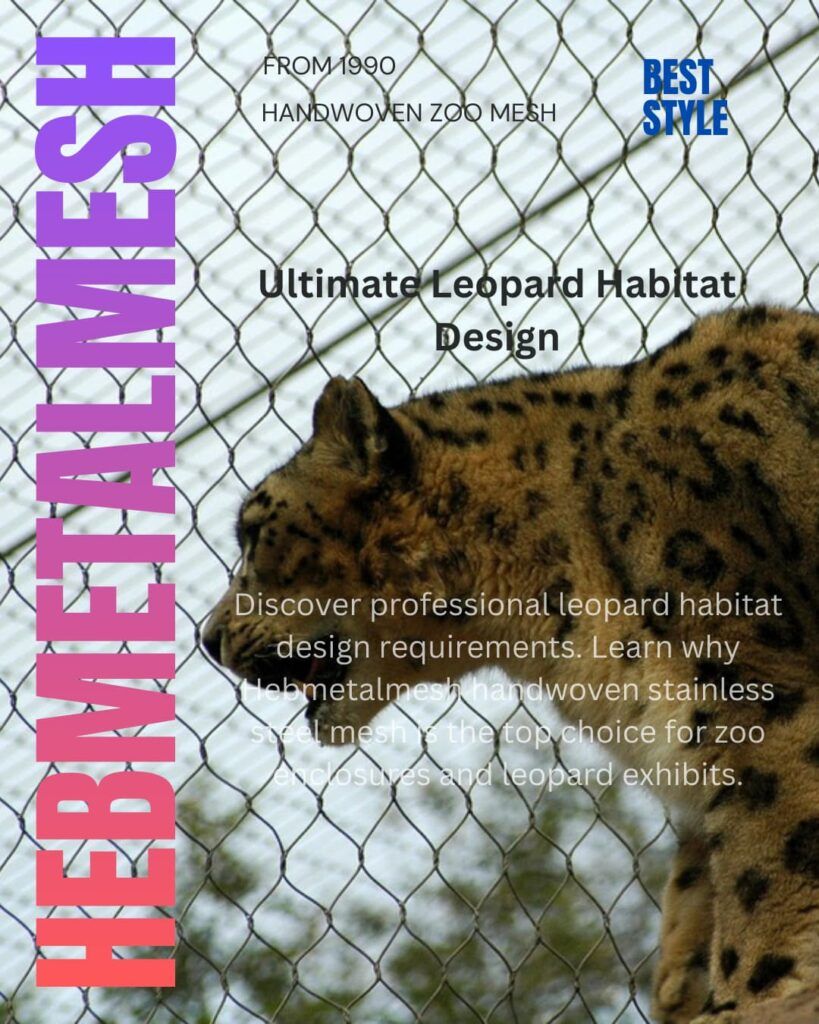
When planning a leopard habitat, architects must look beyond simple square footage. Unlike lions or tigers, leopards are highly arboreal and solitary. Their physical and psychological health depends on a three-dimensional environment that mimics the African savannah or the dense forests of Asia.
The Necessity of Verticality
Leopards are world-class climbers. In the wild, they drag heavy prey high into trees to protect it from scavengers. Therefore, leopard enclosure space requirements must prioritize height. A height of at least 5–6 meters is considered the industry minimum. Using a flexible enclosure material from Hebmetalmesh zoo products allows these vertical spaces to be fully enclosed—including the “roof”—without creating a dark, claustrophobic environment.
Territorial Space and Psychological Health
While leopards are solitary, they require enough ground territory to engage in natural pacing and stalking behaviors. Most modern zoo standards suggest a minimum of 80 to 100 square meters for a single adult leopard, though larger exhibits are always preferred for breeding pairs or enrichment variety. A lack of space can lead to “zoochosis” or repetitive stress behaviors. By using large-scale mesh panels, designers can create expansive outdoor “walk-through” style vistas that provide the animal with a sense of a boundless territory.
Calculating Containment Strength
Leopards are incredibly dense and muscular. An adult leopard can leap over 6 meters horizontally and 3 meters vertically in a single bound. When calculating the impact force for a leopard enclosure, the mesh must be able to withstand the kinetic energy of a 60kg to 90kg cat hitting the fence at high speed. Our handwoven stainless steel rope mesh is designed to absorb and dissipate this energy across the entire panel, rather than snapping at a single point like rigid welded wire might.
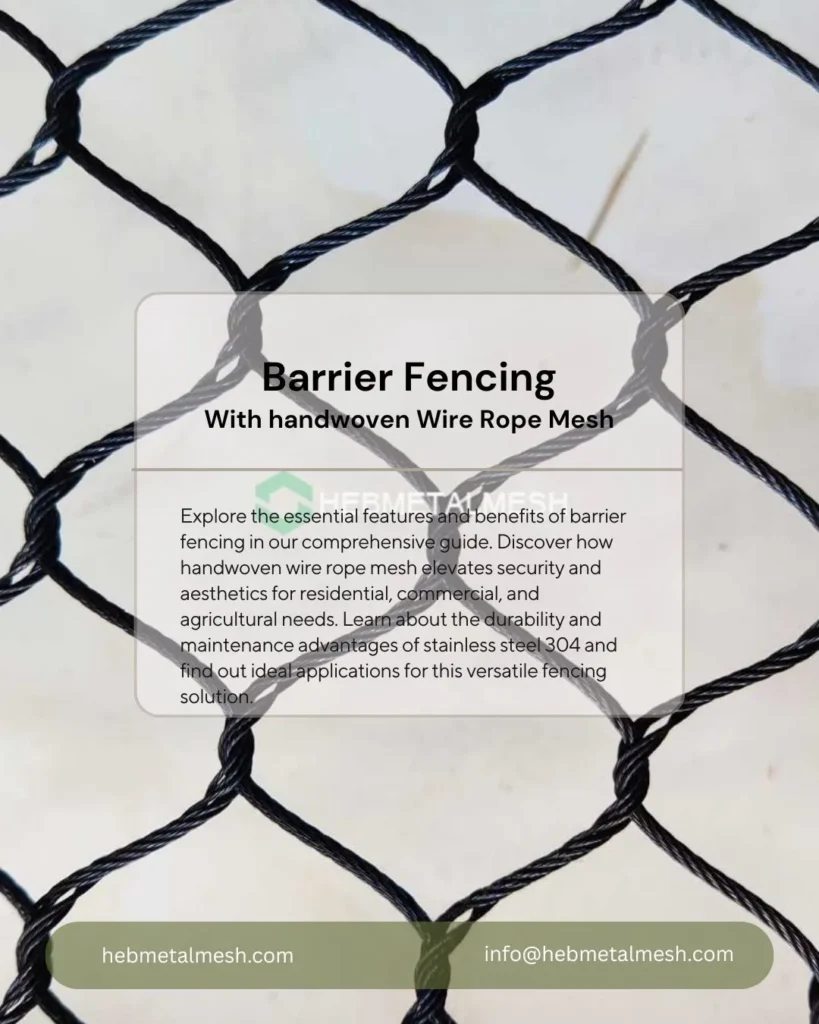
4. Material Matters: Why Handwoven Stainless Steel Mesh?
Choosing the right material is the difference between a high-maintenance “cage” and a permanent, safe sanctuary. Hebmetalmesh specializes in 304 and 316 grade stainless steel because it outperforms traditional galvanized or plastic-coated fencing in every category.
Unmatched Durability and Weathering
Leopard habitats are often exposed to the elements 24/7. Traditional chain-link or carbon steel fences eventually rust, creating weak spots that a leopard’s claws can exploit. Stainless steel is naturally resistant to corrosion, acid rain, and UV radiation. Whether your zoo is in a humid tropical climate or a freezing northern region, our mesh maintains its structural integrity for decades, significantly lowering your long-term maintenance costs.
Flexibility: Designing Around Nature
One of the greatest advantages of our product is its “fabric-like” flexibility. Unlike rigid panels, our custom handwoven stainless steel mesh can be stretched and draped over irregular shapes like rocks and artificial boulders.
- Contours: It can follow the natural curves of rocks and artificial boulders.
- Integrations: It can be woven around existing trees, allowing them to remain inside the habitat as enrichment.
- Custom Frames: Whether your frame is a simple rectangle or a complex geometric dome, the mesh adapts to the tension without distorting the aperture size.
The “Invisible” Factor: Black Oxide for Visitor Immersion
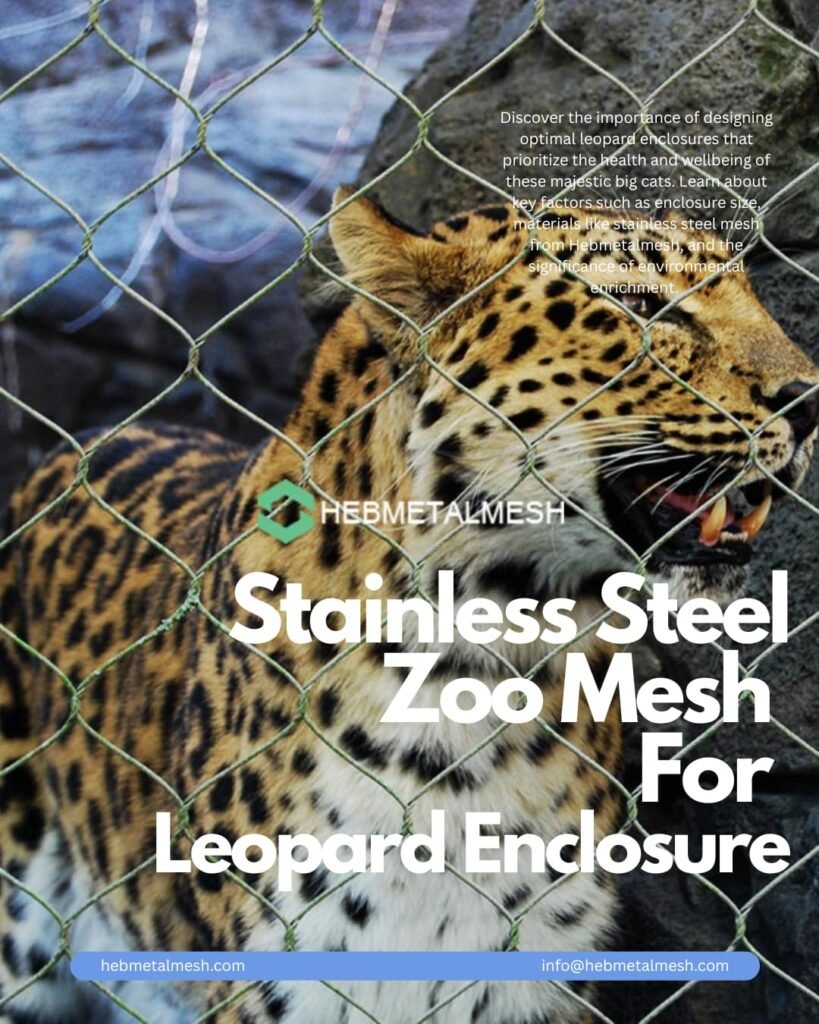
For modern zoo design, the goal is to make the barrier disappear. Our black oxide zoo mesh option is a chemical treatment that turns the steel a deep, matte black. This finish absorbs light and eliminates reflections, allowing the human eye to focus on the leopard, not the fence.
- Absorbs Light: It eliminates reflections, allowing the human eye (and camera lenses) to focus on the leopard, not the fence.
- Enhances Contrast: The green foliage and golden coats of the leopards pop against the dark background.
- Professional Grade: It provides a sleek, high-end look that defines modern, world-class leopard exhibits.
Technical Specifications for Hebmetalmesh Leopard Enclosure Panels
| Specification Category | Professional Standard | Heavy-Duty / High-Security |
|---|---|---|
| Material Grade | Stainless Steel 304 | Stainless Steel 316 (Marine Grade) |
| Wire Rope Diameter | 2.0 mm (5/64″) | 3.2 mm (1/8″) |
| Mesh Aperture (Opening) | 51mm x 51mm (2″ x 2″) | 76mm x 76mm (3″ x 3″) |
| Mesh Type | Handwoven Interwoven | Handwoven Interwoven |
| Available Finishes | Natural / Black Oxide | Natural / Black Oxide |
| Standard Panel Width | Up to 10 meters (33′) | Up to 10 meters (33′) |
| Standard Panel Length | Up to 20 meters (60′) | Up to 20 meters (60′) |
| Breaking Strength | High (Claw-proof) | Extreme (Impact-resistant) |
| Customization Cost | $0.00 (No Extra Cost) | $0.00 (No Extra Cost) |
5. Customization with Hebmetalmesh: Tailored Security
Standard fencing often forces architects to compromise their vision to fit pre-made sizes. At Hebmetalmesh, we believe the enclosure should adapt to the habitat, not the other way around. Our focus on custom size zoo mesh panels allows for total design freedom without the financial penalties usually associated with bespoke manufacturing.
The Power of 30′ x 60′ Large Panel Capability
One of the most significant advantages of choosing Hebmetalmesh is our ability to produce massive, continuous panels—up to 30 feet by 60 feet (approx. 9m x 18m).
- Structural Integrity: Every seam or join in a leopard enclosure is a potential point of weakness. By using extra-large panels, you drastically reduce the number of connections, creating a stronger and more secure perimeter.
- Aesthetic Continuity: Large panels provide a sleek, uniform look across the habitat, which is essential for creating an immersive “cage-free” feel for visitors.
Why “No Additional Cost” is a Game-Changer
In the construction industry, “custom” usually means “expensive.” However, we provide customized roll sizes with no additional cost. This is a revolutionary benefit for zoo architects and project managers for several reasons:
- Zero Waste: You order exactly the square footage you need. There is no need to pay for excess material that will simply be cut off and thrown away on-site.
- Reduced Labor: Custom-fit panels arrive ready to be installed. This eliminates hours of dangerous and tedious on-site trimming, significantly lowering your total installation labor costs.
- Simplified Budgeting: With no hidden customization fees, your initial quote remains accurate, making it easier to manage large-scale municipal or private zoo budgets.
Comparison: Natural vs. Black Oxide Finishes
Choosing the right finish for your leopard habitat depends on your specific aesthetic and environmental goals.
| Feature | Natural Stainless Steel | Black Oxide Finish |
|---|---|---|
| Aesthetic Appearance | Bright, clean, and industrial metallic look. | Matte, sophisticated, and discreet deep black. |
| Visitor Visibility | Reflects sunlight; more visible to the eye. | “Invisible” effect; minimizes light reflection. |
| Photography Quality | Can cause lens glare in direct sun. | Superior for photography; enhances animal contrast. |
| Heat Absorption | Stays cool even in intense direct sunlight. | Slightly higher heat absorption (Matte surface). |
| Primary Use Case | Gardens, farms, and modern architectural décor. | Professional zoo exhibits and large-scale aviaries. |
6. Installation & Safety Standards
A high-performance leopard habitat is only as secure as its installation. When working with handwoven stainless steel mesh, the goal is to create a seamless, tensioned barrier. Because leopards are masters of exploitation, every connection point must be engineered for maximum security using durable zoo enclosure solutions that have been tested against the impact force of large predators.
Integrating Mesh with Steel Frames
The most common method for a professional leopard exhibit is the Perimeter Cable Method. Rather than bolting the mesh directly to a rigid frame, a high-tension stainless steel border cable is first installed through the frame’s eyelets. The Hebmetalmesh panels are then “laced” or “stitched” to these perimeter cables using specialized stainless steel tie wire or spiral binders.
- Stress Dissipation: This method allows the mesh to flex and distribute the impact of a leaping leopard across the entire surface rather than concentrating the force on a single fastener.
- Frame Compatibility: Our mesh works seamlessly with heavy-duty steel pipes or aluminum frames, providing a sleek, architectural look.
The Importance of “Cabled-In” Edges
Leopards are famously dexterous and will use their paws to “pick” at gaps or loose edges. To prevent this, we utilize a cabled-in edge finish. This ensures:
- Zero Gap Tolerance: There are no openings at the top, bottom, or sides where a cub could get stuck or an adult could begin to unravel the barrier.
- Tamper-Proof Design: The hand-knotted structure of Hebmetalmesh means that even if a single wire is somehow compromised, the rest of the panel remains locked in place.
Safety Margins for Big Cat Exhibits
According to global zoo safety standards (such as AZA or EAZA), big cat enclosures must include a “safety margin” or fallback system.
- Overhangs: Habitats should feature a 45-degree inward-tilting mesh overhang at the top to prevent leopards from climbing over.
- Clearance Zones: Keep internal climbing structures (trees or platforms) at least 5 meters away from the perimeter fence to prevent “launch-pad” escapes.
- Impact Rating: We recommend a minimum 3.2mm wire diameter with a 2″ or 3″ aperture for leopards, providing a tensile strength that far exceeds the maximum impact force of a full-grown male cat.
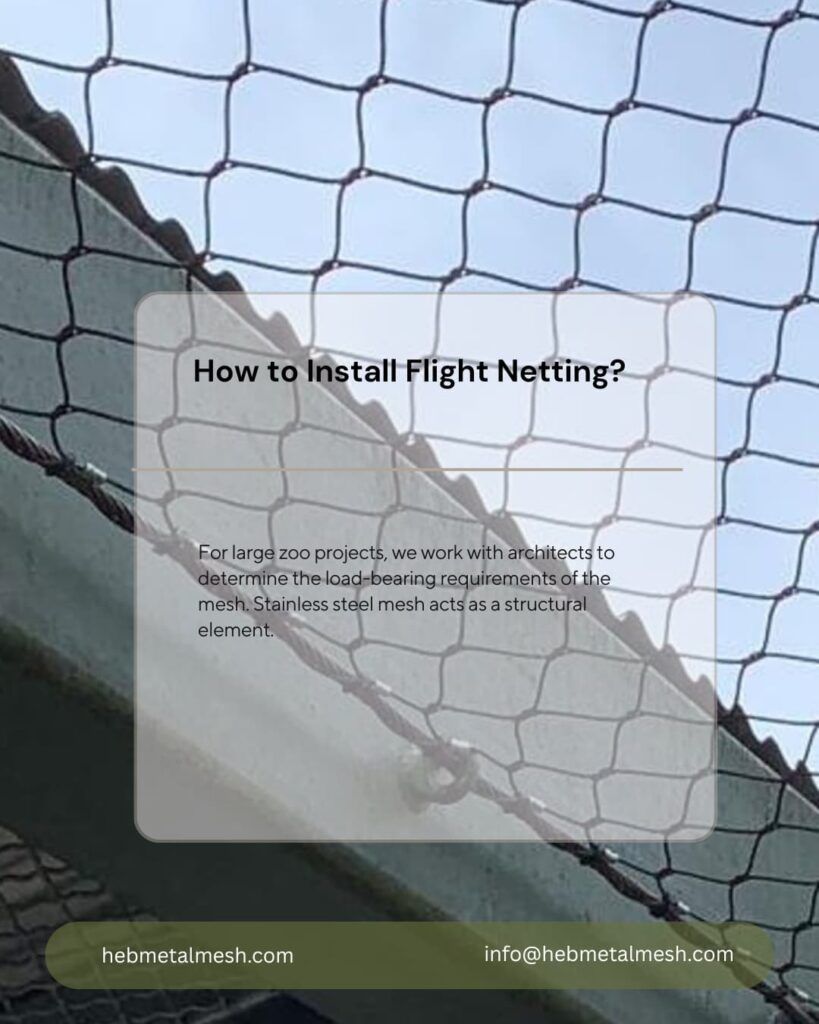
7. Case Studies: Hebmetalmesh in Action
For over a decade, Hebmetalmesh has been the trusted supplier for world-class facilities across the globe. Our handwoven stainless steel mesh isn’t just for leopards; its versatility makes it the premier choice for various wildlife environments.
Premier Zoo Exhibits
From the Savannah Zoo to prestigious parks in the USA and Europe, our black oxide mesh has transformed how visitors view large predators. Curators have reported a significant decrease in animal stress levels after switching to our mesh, as the open-weave design provides better airflow and sensory connection to the outside world without sacrificing security.
Innovative Aviaries and Bird Parks
Our lightweight rolls are a favorite for large-scale walk-through aviaries. Because we can provide large panel sizes (30′ x 60′), bird parks can cover massive flight domes with fewer seams. This prevents small birds from escaping and creates a more natural, open-air feeling for the inhabitants.
Wild Parks and Farm Enclosures
Beyond the zoo, our mesh is used in wild parks to create “safari-style” boundaries that blend into the landscape. Farmers and private estate owners also utilize our natural stainless steel mesh for high-end garden fencing and livestock protection, proving that the same strength used to contain a leopard is perfect for protecting valuable landscape assets.
8. Conclusion: Investing in Long-Term Excellence
Designing a leopard habitat is a commitment to both animal welfare and public safety. While cheaper fencing materials may seem attractive initially, they often lead to high maintenance costs, safety risks, and poor visitor experiences. By choosing Hebmetalmesh handwoven stainless steel mesh, you are investing in a permanent, high-security solution that respects the power and beauty of the leopard.
Our large 30′ x 60′ panels and custom sizing options mean your project will have fewer seams, higher structural integrity, and a cleaner aesthetic. Whether you choose the sleek Black Oxide finish for maximum visibility or the classic Natural stainless steel for a bright, clean look, you are choosing the industry standard for modern zoo architecture.
9. Frequently Asked Questions (FAQs)
Q: What is the best mesh size for a leopard habitat? A: We recommend a 2.0mm to 3.2mm wire diameter with a 2″x2″ or 3″x3″ mesh opening. This ensures leopard claws cannot gain a foothold while maintaining extreme tensile strength.
Q: Why use stainless steel mesh instead of chain link? A: Stainless steel handwoven mesh is far more durable, won’t rust, and offers significantly better visibility. Chain link is rigid and can be deformed by a leopard’s impact over time.
Q: Does black oxide mesh fade over time? A: No. Our black oxide process is a chemical conversion that becomes part of the steel’s surface. It won’t peel, flake, or fade, even under intense UV exposure.
Q: Can I order custom-sized panels for a leopard enclosure? A: Yes! Hebmetalmesh specializes in customized rolls and panels up to 30′ x 60′ with no additional cost for custom sizing.
Q: Is the mesh safe for leopard claws? A: Absolutely. The handwoven design is smooth and flexible. Unlike welded wire, there are no sharp burrs that could cause injury to a leopard’s paws or mouth.
Q: How long does stainless steel zoo mesh last? A: When using high-quality 316 stainless steel, you can expect a lifespan of 30 to 50 years with virtually no maintenance.
Q: What is the benefit of large 30′ x 60′ panels? A: Larger panels mean fewer connection points. This creates a stronger overall structure and a much cleaner, more “invisible” look for visitors.
Q: Can this mesh be used for leopard roof covers? A: Yes. Its high strength-to-weight ratio makes it ideal for securing the tops of enclosures to prevent leopards from leaping or climbing out.
Q: Is 304 or 316 stainless steel better for zoos? A: 304 is excellent for most inland environments. However, 316 is highly recommended for coastal zoos or areas with high humidity due to its superior salt and chemical resistance.
Q: How do I buy Hebmetalmesh products? A: You can browse our full catalog and purchase directly through our online store.
Ready to Build a World-Class Leopard Habitat?
Don’t settle for “standard” fencing when you can have a custom-engineered solution. At Hebmetalmesh, we provide the strength you need with the visibility your visitors deserve.
Would you like me to generate a custom quote or help you select the specific wire diameter for your next zoo project?
By choosing Hebmetalmesh, you are investing in a permanent, high-security solution that respects the power and beauty of the leopard. Our large 30′ x 60′ panels and custom sizing options mean your project will have fewer seams and higher structural integrity.
Ready to start your project? You can buy stainless steel mesh online directly through our store, where we offer customized rolls with no additional cost for custom sizing.
Secure Your Leopard Habitat with Hebmetalmesh
Looking for high-security, “invisible” zoo mesh? We supply customized handwoven stainless steel mesh rolls and fence panels tailored to your exact dimensions.
• No Additional Cost for custom sizes.
• Large panels up to 30′ x 60′ available.
• Choose between Natural or Black Oxide finishes.