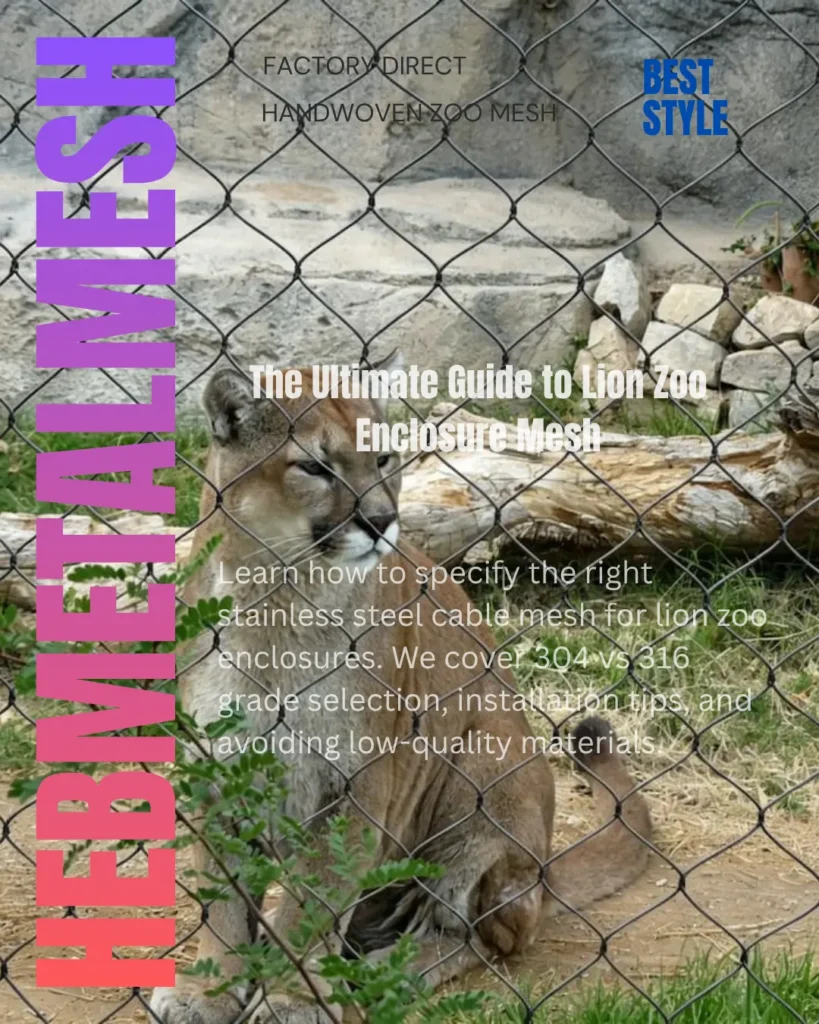
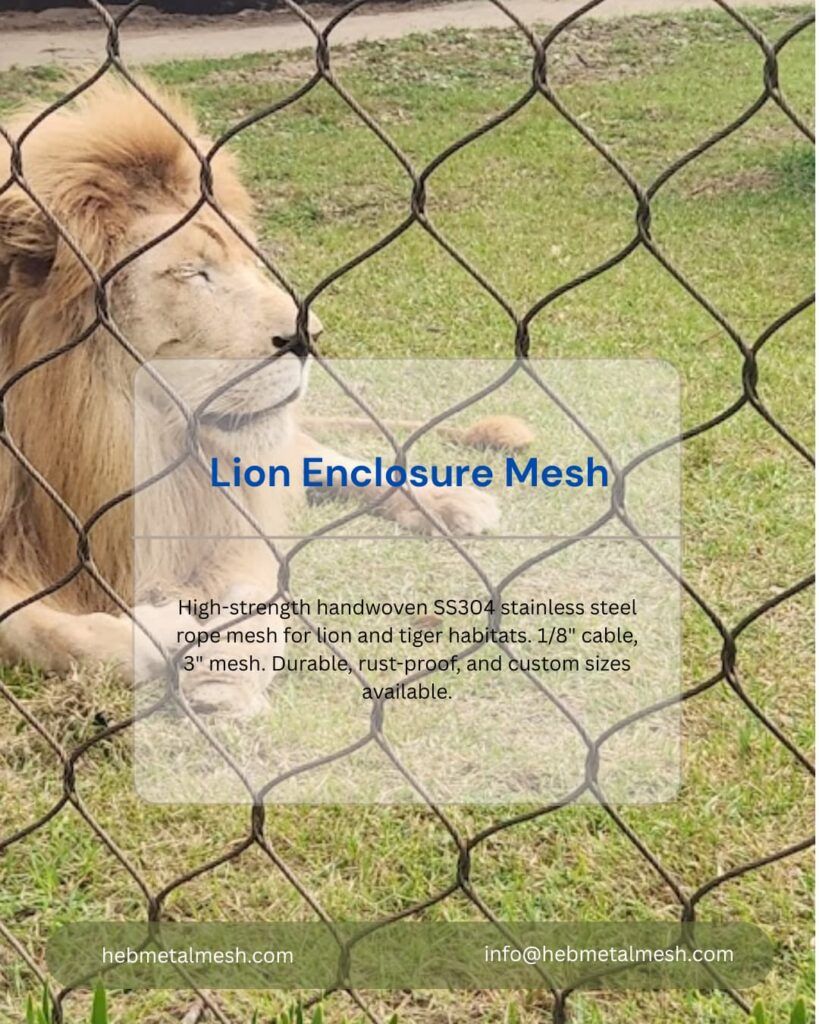
To build a secure lion zoo enclosure, procurement managers must prioritize high-tensile stainless steel cable mesh that guarantees both structural integrity and animal welfare. Successful projects hinge on three factors: selecting the correct grade (AISI 304 vs. 316) based on climate, specifying the right mesh aperture to prevent claw snagging, and ensuring certified factory-direct installation methods. This guide outlines how to source premium materials that meet international safety standards while avoiding common pitfalls that lead to premature corrosion and failure.
1. Introduction: Balancing Safety and Visibility
Designing a habitat for an apex predator is an exercise in engineering precision. The core challenge lies in creating a physical barrier that is virtually impenetrable to a lion’s strength and sharp claws, yet transparent enough for visitors to enjoy an unobstructed, naturalistic viewing experience. Traditional barriers like chain-link or rigid steel bars often fall short, either by creating “caged-in” visuals that detract from the visitor experience or by failing to withstand the corrosive impacts of the environment over time.
As zoo architects and procurement teams move toward more modern, open-concept designs, stainless steel cable mesh has become the gold standard. It offers high tensile strength and minimal visual footprint. However, not all mesh is engineered for the rigors of a big cat exhibit.
From a professional China stainless steel cable mesh factory with 20+ years export experience, we understand that the quality of your procurement decision today determines the safety of the habitat for the next two decades. We have supported global zoo projects by providing high-performance Lion Enclosure Fence Netting Mesh that combines safety-rated raw materials with specialized fabrication techniques. In this guide, we provide the technical transparency needed to make informed decisions for your next zoo habitat project.
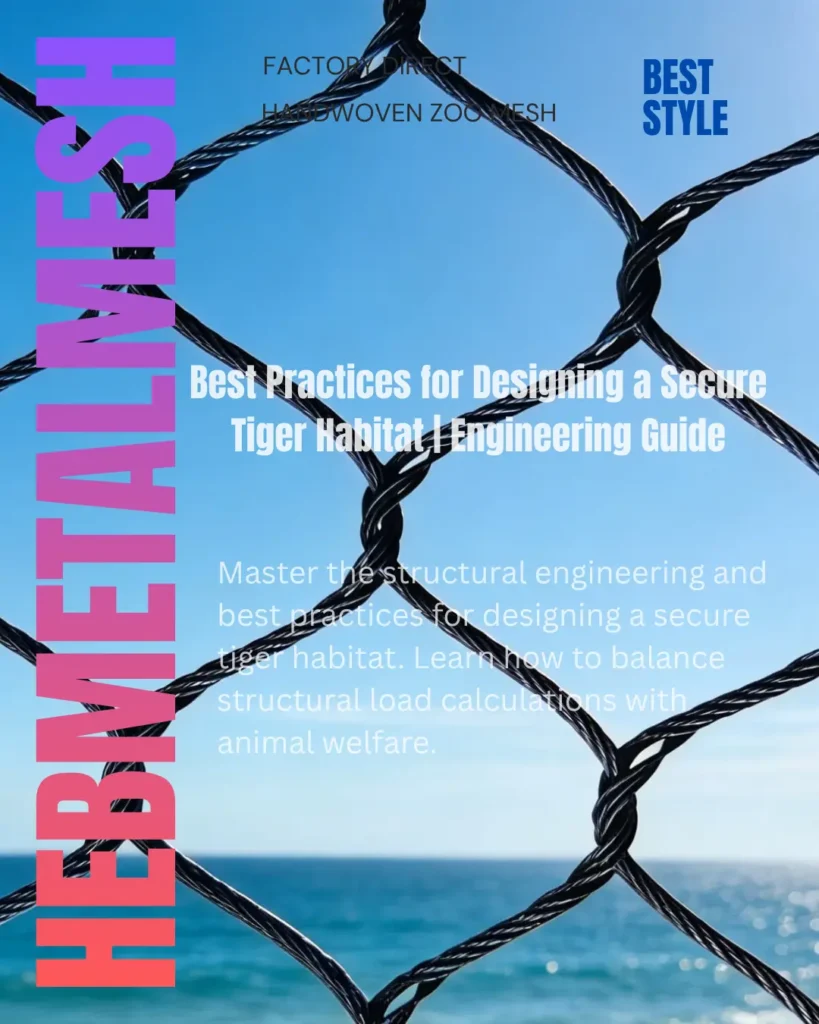
2. Critical Material Selection: 304 vs. 316 Grade
The longevity of a lion zoo enclosure is determined long before the mesh arrives on-site; it begins with the chemical composition of the stainless steel. While both Grade 304 and 316 are high-quality, corrosion-resistant alloys, the difference between them is vital for zoo infrastructure.
The Chemical Difference: Why Molybdenum Matters
The primary difference is the addition of Molybdenum in Grade 316. While both grades contain Chromium and Nickel, Grade 316 includes approximately 2% to 3% molybdenum. This seemingly small addition acts as a powerful shield against pitting and crevice corrosion. In environments where stainless steel is exposed to chlorides—such as salt spray in coastal areas or the ammonia found in animal waste—standard Grade 304 can begin to develop microscopic surface rust. Grade 316, however, maintains its passive oxide layer, ensuring the metal remains smooth and structural for decades.
Climate-Based Procurement Decisions
Choosing the wrong grade leads to a “hidden cost” in maintenance.
- Inland/Dry Usage (304): For zoos located far from the ocean in temperate or dry climates, AISI 304 is often sufficient. It provides excellent strength and rust resistance for standard zoo exhibits, offering a high-value, cost-effective solution for large-scale fencing.
- Coastal/Humid/Corrosive Usage (316): If your zoo is located within 5–10 miles of the coast or in a region with extremely high humidity, Grade 316 is a non-negotiable requirement. Salt-laden air acts as a catalyst for corrosion. Using 304 in these environments often leads to “tea staining” within a few years, which compromises the aesthetics of the exhibit and can eventually weaken the wire rope.
Verification: Requesting Mill Test Certificates (MTC)
To ensure you receive the quality you paid for, always demand a Mill Test Certificate (MTC). This document provides the chemical breakdown of the specific batch of steel used to produce your mesh. Look for clear, traceable data that verifies the content of Chromium, Nickel, and Molybdenum. If a supplier is unable to provide an MTC, it is a significant red flag that the material may be a lower-quality “look-alike” alloy.
3. Technical Specifications for Apex Predator Safety
Safety in a lion habitat is not just about the strength of the material; it is about the geometry of the design. Selecting the correct wire diameter and aperture ensures that the enclosure can withstand the dynamic force of a lion jumping against it while remaining safe for the animal’s paws.
Wire Diameter: High-Impact Resistance
Lions are powerful athletes capable of generating significant force upon impact. We recommend a wire rope diameter between 2.0mm and 3.2mm.
- 2.4mm: Ideal for smaller exhibit partitions or areas with lower impact risk.
- 3.2mm: The industry standard for high-traffic or primary perimeter walls where the risk of animal contact is constant. This gauge ensures that the mesh remains elastic enough to absorb energy without snapping or permanently deforming.
Aperture Optimization: Balancing Safety and Visibility
The aperture—or “hole size”—is the critical metric for preventing injury.
- 60mm – 100mm: This range is the “sweet spot” for lion enclosures.
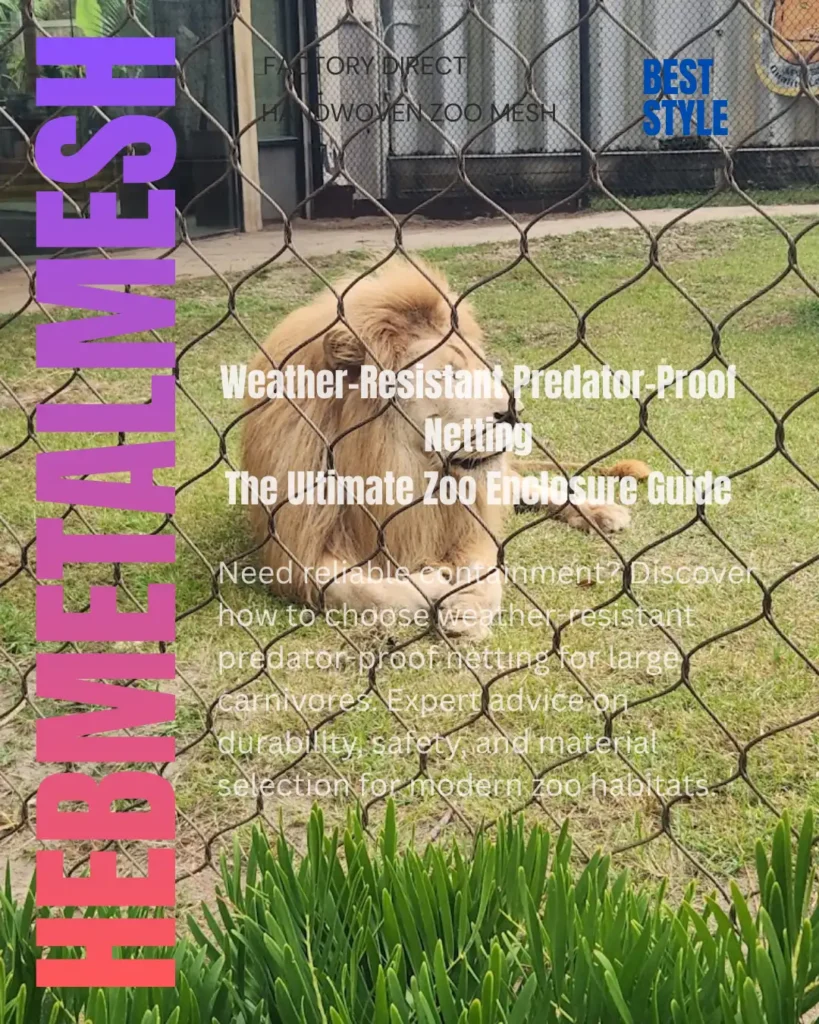
- The Snagging Risk: If the aperture is too large, it may allow an adult lion to get its paw stuck, leading to injury or panic. Conversely, if the aperture is too small, the high density of steel can obscure the visitor’s view, creating a “caged” look that diminishes the immersive nature of the exhibit.
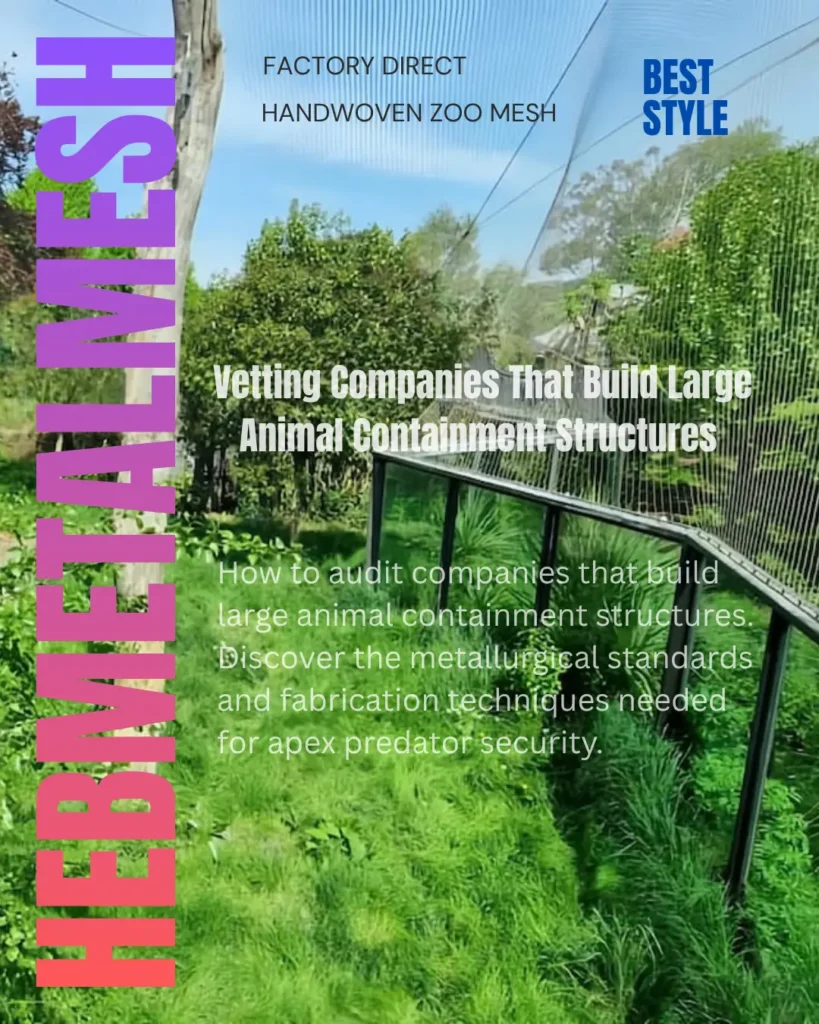
- Visibility: By using high-tensile wire at these specific apertures, you create a barrier that is “transparent” to the human eye from a distance, allowing visitors to feel as though they are sharing the space with the lions without the visual obstruction of thick bars or chain-link.
4. Advanced Manufacturing & Surface Finish
The durability of a lion zoo enclosure relies heavily on the final treatment of the wire surface. During the manufacturing process, stainless steel cable is subjected to intense stress, and the surface finish determines how effectively the material will resist environmental degradation over its lifespan.
The Polishing Debate: Why Electropolishing Wins
Many suppliers rely on mechanical polishing, which uses abrasive pads or belts to buff the surface to a shine. While this creates a bright, reflective appearance, it is fundamentally flawed for high-stress outdoor environments. Mechanical polishing can actually embed tiny particles of the abrasive material into the stainless steel surface, creating microscopic “pitting” sites where corrosion can take root.
From a professional China stainless steel cable mesh factory with 10+ years export experience, we exclusively utilize electropolishing for zoo-grade orders. Unlike mechanical methods, electropolishing is an electrochemical process that removes surface impurities and peaks at a microscopic level. It effectively “passivates” the wire, strengthening the natural chromium-oxide layer. The result is a smoother, more uniform finish that is far less likely to harbor dirt, bird droppings, or moisture—the primary precursors to rust.
Anti-Corrosion Standards: ASTM B117 Compliance
Zoo environments are uniquely harsh; they involve high exposure to UV rays, animal waste (which is often acidic), and moisture. To guarantee that our mesh meets these challenges, we subject our production batches to rigorous testing, specifically referencing the ASTM B117 salt spray test standard.
In this test, mesh samples are placed in a closed chamber and subjected to a continuous, dense salt fog. This mimics years of coastal or humid exposure in a matter of hours or days. Our electropolished 316-grade mesh consistently outperforms mechanical alternatives in these tests, showing zero signs of pitting or staining. When specifying mesh for your project, always ask your supplier if their production process can pass the ASTM B117 standard—it is the definitive benchmark for long-term corrosion resistance.
5. Edge Fixing and Structural Integrity
The most common failure point in any fencing system is not the wire itself, but the connection between the mesh and the perimeter frame. Proper tensioning is required to prevent sagging, and the chosen fixing method must be able to handle the high-impact energy of a large predator.
The Three Pillars of Secure Installation
To achieve the best balance of safety and aesthetics, we categorize installation techniques into three primary methods:
- Sleeve/Ferrule Systems (Recommended for Lions): This is the industry gold standard for predator exhibits. The mesh border is finished with high-strength metal sleeves (ferrules) that are hydraulically crimped onto the cable ends. This creates a permanent, high-tensile termination that will not slip under load. It provides the highest safety rating, ensuring that even if a lion charges the perimeter, the connection remains intact.
- Buckle/Clamping: This method is preferred when the enclosure design requires modularity or periodic access. Clamps allow the mesh to be tightened or loosened over time. While highly secure, it is generally used for secondary barriers or internal exhibit divisions rather than primary high-impact perimeter walls.
- Winding/Weaving: This approach involves weaving the mesh cables directly around a perimeter rod or cable. This results in the cleanest, most minimalist visual aesthetic because it eliminates visible hardware. While elegant, it requires precise calculation of initial tension and is best suited for environments where high-impact “shock” loading is minimal.
For detailed diagrams and specifications on how to integrate these methods into your specific tension frame design, please refer to our full guide on Technical Mounting Systems. Choosing the right fixing method early in the design phase prevents costly on-site modifications and ensures the structural integrity of your enclosure for years to come.
6. Logistics: Protecting Your Investment
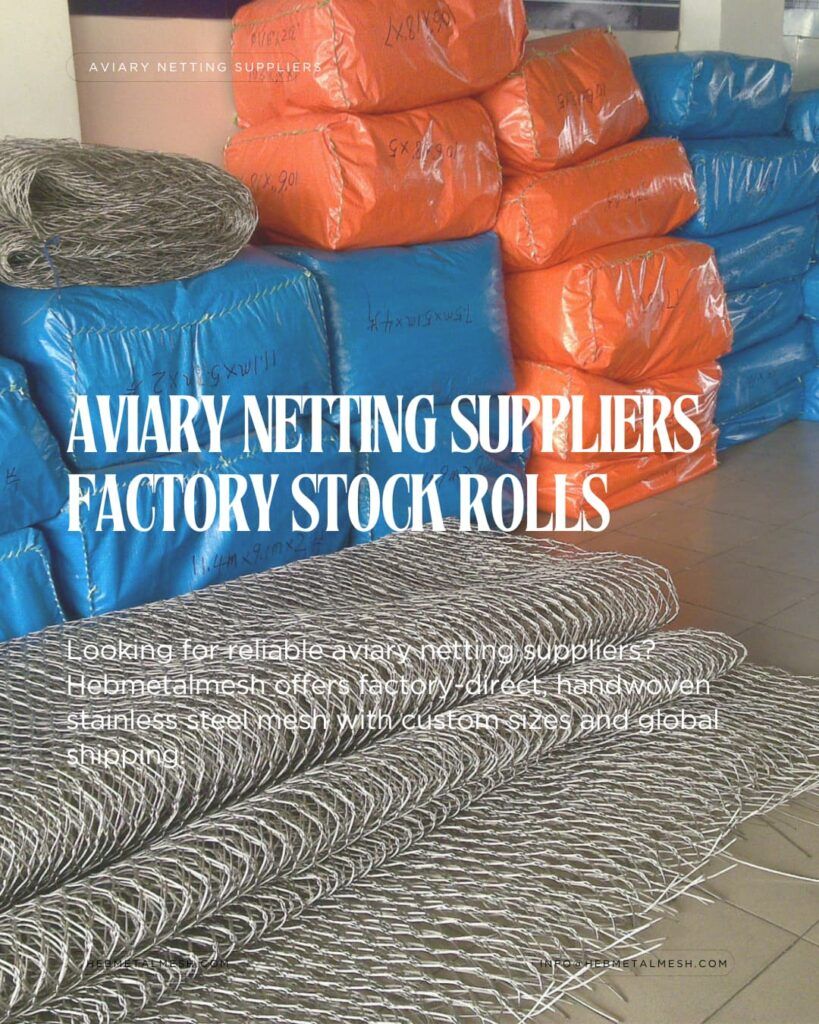
Even the highest-quality stainless steel mesh can be compromised if handled poorly during shipping or installation. At our factory, we view logistics as the final stage of manufacturing. Protecting the mesh from the moment it leaves our facility until it is installed on your site is critical to ensuring a perfect, kink-free result.
Export Packing Protocols
High-tensile stainless steel rope is flexible but sensitive to improper handling. If bent at an extreme angle during transport, the wire can suffer from “kinking,” which permanently ruins the aesthetic and structural integrity of the panel.
To prevent this, we employ a strict packing protocol:
- Roll Integrity: Each mesh panel is carefully rolled around a rigid core to maintain tension and prevent crushing.
- Moisture Protection: We wrap all rolls in industrial-grade, moisture-proof plastic film to protect against salt air and humidity during sea transit.
- Fumigated Pallets: All shipments are secured on heat-treated, fumigated timber pallets. This ensures compliance with international phytosanitary regulations (ISPM 15) and provides a solid base for forklift handling, keeping the mesh off the ground and away from potential transit damage.
Site Prep: Avoiding Common Pitfalls
“Sagging” is the most common complaint in poorly designed enclosures, usually caused by frame misalignment. Our panels are fabricated based on your exact CAD drawings, meaning the mesh is manufactured to fit your specific frame geometry. If the frame is even slightly out of square, the mesh will not tension evenly.
- Pre-Installation: Always verify that your perimeter frame is perfectly square and level before attempting to attach the mesh.
- Tensioning: Use proper tensioning tools to ensure the wire is taut. If you notice “bowing” in the center of a panel, it is usually a sign that the perimeter frame is flexing under the tension of the mesh—reinforce the frame corners before final attachment to guarantee a sleek, professional appearance.
7. Frequently Asked Questions (FAQ)
Claw snagging occurs primarily when the mesh aperture is too large for the animal’s paw or when the surface is rough. We recommend an aperture of 50mm to 100mm. Additionally, our ferrule-type Lion Enclosure Fence Netting Mesh uses a smooth, machine-crimped sleeve that eliminates the sharp edges found in traditional welded wire mesh, significantly reducing the risk of snagging.
While 316 stainless steel is highly resistant to corrosion, it is not immune to surface buildup. In a zoo environment, periodic cleaning is essential to remove uric acid and atmospheric pollutants. Simply rinse the mesh with fresh water and use a soft cloth or a specialized stainless steel cleaner. Avoid using steel wool or carbon steel brushes, as these can leave iron particles on the surface that will eventually rust.
While requirements vary by region, most zoos require a Mill Test Certificate (MTC) that verifies the material’s chemical composition (ASTM/AISI standards). In high-safety applications, we also provide pull-test data confirming the breaking strength of our wire ropes, ensuring they exceed the dynamic load requirements for large predator containment.
Yes. We specialize in custom-fabricating large panels to reduce the number of on-site connections. By using our advanced ferrule-joining techniques, we can create expansive, near-seamless mesh walls. This not only improves the structural integrity of the lion zoo enclosure but also provides a much cleaner, more immersive visitor experience.
Custom fabrication lead times typically range from 3 to 6 weeks. This accounts for wire sourcing, precision weaving, ferrule termination, and final quality control. We recommend contacting our engineering team at the start of your design phase so we can coordinate production with your site’s construction schedule.
8. Key Takeaways & Conclusion
Procuring the right mesh for a lion zoo enclosure is an investment in both safety and the long-term operational efficiency of your exhibit. By focusing on the intersection of material science, precise engineering, and correct installation, you can create a habitat that is both secure for the animals and breathtaking for your visitors.
Buyer’s Checklist for Success:
- Grade Selection: Choose 304 for inland dry climates; mandate 316 for coastal or high-humidity zones to prevent long-term corrosion.
- Quality Verification: Always request a Mill Test Certificate (MTC) to guarantee the chemical composition of your steel.
- Safety Geometry: Specify a 2.0mm–3.2mm wire diameter with a 60mm–100mm aperture to balance impact resistance with animal safety.
- Surface Finish: Insist on electropolishing to ensure a smooth, passive surface that resists buildup and rust.
- Installation Strategy: Prioritize sleeve/ferrule termination for high-impact zones to ensure structural integrity.
- Logistics: Ensure your supplier uses moisture-proof packing and fumigated pallets to protect against transit damage.
For deeper insights into the specific safety protocols and regulatory requirements currently impacting zoo design, explore our comprehensive guide: Lion Protect: What You Need to Know Now. By adhering to these standards, you ensure that your enclosure remains a flagship exhibit for years to come.
9. CTA
From a professional China stainless steel cable mesh factory with 10+ years export experience, we understand the technical demands of zoo architecture. Whether you are in the planning phase or seeking a quote for a custom-fabricated enclosure, our engineering team is ready to assist.
Ready to Secure Your Zoo Habitat?
Don’t leave the safety of your exhibit to chance. Get a custom quote and expert engineering consultation tailored to your specific project needs.
Request Your Custom Fabrication QuoteFast turnaround for global shipping and professional technical support.