
Executive Summary
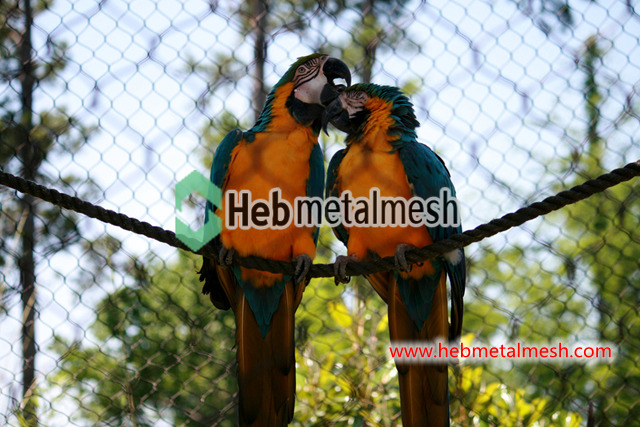
Designing a successful macaw enclosure requires prioritizing three non-negotiable pillars: structural durability, absolute bird safety, and the use of non-toxic materials. Because macaws are highly intelligent and possess powerful, destructive beaks, standard pet-grade wire often fails, leading to costly repairs and potential safety risks. For professional zoo-grade habitats, stainless steel cable mesh has become the industry standard due to its superior tensile strength, remarkable flexibility, and long-term resistance to corrosion. Unlike rigid welded wire, flexible cable netting absorbs the kinetic energy of a macaw’s bite, preventing fatigue and structural failure. Whether you are planning a large-scale flight cage or a backyard aviary, selecting the correct material—specifically high-grade stainless steel—ensures both the longevity of the structure and the physical wellbeing of your birds. For a deeper dive into the engineering behind these structures, please refer to our Ultimate Macaw Aviary Guide: Design & Safety.
2. Introduction
Housing macaws is a rewarding experience, but it presents a unique engineering challenge that most standard bird cages simply cannot meet. These magnificent birds are among the most intelligent and energetic parrots in the world, equipped with beaks designed to crack the hardest nuts in the rainforest. When placed in a sub-par environment, a macaw will treat a standard wire cage as a puzzle to be dismantled, eventually causing damage that compromises the entire structure.
The integrity of a macaw enclosure is not just about keeping the bird inside; it is about ensuring their long-term health and safety. A poorly constructed aviary can lead to two major dangers: the risk of escape and the risk of toxic ingestion from degraded, low-quality materials. Macaws are notorious for chewing on the boundaries of their habitat, and if the wire contains zinc or other harmful coatings—commonly found in cheaper, galvanized alternatives—it can lead to severe heavy metal poisoning.
To create a sanctuary that truly lasts, you must shift your perspective from “cage building” to “habitat engineering.” By choosing materials that prioritize impact resistance and safety, you provide a space where your macaws can thrive through natural behaviors like climbing and flight, rather than spending their time testing the limits of their containment. In the following sections, we will explore the critical technical specifications, from steel grades to installation hardware, that will help you build a professional-grade, escape-proof habitat.
3. Why Material Choice Defines Your Macaw Enclosure
The most frequent mistake bird owners and project managers make is prioritizing upfront cost over material science. When building a macaw enclosure, the material you choose is the single most important factor for both the bird’s safety and your long-term maintenance budget. When planning the aviary, our article Macaw Aviary Mesh Panels For Sale can also serve as a useful supplementary reference.
The Danger of Galvanized vs. Stainless Steel
Many standard enclosures utilize galvanized steel—steel coated with a layer of zinc to prevent rust. While inexpensive, galvanized wire is a significant health hazard for macaws. These birds are natural chewers; they will inevitably gnaw on the wire, ingesting tiny flakes of zinc in the process. Over time, this leads to heavy metal poisoning, which is often fatal if not caught early. Furthermore, the zinc coating eventually wears away, exposing the base steel to moisture, which causes the wire to rust and weaken, turning a secure wall into a potential escape route. Stainless steel is the only non-toxic, permanent solution for a healthy, high-energy parrot.
304 vs. 316 Stainless Steel: A Technical Breakdown
Not all stainless steel is created equal. Understanding the difference between 304 and 316 alloys is essential for climate-specific planning.
| Feature | SS304 Stainless Steel | SS316 Stainless Steel |
|---|---|---|
| Composition | Chromium-Nickel | Chromium-Nickel + Molybdenum |
| Corrosion Resistance | Excellent (Standard) | Superior (High) |
| Ideal Environment | Inland, dry, or mild climates | Coastal, high-humidity, or industrial areas |
| Cost | More economical | Higher due to Molybdenum content |
| Best For | Standard backyard aviaries | Zoo exhibits near oceans or salt air |
Selecting the right grade is about preventing “pitting,” a form of localized corrosion that can occur in harsh environments. To view our full range of professional-grade options, explore our high-quality mesh products today.
4. Zoo-Grade Wire Mesh: Factory Insights & Engineering
At HEBMETALMESH, we do not just sell wire; we engineer containment solutions. Understanding the “how” behind the manufacturing process is critical for anyone building a serious macaw habitat. When planning an aviary, our article How Aviary Netting For Pheasant Bird Enclosure can also serve as a practical supplementary reference.
Raw Material Grade
We source high-purity stainless steel coils directly from top-tier mills. We verify the chemical composition of every batch to ensure it meets international quality standards. By controlling the raw material supply, we guarantee that the wire used in your macaw enclosure is free from impurities and possesses the exact tensile strength required for animal containment.
Structure Matters: The Power of 7×7 and 7×19
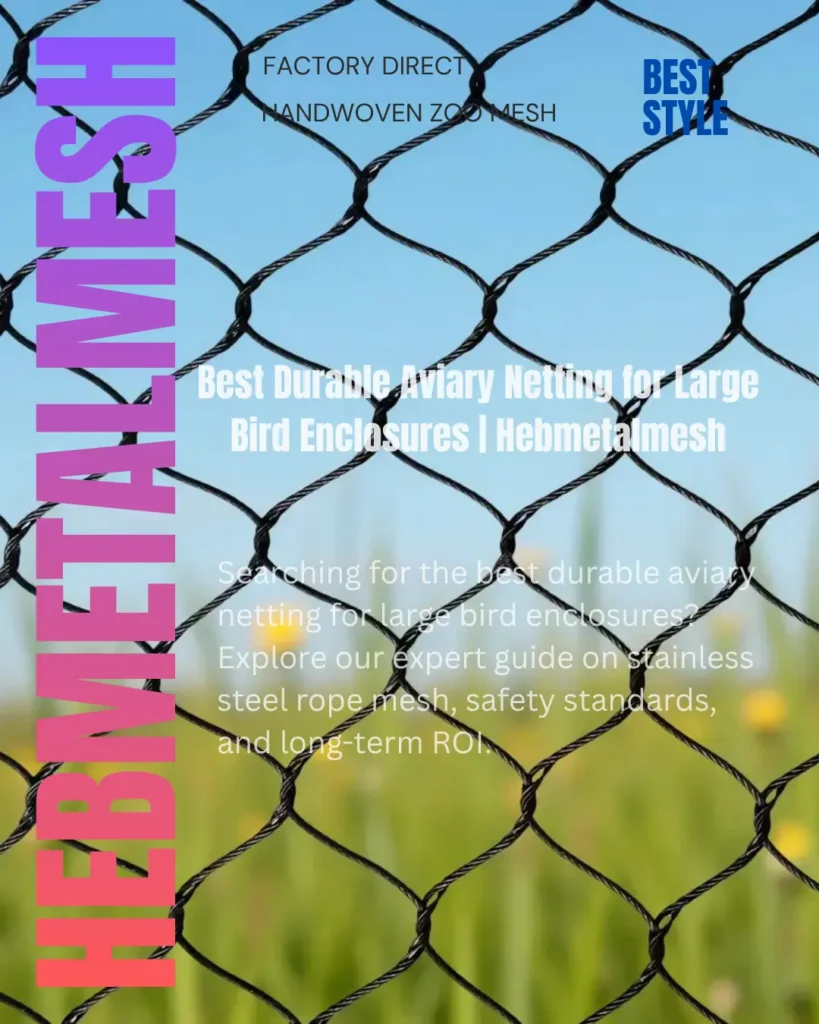
A common failure in macaw aviaries is using rigid, welded-wire panels. When a macaw bites a rigid wire, the force is concentrated in one spot, leading to “beak fatigue” and eventually snapping the wire. In contrast, our wire rope netting uses a 7×7 or 7×19 strand configuration. This braided design creates a flexible mesh that acts like a spring—it absorbs the energy of the bird’s bite and distributes it across the entire panel. This flexibility prevents the mesh from fatiguing, making it virtually indestructible against even the most persistent macaws.
Anti-Corrosion Treatments
Beyond the inherent properties of stainless steel, we utilize specialized passivation processes. Passivation is a post-fabrication treatment that removes free iron from the surface of the steel and strengthens the protective chromium-oxide layer. This chemical process significantly extends the lifespan of the mesh, ensuring that it remains rust-free and aesthetically clear even after years of exposure to rain, wind, and avian waste.
Custom Size Service
Factory-direct fabrication is the secret to a seamless build. Rather than buying standard-sized sheets and cutting them on-site—which creates sharp edges, material waste, and weak points—we fabricate the mesh panels to your project’s specific dimensions. This custom approach ensures:
- Zero wasted material: You only pay for what you need.
- Faster installation: Panels arrive ready to hang, reducing labor costs.
- Enhanced security: Custom edge configurations ensure that there are no gaps for a bird to pry open.
5. Design Considerations for Large Parrot Habitats
When designing a habitat for macaws, the “details” are often the most critical points of failure. A well-planned habitat balances the bird’s need for flight and stimulation with the owner’s need for security and maintenance.
Aperture Size: Preventing Head Entrapment
One of the most vital safety specifications for any macaw enclosure is the aperture size—the measurement of the mesh opening. For large macaws, such as Hyacinth or Green-winged macaws, the mesh must be small enough to prevent the bird from poking its head through the diamond-shaped openings. If a bird can fit its head through a gap, it can easily become stuck, leading to panic, injury, or even strangulation. We recommend specific aperture dimensions based on your species. Always prioritize a tighter mesh pattern if you are housing smaller birds in the same structure.
Strength & Flexibility: The “Welded vs. Woven” Debate
Many hobbyists fall into the trap of using rigid welded wire panels. While these appear sturdy initially, they have a major flaw: they are brittle. A macaw’s beak is designed for immense crushing force. Because welded wire cannot “give” or flex, the junction points—the weld spots—are under constant, localized stress. Over time, these welds fatigue and snap, creating sharp wire ends that can injure your bird.
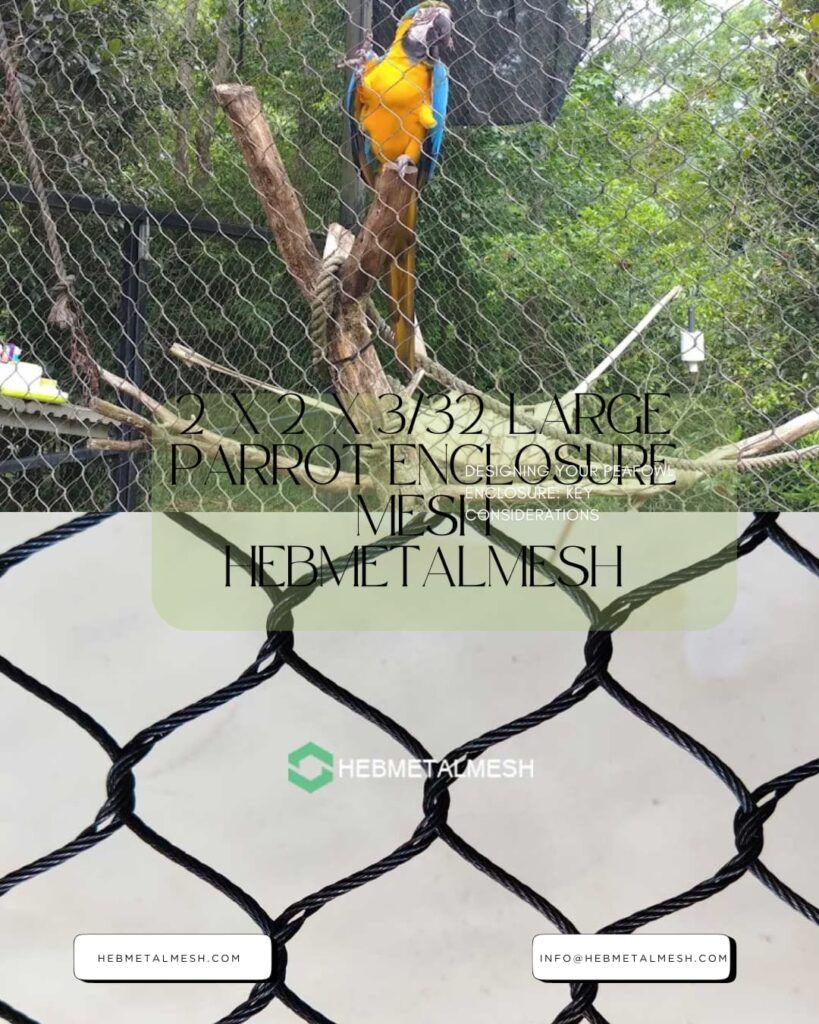
In contrast, woven wire rope netting is inherently flexible. Because the strands can shift and distribute the bite pressure across the entire diamond structure, it is nearly impossible for a parrot to create a “beak fatigue” point. This is why professional zoo-grade habitats exclusively utilize cable mesh. For those looking for the right balance of visibility and structural integrity, our 2×2 Large Parrot Enclosure Mesh is engineered specifically to withstand these demands while providing an open-air feel.
6. Practical Construction: From Ground to Canopy
Building a secure macaw enclosure requires more than just high-quality mesh; it requires a systematic approach to the entire structure, from the foundation to the roof.
Foundation & Predator Proofing
Predators—such as raccoons, rats, or stray animals—are a constant threat to outdoor aviaries. A common oversight is failing to secure the perimeter. We recommend burying your mesh at least 12 to 18 inches below the ground level, or folding it outwards in an “L-shape” and burying it beneath a layer of pavers or gravel. This effectively prevents predators from digging underneath the walls. Always ensure that the connection between the ground frame and the wire mesh is sealed tight with heavy-duty metal stripping, leaving no gaps where teeth or paws can get a grip.
Installation Hardware: The Secret to Longevity
The longevity of your enclosure depends heavily on proper tensioning. A sagging or loose mesh is an invitation for a macaw to start chewing at the edges. To achieve a “drum-tight” finish, you need the right industrial-grade hardware.
We recommend procuring a full installation kit that includes:
- Swage Ferrules: Used to create strong, permanent loops at the mesh ends.
- Turnbuckles: Essential for fine-tuning the tension of your cables to prevent slack over time.
- Eye Bolts and Clamps: To anchor your mesh panels securely to the main frame of the macaw enclosure.
By using high-tensile hardware, you ensure that the entire structure acts as a unified system that can withstand wind loads and intense play. For a detailed walkthrough on how to properly mount your netting and secure these critical tension points, check out our guide on Macaw Cage Setup with Wire Cable Netting.
7. Maintenance and Longevity
Investing in a high-quality macaw enclosure is a long-term commitment. While stainless steel is remarkably durable, proper maintenance ensures it remains a safe, hygienic, and pristine environment for your birds.
Cleaning Without Harsh Chemicals
To maintain the integrity of your stainless steel netting, avoid harsh acidic cleaners or bleach, which can damage the protective chromium-oxide layer over time. For regular upkeep, simply use:
- Warm Water and Mild Soap: A soft-bristle brush and a mixture of mild dish soap and warm water are sufficient to remove dust, droppings, and debris.
- Pressure Washing: You can use a low-to-medium pressure washer for larger walk-in enclosures. Ensure you use a fan spray tip to avoid direct, high-pressure hits on the ferrules or cable connections.
- Rinsing: Always rinse thoroughly with fresh water to prevent soap residue from attracting dust.
Inspecting After Extreme Weather
Even the most robust structures should be inspected after high winds, storms, or heavy snowfall. Conduct a seasonal walkthrough to check for:
- Tensioning: Verify that turnbuckles haven’t loosened due to temperature fluctuations or heavy debris loads.
- Structural Integrity: Check the perimeter seals at the base where the mesh meets the ground to ensure no soil erosion has created gaps for predators.
- Connection Points: Look for any signs of movement at the frame-to-mesh attachments.
For more insights on maintaining your habitat, visit our resource on Macaw Outdoor Aviary: Creating the Perfect Habitat.
8. Key Takeaways
- Prioritize Safety: Always select non-toxic stainless steel to prevent heavy metal poisoning, which is a lethal risk with lower-quality galvanized materials.
- Choose the Right Grade: Use SS316 for coastal or high-humidity environments to maximize corrosion resistance; SS304 is excellent for standard inland use.
- Invest in Flexibility: Use woven cable nets with a 7×7 or 7×19 strand configuration to absorb beak impact and prevent structural fatigue.
- Mind the Aperture: Select an aperture size specifically suited to your macaw species to eliminate the risk of head entrapment.
- Professional Installation: Use industrial swage fittings and turnbuckles to maintain proper tension and ensure your macaw enclosure remains secure for years.
9. FAQ
For large macaws, we recommend a wire rope diameter of at least 2.0mm to 3.2mm. The exact gauge depends on the specific species and the size of the flight area; heavier gauges provide more resistance against constant, powerful chewing.
Prevent escape by using flexible cable mesh that eliminates rigid “bite points” and by ensuring your perimeter is buried or sealed with heavy-duty metal stripping. Professional-grade tensioning with turnbuckles also keeps the mesh drum-tight, leaving no room for prying.
Stainless steel is inert and non-toxic. Galvanized wire is coated in zinc, which macaws can ingest when they gnaw on the wire. Zinc toxicity is a common and dangerous health issue in pet parrots that stainless steel completely eliminates.
The cost varies based on dimensions, wire thickness, and material grade (SS304 vs. SS316). Because we provide custom fabrication, we recommend requesting a quote based on your specific project footprint to ensure you receive a cost-effective solution tailored to your layout.
Clean the mesh using warm water, a mild soap, and a soft-bristle brush. Avoid harsh chemicals or bleach, which can compromise the steel’s protective finish. Rinse thoroughly with clean water to prevent buildup and ensure the environment stays sanitary for your birds.
If you plan to place an order or require rolls, custom sizes and global shipping, stainless steel aviary netting serves as our core product page, featuring all available specifications and material options.
Need a Custom Macaw Enclosure Solution?
Don’t settle for standard cages. Get factory-direct, zoo-grade stainless steel mesh tailored to your exact dimensions.
Request a Factory Quote Today