
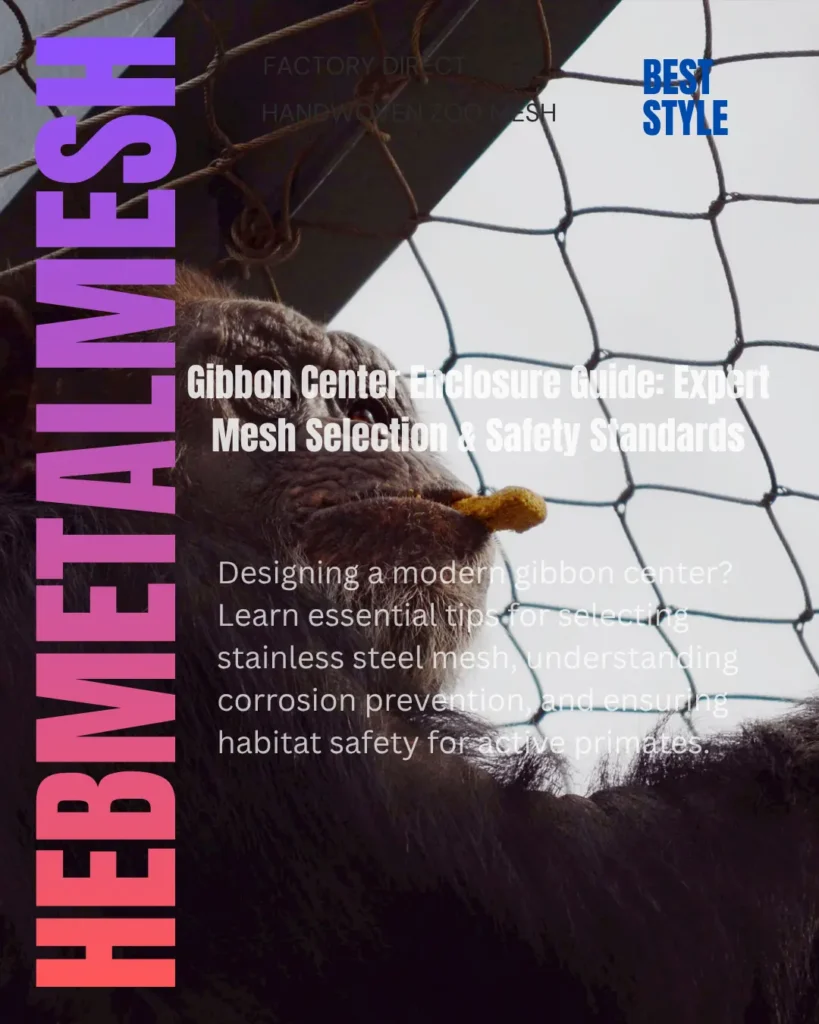
A professional gibbon center requires more than standard fencing; it demands specialized, high-tensile stainless steel cable mesh engineered for extreme durability and primate safety. This guide covers the critical technical requirements—from choosing between 304 and 316 stainless steel to understanding why 7×7 cable construction outperforms others for brachiation. Learn how to verify factory quality control, apply proper tensioning techniques, and protect your facility from long-term maintenance liabilities.
Designing a world-class gibbon center requires a delicate balance between complex engineering and the biological needs of highly active primates. When creating an environment for these expert brachiators, the primary concern must be the safety and longevity of the barrier systems. Unlike standard industrial fencing, primate enclosures require specialized materials capable of withstanding constant physical impact, extreme weather, and the unique stresses of daily use. This guide provides the technical insights necessary for zoo facility managers and engineers to select high-performance stainless steel mesh that meets international safety standards while ensuring a secure, transparent habitat for the animals under your care.
1. Key Takeaways
- Material Grade: Utilizing 316-grade stainless steel over 304 significantly enhances longevity, especially in humid or coastal climates, by providing superior resistance to environmental corrosion.
- Cable Construction: A 7×7 wire rope configuration is generally preferred over 7×19 for gibbon enclosures, as it offers a superior strength-to-flexibility ratio and improved cut resistance against primate interference.
- Surface Passivation: Professional passivation—an acid bath process—is vital to remove free iron from the wire surface, effectively preventing bio-fouling and long-term surface rusting.
- Maintenance Protocol: Consistent tension management is the most critical factor in habitat safety. Quarterly inspections should focus on detecting cable fatigue and ensuring that turnbuckles remain properly calibrated to seasonal thermal expansion and contraction.
2. Understanding the Needs of a Gibbon Center Habitat
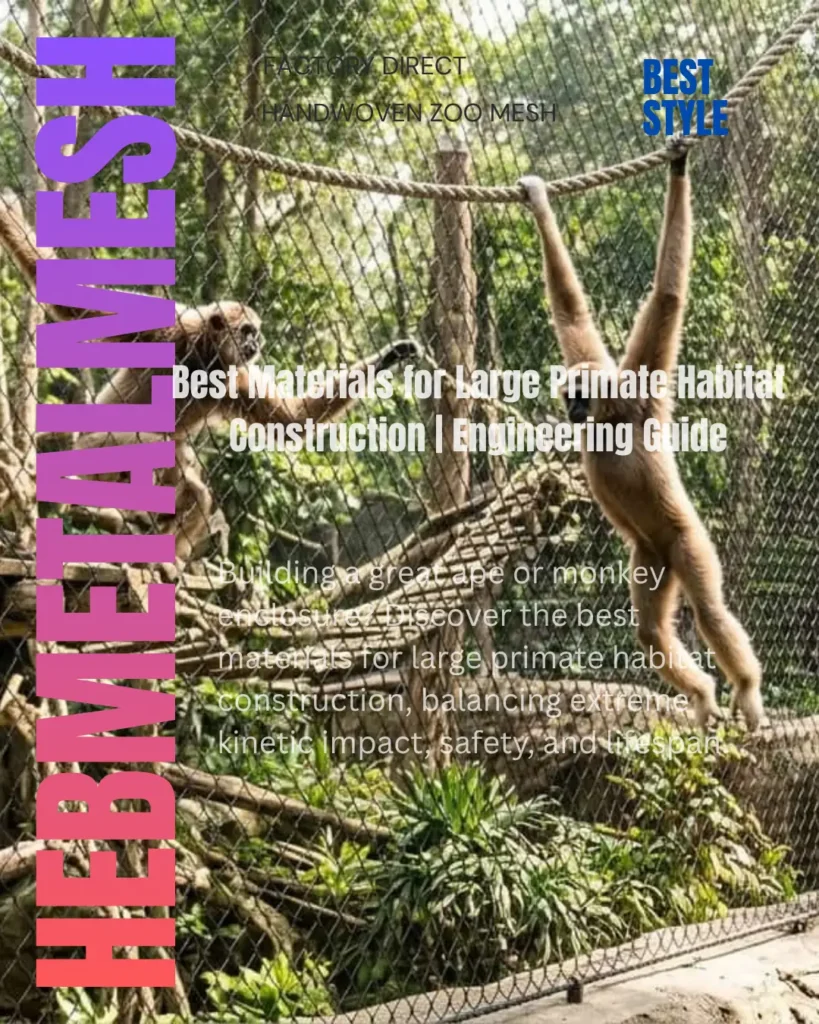
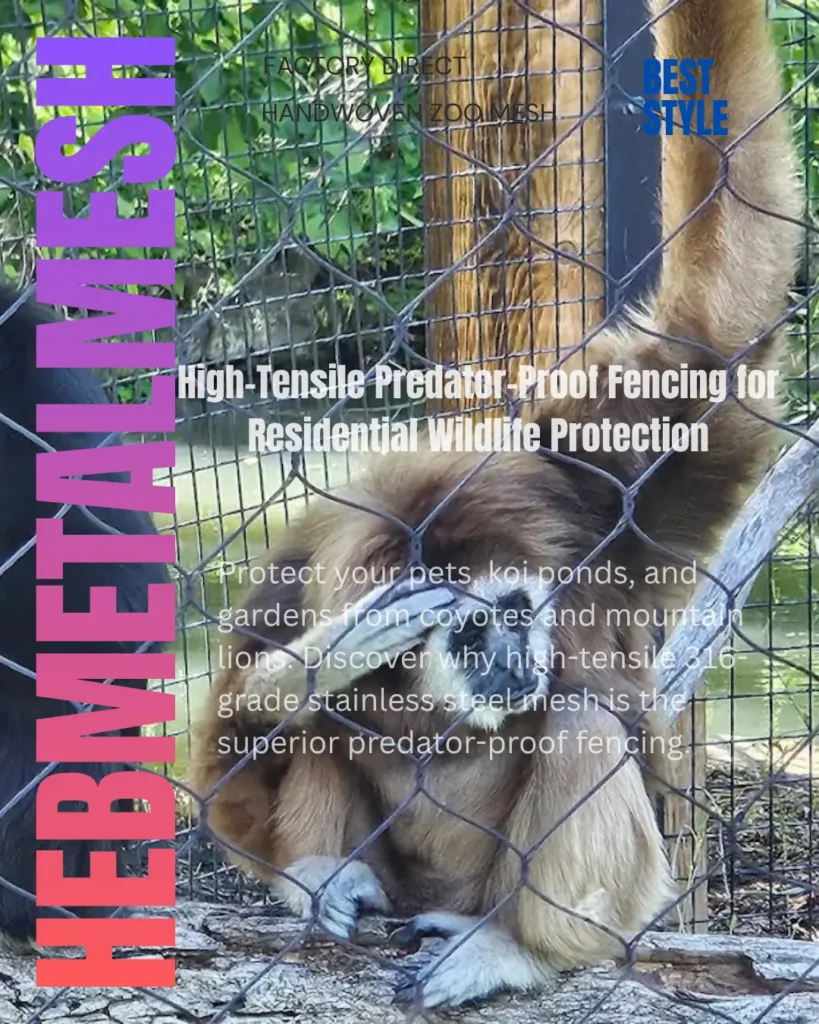
The design of a modern gibbon center habitat is fundamentally driven by the animals’ primary mode of locomotion: brachiation. Gibbons are specialized arboreal primates that propel themselves through the canopy with remarkable speed and force. When translating this natural behavior into a captive setting, the enclosure netting becomes an active structural component rather than a static barrier.
To prevent injuries and ensure long-term containment, the mesh system must be engineered to absorb dynamic loads. Gibbons do not just sit against the mesh; they swing from, hang off, and bounce against it, creating localized tension spikes that can compromise inferior materials. For this reason, selecting high-quality stainless steel cable mesh is a critical decision.
Beyond strength, the habitat must maintain high visual transparency to satisfy both the primates’ need for spatial awareness and the guests’ desire for unobstructed viewing. The goal is to provide a “spring-effect” containment—a system that is rigid enough to be secure but flexible enough to dissipate the energy of a swinging gibbon. By focusing on professional-grade materials and proper structural design, you can build a habitat that mimics the structural complexity of a forest canopy while adhering to the highest standards of zoo safety and operational longevity.
3. Material Selection: Why Grade Matters for Primate Safety
Selecting the correct alloy for your mesh is the single most important decision for long-term facility maintenance. In a gibbon center, the mesh is constantly exposed to moisture, animal waste, and—in many climates—outdoor weather cycles. Using the wrong grade of steel is not just a cosmetic issue; it is a structural risk.
304 vs. 316 Stainless Steel: Choosing Your Corrosion Defense
The fundamental difference between 304 and 316 stainless steel lies in their chemical composition. While 304 is the industry standard for general construction, 316 stainless steel includes a critical addition: molybdenum.
This alloying element significantly increases the steel’s resistance to pitting and crevice corrosion, particularly in environments exposed to chlorides (like salt spray in coastal zoos or humidity in tropical-themed exhibits). In a gibbon center, where the mesh is subject to animal-related organic acids and frequent cleaning, 304 can begin to show signs of surface tea-staining or oxidation within a few years. For any facility near a coastline or in a high-humidity region, 316 is non-negotiable. Investing in the higher-grade alloy during initial construction prevents costly future replacements and ensures the safety of the primates remains uncompromised.
The Science of Wire Rope: 7×7 vs. 7×19 Construction
When specifying cable, you will encounter two common configurations: 7×7 (seven bundles of seven wires) and 7×19 (seven bundles of nineteen wires). While 7×19 is more flexible, 7×7 construction is superior for gibbon habitats.
The reason is simple: strand density. Because 7×7 cables are composed of fewer, thicker wires, they offer significantly better cut resistance against primate interference compared to the thinner, more fragile wires found in 7×19. Furthermore, 7×7 construction provides the necessary rigidity to maintain shape under the dynamic loads of brachiation. Using overly flexible cable can lead to “mesh creep,” where the panels sag or lose tension over time, increasing the risk of entrapment. To understand how to best balance these mechanical properties for your specific enclosure geometry, refer to our gibbon barrier stainless steel mesh guide.
4. Advanced Anti-Corrosion and Finishing Processes
Material grade is only the starting point; the way the factory processes that material determines whether your mesh will last for a decade or a lifetime.
Passivation and Surface Treatments for Longevity
Many suppliers overlook the “passivation” step, but it is essential for zoo-grade hardware. During the manufacturing process, microscopic bits of iron from machinery can become embedded in the surface of the stainless steel. If these are not removed, they will rust immediately upon exposure to air or moisture, acting as a “seed” for further corrosion.
A high-quality manufacturer subjects all mesh to an acid bath (passivation). This treatment chemically dissolves these surface contaminants, leaving behind a clean, chromium-rich surface that naturally resists oxidation. Without this step, your mesh is highly susceptible to bio-fouling and rust, regardless of the steel grade used.
Black Oxide vs. Natural Finish: Balancing Visibility and Aesthetics
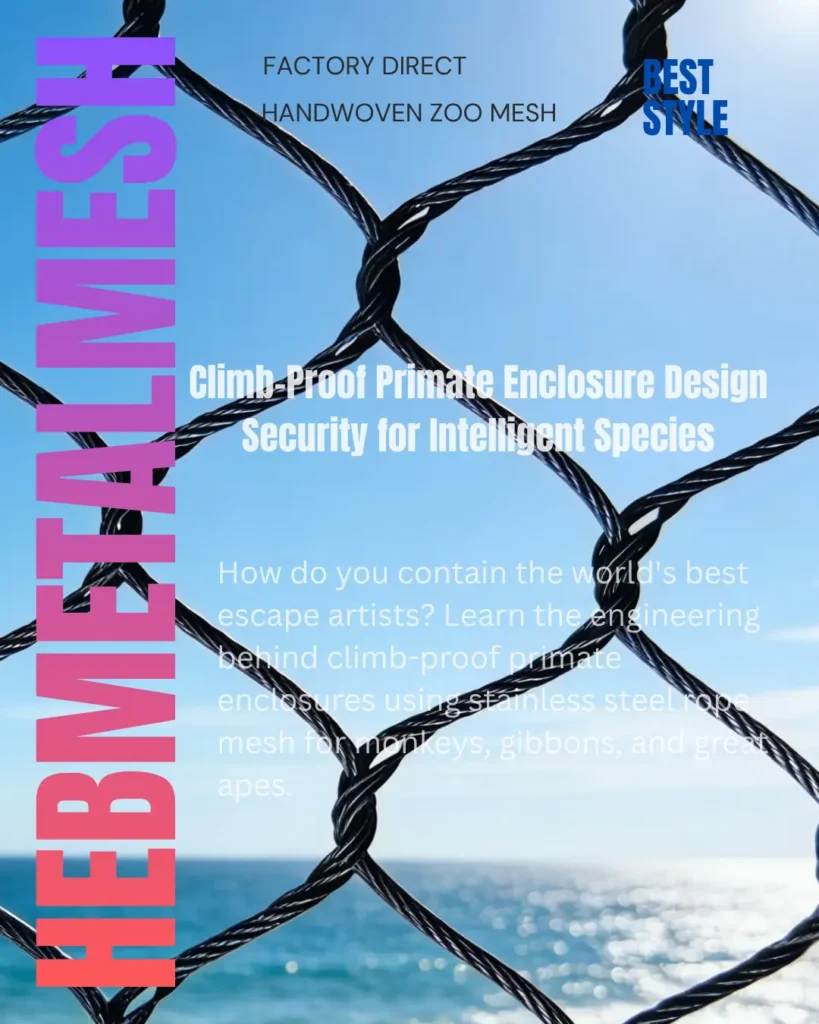
Beyond corrosion, the visual impact on the guest experience is a major priority for modern zoos. While natural stainless steel has a bright, reflective finish that can cause glare, black oxide coating is an excellent alternative. By darkening the steel, you effectively absorb light, which makes the mesh “disappear” against the background of the exhibit. This enhances zoological exhibit transparency, allowing visitors to view the gibbons without the distraction of reflective wire.
Comparison of Zoo Mesh Options
| Feature | 304 SS Mesh | 316 SS Mesh | Black Oxide Finish |
|---|---|---|---|
| Corrosion Resistance | Moderate | Superior | High |
| Best Environment | Dry/Inland | Humid/Coastal | All |
| Visibility | Standard | Standard | High (Anti-Glare) |
| Primary Use | General Enclosures | Salt-Air Exhibits | Premium Habitats |
5. Engineering for Brachiation: Designing High-Performance Enclosures
The physical activity level of a gibbon is unmatched among primates. Their brachiation—swinging from branch to branch—generates significant kinetic energy. When this force is applied to a barrier, it creates dynamic load stresses that must be accounted for during the design phase.
Calculating Tensile Strength for Active Gibbons
A common mistake in enclosure design is treating mesh as a simple static wall. In reality, large, unsupported panels act like a trampoline. As the panel size increases, the potential for “sag” and structural oscillation grows, which can lead to material fatigue.
Engineers must calculate the maximum allowable span based on the cable diameter and the weight of the occupants. For instance, a panel that is perfectly stable for a small enclosure may become hazardous if stretched across a massive, open-air exhibit without intermediate support cables or specialized border perimeter tensioning. To avoid these pitfalls, we recommend following the structural parameters outlined in our gibbon cage enclosure design guide, which provides the necessary data to determine panel limits and load-bearing requirements.
Installation Best Practices and Tension Management
Even the highest quality mesh will fail if it is improperly installed. Tension management is the “secret” to a long-lasting habitat. During installation, heavy-duty turnbuckles are essential to pull the mesh taut and ensure there are no pockets of slack where a gibbon might find grip for tampering.
However, be careful not to over-tighten, as this places unnecessary stress on the ferrules and can shorten the fatigue life of the stainless steel wire. Additionally, you must account for thermal expansion. Metal expands in the summer and contracts in the winter; therefore, a seasonal re-tensioning schedule is required. Regularly checking your tension settings ensures the habitat remains secure year-round. For a deeper look at selecting the right hardware and tensioning tools, consult our gibbon fence materials for optimal habitat design.
6. Factory Quality Control: Ensuring Zoo-Grade Reliability
When you procure mesh for a gibbon center, you are not just buying wire; you are buying liability protection. The difference between an off-the-shelf product and a zoo-grade solution lies in rigorous, documented quality control.
From Raw Material Testing to Final Inspection
Quality assurance must begin at the wire rod stage. Before any weaving takes place, batches of stainless steel must undergo tensile testing to verify that they meet specific elongation and breaking strength requirements. Once the mesh is woven, the focus shifts to finish quality.
Our manufacturing process includes a specialized inspection for micro-burrs—tiny, sharp protrusions on the wire or ferrules. These are virtually invisible to the naked eye but can cause lacerations to a gibbon’s sensitive palms during daily brachiation. By implementing strict batch-testing protocols, we ensure that every panel of gibbon enclosure fence netting mesh is smooth, uniform, and safe for animal interaction.
Quality Assurance and Liability Protection
For procurement officers and zoo directors, material certification is the ultimate risk-mitigation tool. Relying on “standard” industry materials without proper documentation can leave a facility vulnerable to safety breaches and warranty voids.
Always demand certified material test reports (MTRs) that verify the chemical composition and mechanical properties of the steel. This documentation proves that the mesh supplied meets the exact grade—such as 316 stainless steel—required for your specific climate and application. Whether you are installing a specialized primate wall or looking for 2×2 1/8 gorilla fence mesh for high-traffic zones, having this paper trail is essential for meeting international zoo safety standards and protecting your institution from long-term liability.
7. FAQ: Common Questions for Gibbon Center Managers
For most gibbon enclosures, a cable diameter between 2.0mm and 3.0mm (using 7×7 construction) is the industry standard. This gauge provides the optimal balance between flexibility for comfort and the structural rigidity required to withstand the high-impact forces of daily brachiation.
We recommend a comprehensive inspection at least twice a year, with additional checks after extreme weather events or if the gibbons exhibit signs of focused tampering in a specific area. Focus your inspection on high-tension zones, ferrules, and attachment points to ensure no wires have snapped or loosened.
Stainless steel is durable, but not entirely maintenance-free. Periodic cleaning with mild soap and water is recommended, especially in coastal areas where salt accumulation can accelerate corrosion. Avoid using harsh chemical cleaners or abrasive brushes, as these can strip the protective passivation layer and cause surface pitting.
Yes. Modern zoo enclosures often feature complex geometries that do not fit standard rectangular panels. Custom-engineered mesh panels can be fabricated to your exact site dimensions, ensuring a seamless, gap-free installation that covers every contour of your unique habitat design.
Escape prevention relies on two factors: aperture size and edge security. Choose a mesh aperture size (typically 2-inch or 50mm) small enough that a gibbon cannot pass its hands or head through. Furthermore, ensure the mesh is professionally tensioned and securely fixed to the perimeter frame, leaving no gaps at the seams or corners.
8. Conclusion
Building a successful gibbon center is an investment in both animal welfare and institutional longevity. By prioritizing high-grade 316 stainless steel, insisting on rigorous factory quality control, and committing to proactive maintenance, you ensure that your enclosure remains a secure and naturalistic environment for years to come. Do not leave the safety of your primates to chance; selecting the right materials today is the most effective way to eliminate long-term risks and maintain operational efficiency. When you partner with experienced manufacturers who understand the unique dynamics of primate habitats, you build more than just a cage—you build a safe, transparent, and durable sanctuary that serves as a benchmark for zoological excellence.
Need Expert Advice for Your Primate Enclosure?
Contact our engineering team for custom sizing, material testing documentation, and project-specific design consultations.
Get Your Free Consultation