
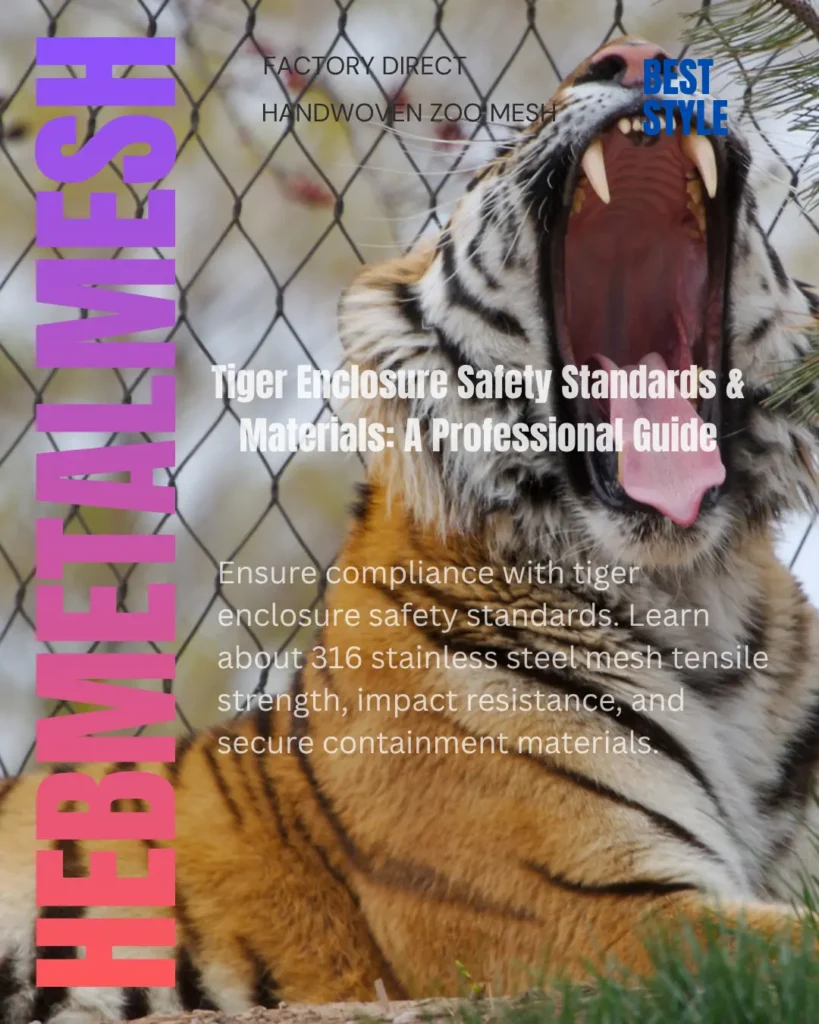
What are the safety standards for tiger enclosures? Modern safety protocols require a combination of containment height (minimum 5 meters), inward overhangs, and impact-resistant materials. The gold standard for materials is 316-grade stainless steel rope mesh with a minimum wire diameter of 3.2mm. This material is preferred over rigid steel because it absorbs the kinetic energy of a charging tiger without structural failure, meeting AZA and EAZA guidelines for both animal welfare and public safety.
I. Introduction: The High Stakes of Large Felid Containment
In the world of zoological design, a tiger habitat is the ultimate test of engineering. When dealing with a 250kg apex predator capable of jumping 4m vertically and reaching speeds of 60km/h, there is absolutely zero margin for error.
In this environment, a perimeter failure isn’t just a maintenance headache—it’s a catastrophic liability. For curators and facility managers, the challenge is balancing the “Landscape Immersion” that visitors crave with the cold, hard reality of tiger enclosure safety standards and materials. You aren’t just building a fence; you are building a high-performance safety system that must remain 100% effective 24 hours a day, 365 days a year, for decades.
The Modern Standard
Today’s global standards, set by organizations like the AZA and EAZA, have moved away from the “iron bar” prisons of the past. The industry has shifted toward high-tensile, flexible barriers that provide better welfare for the animal and higher security for the public. By using advanced materials, we can now create habitats that look like open jungles but possess the structural strength of a high-security vault.
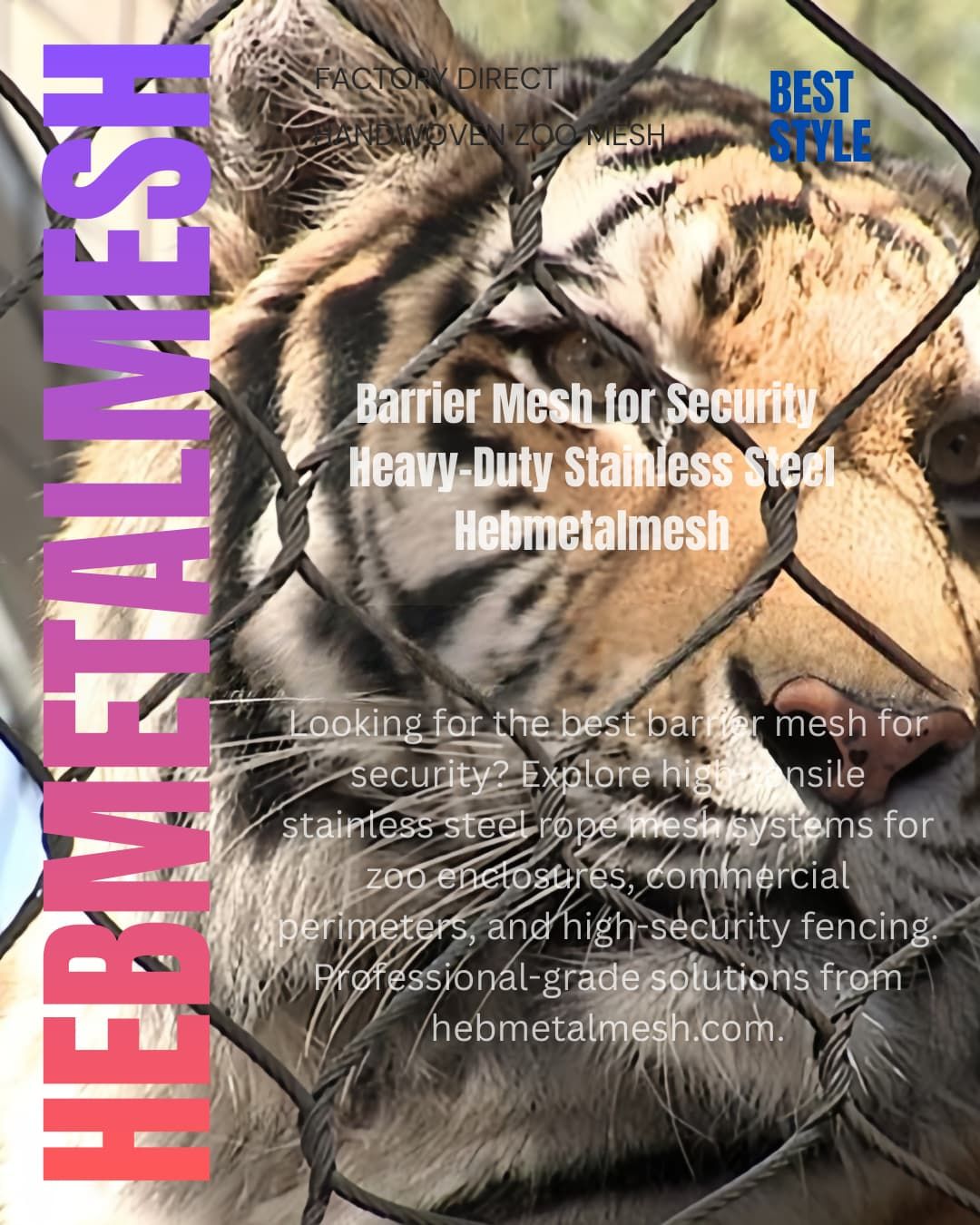
II. Understanding “Tiger Enclosure Safety Standards”
To achieve compliance with international safety protocols, designers must account for the extreme physical capabilities of the tiger. These standards are built on three pillars: Height, Reach, and Redundancy.
1. Height Requirements: The 5-Meter Benchmark
A tiger can leap significantly higher than most people realize. While a standard tiger can clear a 3m fence with ease, international safety standards typically mandate a minimum height of 5 to 8 meters for the primary perimeter. This ensures that even with a running start, the animal cannot find a “lip” or a landing point to pull itself over.
2. The “Jump & Reach” Calculation
It isn’t just about the jump; it’s about the “reach and pull.” Tigers use their massive forelimbs and claws to hook onto the top of barriers.
- The Inward Overhang: To counter this, safety standards require a 45-degree inward-curving overhang at the top of the fence.
- Non-Climbable Surfaces: This is why the material choice is critical. If the surface is rigid (like chain-link), it provides a “step” for the claws. If it is flexible and smooth (like rope mesh), the tiger cannot find a stable foothold to generate vertical leverage.
3. Public Buffers and Stand-off Barriers
Containment doesn’t stop at the mesh. A secondary “stand-off” barrier is required to keep the public at a safe distance (usually 1.5m to 2m) from the primary containment. This prevents visitors from sticking fingers through the mesh and prevents the tiger from feeling crowded or threatened by human proximity. Using tiger enclosure fence netting for both the primary and secondary barriers ensures a cohesive, professional look that meets all regulatory “line-of-sight” safety codes.

III. Material Science: Why Stainless Steel Beats Galvanized & Iron
When evaluating tiger enclosure safety standards and materials, we must look beyond “thickness” and focus on tensile strength and longevity. In a high-stakes environment, the material’s reaction to stress determines the safety of the entire facility.
Tensile Strength and The Breaking Load
Traditional galvanized wire often relies on a high carbon content that makes it stiff, but brittle. Over time, environmental exposure causes “hydrogen embrittlement,” where the wire snaps under sudden pressure.
Our stainless steel rope mesh is composed of 316-grade multi-strand cables. For tiger enclosures, we utilize a 3.2mm (1/8″) cable construction, which offers a massive breaking load. Unlike a single solid wire, these woven cables distribute tension across thousands of individual strands, ensuring that even if a single strand were somehow damaged, the structural integrity of the panel remains intact.
Understanding the material requirements for large predators is critical; you can learn more about the best practices for safety and durability in our latest article, The Ultimate Guide to Tiger Enclosure Fence Design and Material Selection.
Corrosion: The Hidden Safety Threat
A safety barrier is only as strong as its weakest point—usually a rusted joint.
- The Iron Failure: Wrought iron or standard steel requires constant painting and scraping. Rust eats into the welds, often hiding behind layers of paint until the moment of impact.
- The Stainless Advantage: 316-grade stainless steel is resistant to the corrosive elements found in zoo environments, including animal waste and high-pressure cleaning chemicals. By eliminating rust, you eliminate the “hidden” failure points that lead to enclosure breaches.
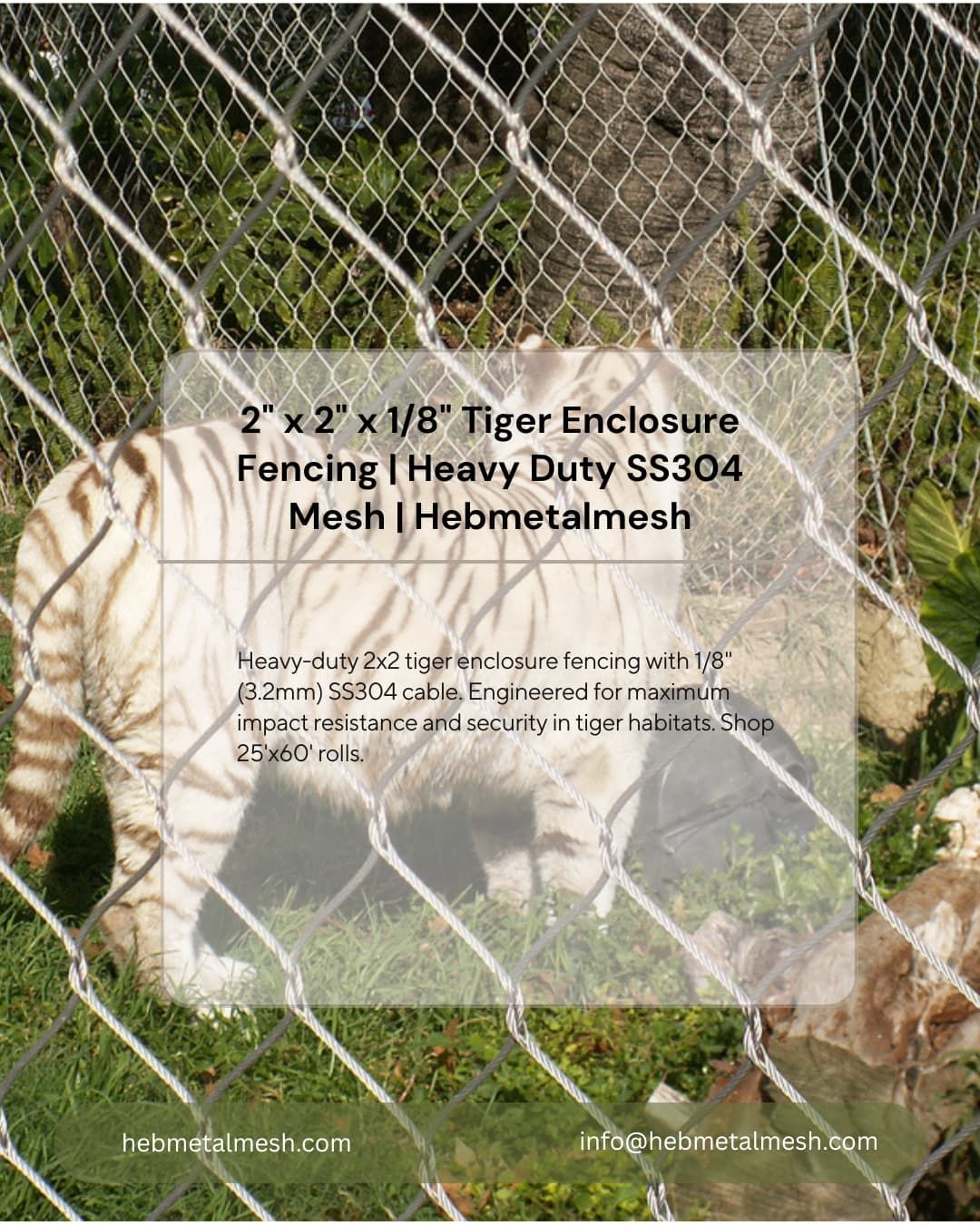
IV. Impact Resistance: The Physics of the “Charge”
A tiger doesn’t always test a fence with a climb; sometimes, they test it with a charge. This is where the physics of energy dissipation becomes the difference between a safe enclosure and a tragedy.
Energy Dissipation vs. Rigid Resistance
Imagine a 250kg male tiger charging the perimeter at 50km/h. The kinetic energy (E_k) is enormous.
- Rigid Bars: When a tiger hits a rigid steel bar, the energy is concentrated at the weld points. Because the bars do not move, the force must be absorbed by the tiger’s body and the structural frame. This often results in snapped welds or, sadly, dental and skeletal injuries to the animal.
- Flexible Mesh: Our hand-woven mesh acts like a high-tech “safety net.” Upon impact, the mesh deforms slightly, spreading the energy across the entire web of cables. This “soft-stop” mechanism absorbs the E_k and safely returns the animal to the ground without the barrier failing or the tiger being injured.
The “Soft-Catch” for Animal Welfare
Safety standards aren’t just for humans; they are for the animal. Tigers are prone to “fence-fighting” or territorial displays. Rigid fencing can cause “broken canine syndrome” if a tiger bites the bars during a display. The flexible nature of hebmetalmesh prevents these injuries, ensuring your tiger remains a healthy, majestic ambassador for its species while remaining securely behind a barrier that meets every international safety metric.
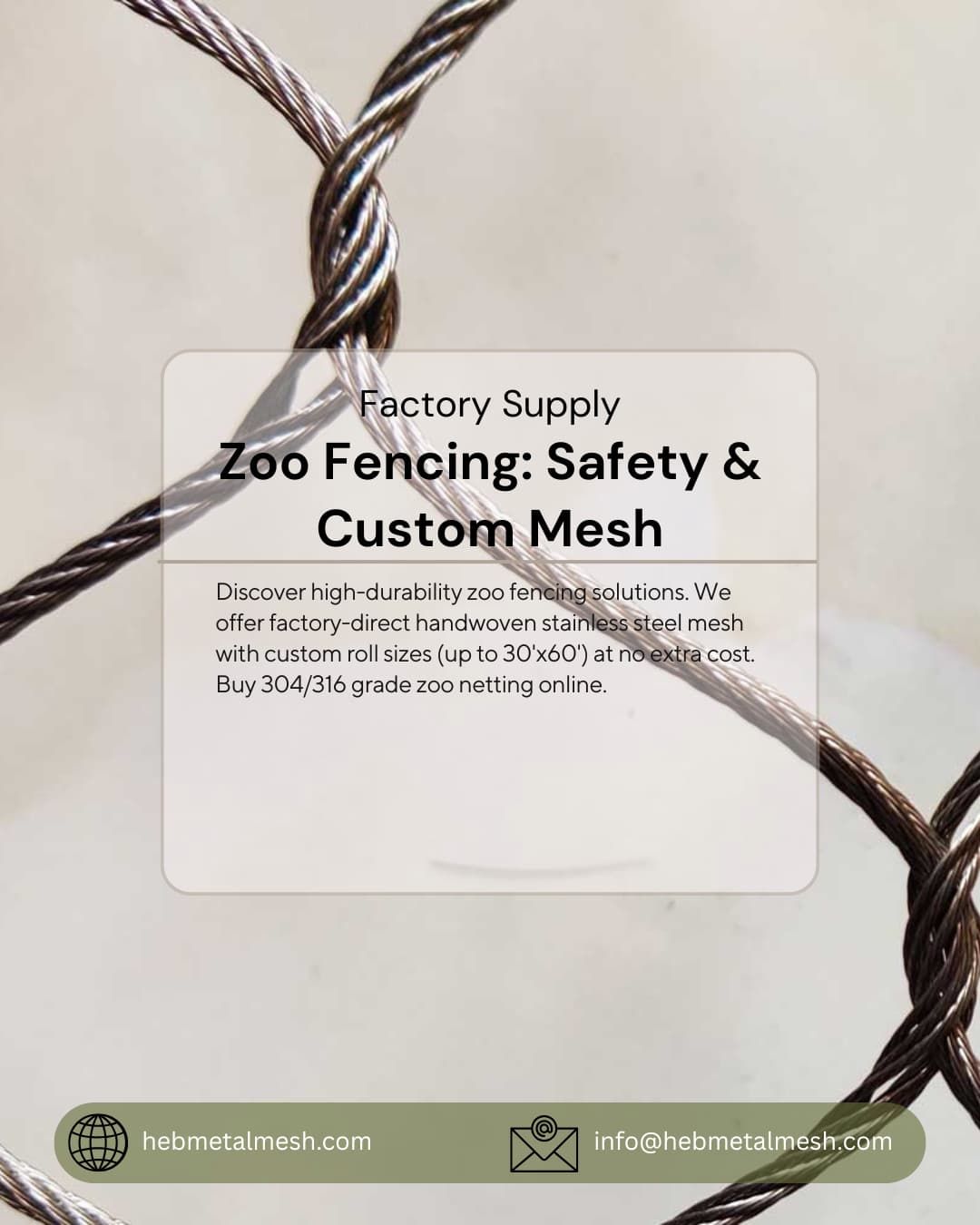
V. Installation Protocol for Professional Compliance
A tiger enclosure is only as secure as its installation. To meet global tiger enclosure safety standards and materials requirements, the transition from raw material to finished habitat must follow strict engineering protocols. At hebmetalmesh, we emphasize that the “mesh is the fabric, but the installation is the suit.”
Seam Security: Eliminating the Weak Link
In traditional fencing, the seams between panels are often the first points to fail under the pressure of a 250kg charge.
- The Solution: Our mesh is installed using a continuous lacing system. We use a stainless steel rope of the same grade and diameter as the mesh itself to “stitch” panels together. This ensures that the seam possesses the same tensile strength as the rest of the wall, creating a monolithic barrier with no structural gaps.
Foundation Anchoring: The Underground Defense
Tigers are natural diggers, especially when pursuing prey or investigating sounds outside the perimeter.
- The “L-Buffer”: To comply with safety standards, the mesh must extend vertically into the ground or be bent into an “L-shaped” floor buffer buried 50cm to 1m deep. This prevents “dig-outs” and ensures the base of the fence cannot be lifted by the brute strength of a tiger’s paw.
Testing & Inspection: The Safety Audit
Compliance is an ongoing process. We recommend a monthly “Safety Audit” for all large felid habitats:
- Tension Check: Ensure the mesh remains “tuned” to prevent excessive sagging.
- Lacing Inspection: Verify that no lacing ropes have been tampered with or worn by environmental friction.
- Clear Zone Maintenance: Ensure no branches have grown close enough to provide a “bridge” over the 5-meter perimeter.
VI. Conclusion: Safety as a Long-Term Investment
When it comes to apex predators, the “cheapest” material is often the most expensive mistake a facility can make. Choosing high-performance materials for your tiger habitat is an investment in liability reduction and brand reputation.
The Peace of Mind Factor
Using hebmetalmesh 316-grade stainless steel means you are no longer worried about rust, weld fatigue, or “brittle failure.” You are providing a habitat that meets the world’s most stringent safety codes while offering the transparency needed for a world-class visitor experience.
Safety standards exist to protect the public, the keepers, and the animals. By choosing the right materials from the start, you ensure that your facility remains a leader in zoological excellence for the next 30 years.
Tiger Mesh Compliance Summary
| Material: | AISI 316 Stainless Steel (Corrosion Proof) |
| Wire Diameter: | 3.2mm (1/8″) – Industry Standard for Large Felids |
| Structure: | 7×19 Multi-strand Cable (High Energy Absorption) |
| Safety Lifecycle: | 30+ Years with Zero Structural Degradation |
Frequently Asked Questions: Tiger Enclosure Safety & Engineering
For adult tigers (Amur, Bengal, or Sumatran), the industry safety standard is a minimum of 3.2mm (1/8″). This diameter provides the necessary tensile strength to withstand the impact of a charging cat while maintaining enough flexibility to absorb kinetic energy without snapping. For secondary barriers or smaller cubs, a 2.4mm wire may be used, but 3.2mm remains the gold standard for primary containment.
Chain-link is a “mechanical weave” that can be unraveled if a single wire is cut or rusted through. Furthermore, tigers can get their claws into the gaps of chain-link to climb. Stainless steel rope mesh is hand-woven and knotted; it cannot be unraveled, and its smooth, flexible surface makes it nearly impossible for a tiger to gain the “step” leverage required to climb vertically.
Yes. One of the reasons hebmetalmesh is used globally is its performance in extreme temperatures. Unlike carbon steel, which becomes brittle in sub-zero temperatures (increasing the risk of “shatter failure”), 316 stainless steel remains ductile and strong. This makes it the preferred material for Siberian Tiger habitats in cold climates as well as tropical enclosures with high humidity and salt air.
The most common aperture for tigers is 50mm x 50mm (2″ x 2″) or 60mm x 60mm (2.4″ x 2.4″). This size is small enough to prevent the tiger from getting a paw through the mesh (preventing “reaching” injuries) but large enough to provide the high transparency required for the landscape immersion visitor experience.
While tigers are capable climbers, the combination of a smooth cable surface and a 45-degree inward overhang makes the mesh practically climb-proof. Because the mesh is flexible, it doesn’t provide the rigid “ladder effect” of bars or chain-link, causing the tiger’s paws to slip and preventing them from reaching the top of the 5-meter safety perimeter.