
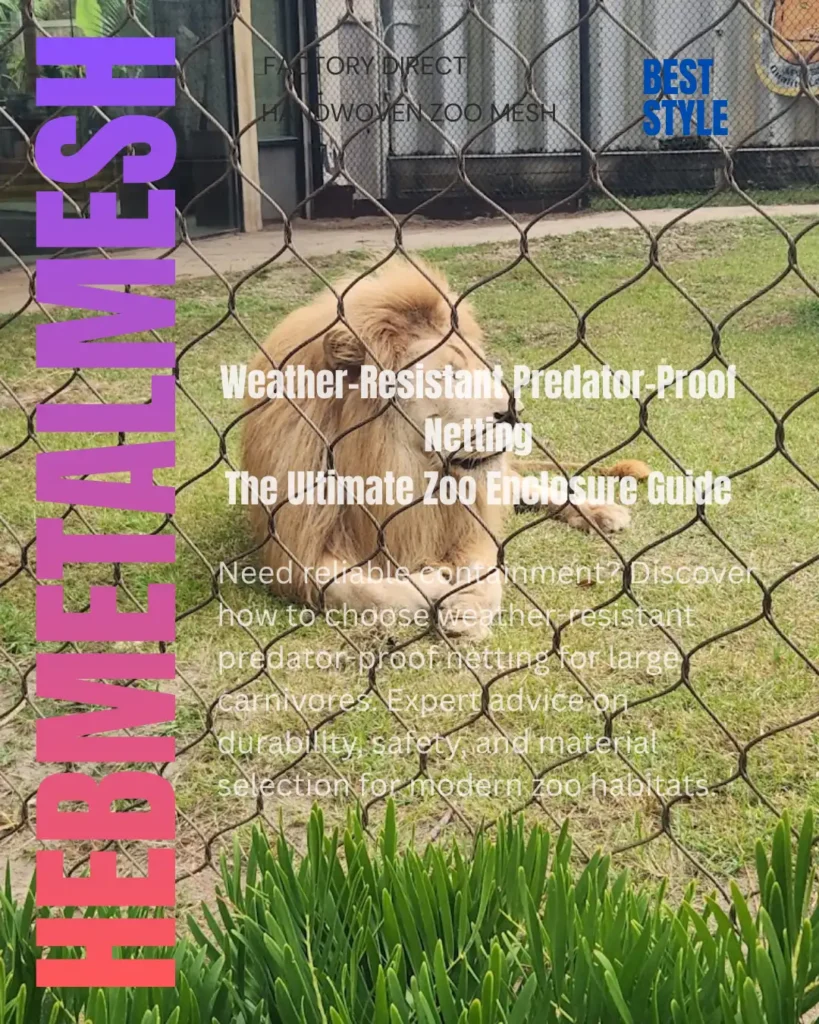
Weather-resistant predator-proof netting is the critical security layer in modern zoo design, balancing animal welfare with high-security containment. For large carnivores, high-grade stainless steel wire rope mesh is the industry standard due to its unmatched tensile strength, corrosion resistance, and longevity in harsh environments. Effective systems must incorporate anti-digging base skirting, anti-climbing top deterrents, and material integrity that withstands both animal impact and extreme weather conditions. Choosing the right mesh—specifically engineered for specific species—is the most effective way to ensure long-term habitat safety and minimize maintenance costs.
I. Introduction
The creation of modern zoological habitats is a complex balance between human-centric viewing, animal welfare, and—most importantly—absolute security. For facility managers and zoo curators, the challenge of securing large carnivore enclosures goes far beyond simple physical separation; it requires creating a barrier that can withstand the immense physical force of apex predators while remaining aesthetically unobtrusive.
Many operators mistakenly believe that standard, off-the-shelf fencing is sufficient for initial enclosure designs. However, “commercial-grade” chain-link or standard galvanized wire frequently fails in zoo environments. These materials suffer from rapid degradation due to constant exposure to humidity, animal waste, and the persistent stress of large cats pacing or testing boundaries. When fencing is not specifically engineered for the unique biomechanical load of a lion or a tiger, the risk of material fatigue—and subsequent containment breaches—becomes an unacceptable liability.
This is why material choice is the single most important factor in habitat longevity. While traditional materials often rely on thin, rigid structures that can snap under repeated impact, stainless steel rope mesh provides a flexible, high-tensile solution. Unlike galvanized steel, which eventually succumbs to rust, or chain-link, which can be unravelled or deformed by an animal’s claws, stainless steel offers a superior strength-to-weight ratio that maintains structural integrity for decades. By choosing specialized zoo-grade materials, facilities move away from constant reactive maintenance and toward a proactive, safety-first enclosure model.
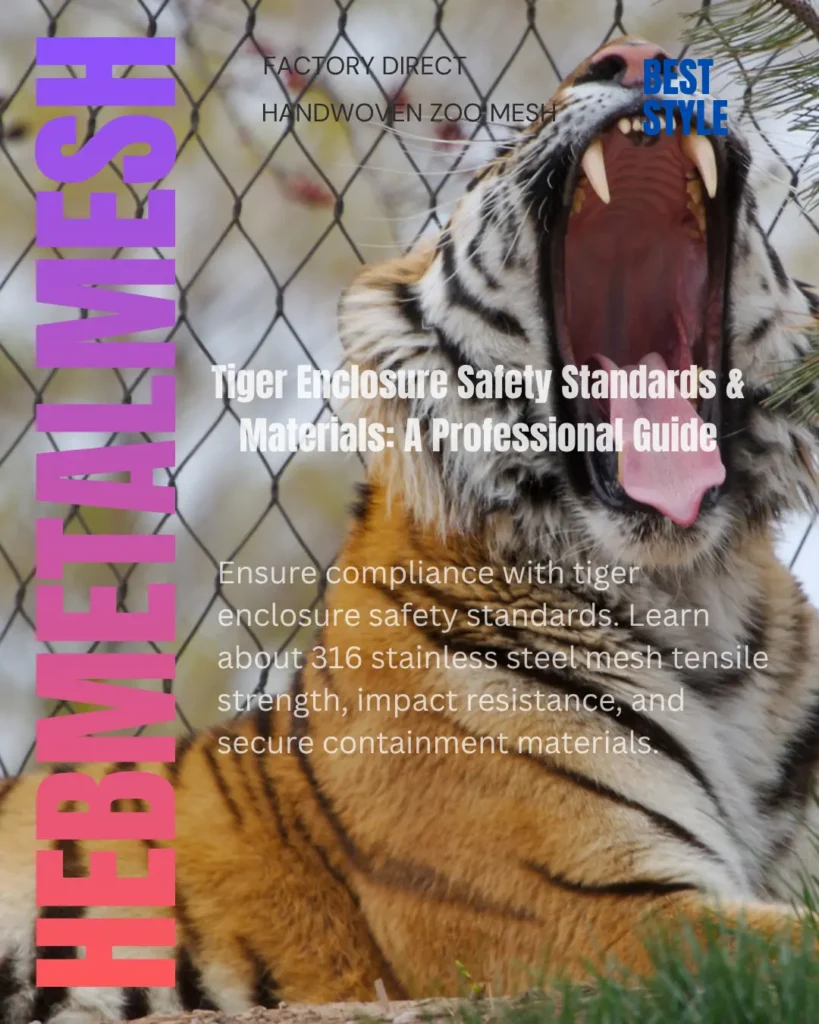
II. What Makes Netting Truly “Predator-Proof” and Weather-Resistant?
To be considered “predator-proof” in a high-traffic zoo environment, netting must possess three core characteristics: chemical stability, physical resilience, and environmental adaptability.
Material Science: The Case for 316-Grade Stainless Steel
The cornerstone of a truly weather-resistant system is the alloy used. At Hebmetalmesh, we prioritize 316-grade stainless steel for all primary enclosures. Unlike lower-grade options, 316 contains a higher molybdenum content, which provides superior resistance to chloride-induced corrosion. In outdoor habitats, this is non-negotiable; rain, animal urine, and proximity to cleaning agents create a corrosive cocktail that will oxidize lesser metals. By selecting 316-grade, you ensure that the mesh remains chemically inert and structurally sound for the life of the habitat.
Structural Integrity: Tensile Strength vs. Impact Resistance
“Predator-proof” is not synonymous with “rigid.” In fact, rigidity is often the failure point for animal barriers. Large carnivores exert sudden, heavy dynamic loads—the force of a tiger pouncing or leaning against a partition. Stainless steel rope mesh is engineered to be flexible yet incredibly strong. Through a system of interwoven ferrules and high-tensile wire rope, the mesh dissipates the energy of an impact across the entire panel rather than concentrating stress on a single point. This prevents the “kinking” or snapping that renders chain-link useless after a few years of high-intensity contact.
UV and Extreme Weather Adaptability
Outdoor habitats are subjected to extreme thermal expansion and contraction. Standard coatings on cheaper fencing, such as PVC or plastic-based sealants, will eventually crack, peel, and become brittle under constant UV exposure. High-quality stainless steel mesh is inherently resistant to these cycles; it does not degrade in the sun, nor does it lose its flexibility in sub-zero temperatures. Because the mesh is essentially a series of stainless steel cables, it “breathes” with the temperature, ensuring that the structural integrity remains identical in the sweltering heat of summer and the deep freeze of winter.
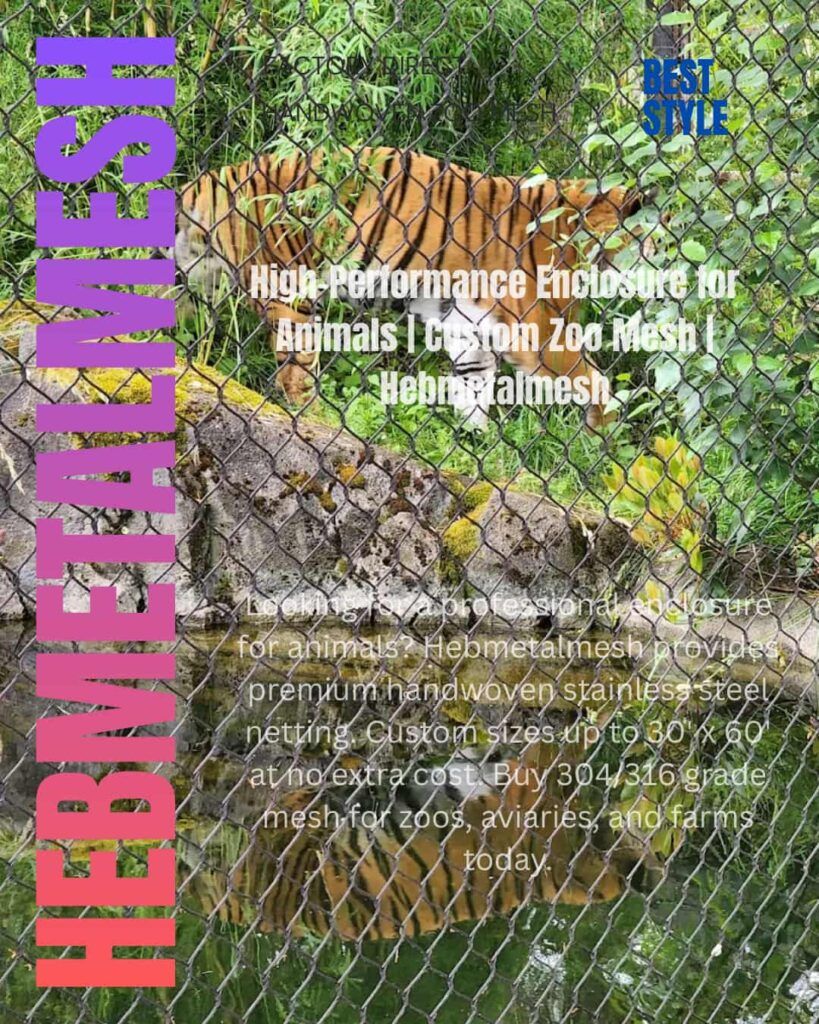
III. Critical Design Features for Large Carnivore Enclosures
When designing for large predators, the fencing must account for the animal’s natural behaviors: digging, climbing, and testing the integrity of the barrier. A “predator-proof” system is only as strong as its weakest point.
Dig-Proofing: Implementing Footer Systems
Big cats, particularly leopards and tigers, are known to investigate the perimeter of their territory. If the soil is loose, they will dig. To prevent this, your mesh installation should incorporate an “L-shaped” buried skirt. By extending the stainless steel mesh underground at a 90-degree angle—often anchored with steel bars or concrete—you create a deterrent that is impossible for the animal to bypass. The animal reaches the vertical fence, begins to dig, hits the horizontal mesh skirt, and is stopped by the material itself.
Climb-Proofing: Height and Geometry
Large carnivores are expert climbers. A vertical fence is rarely enough to keep them contained if they are determined. Modern zoo design typically utilizes an angled overhang—a section of the mesh that leans inward toward the enclosure at a 45 to 60-degree angle. Because stainless steel rope mesh is flexible yet holds its shape, it can be custom-tensioned to maintain these complex angles, making it physically impossible for a cat to get a grip and clear the top of the enclosure.
Impact Resilience: Mesh Aperture and Wire Diameter
The secret to impact resistance lies in the relationship between the wire diameter and the aperture size (the opening of the mesh). For large carnivores, a smaller aperture is generally preferred to prevent claws from snagging or paws from becoming stuck, which could cause injury to the animal. Simultaneously, a thicker wire gauge provides the necessary tensile strength to absorb the kinetic energy of a full-speed strike.
Read out guide on best materials for building a durable zoo enclosure
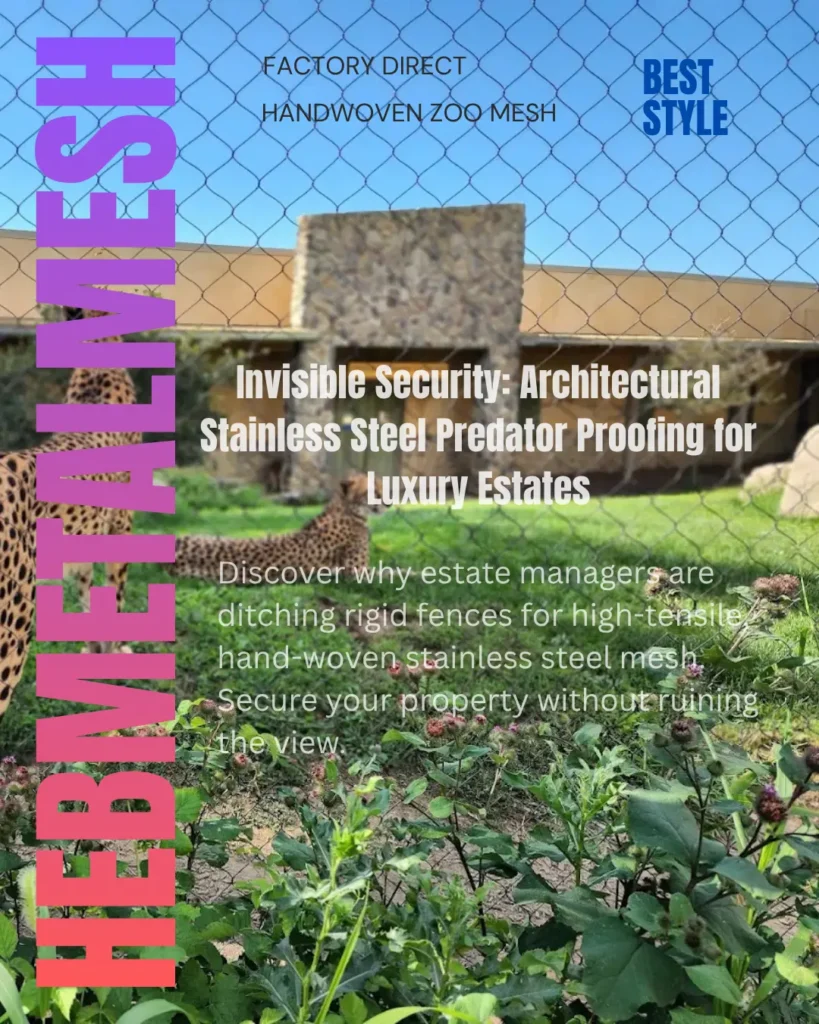
IV. Choosing the Right Mesh for Your Species
Choosing the correct netting is not a “one size fits all” process; the specific behavioral profile of the species must dictate the engineering specifications.
Behavioral Considerations for Big Cats
- Tigers: Known for their power and love for water. They require the highest gauge of wire to resist heavy impact and corrosion-resistant materials that won’t degrade in humid, water-rich environments. For those managing tiger habitats, our specialized tiger enclosure netting is engineered specifically to withstand these high-force requirements.
- Lions: While they are less prone to climbing than leopards, they are heavy and social. Enclosures often require larger spans of mesh with high-tension integrity to accommodate social activity near the perimeter.
- Leopards/Jaguars: These are expert climbers. For these species, the mesh must be installed with zero slack to prevent the cat from utilizing the “give” of the mesh to climb higher.
Visibility and Aesthetics
One of the primary benefits of high-grade stainless steel rope mesh is its visual transparency. Compared to thick, welded-wire panels or chain-link, our zoo-grade netting collection provides an almost “invisible” barrier. This enhances the guest experience while keeping the animal’s health and security as the top priority. When selecting your mesh, always consider the viewing angle: thinner wire profiles at the eye-level of guests can significantly improve the quality of photography and observation without compromising the structural safety of the containment.
| Material Type | Expected Lifespan | Maintenance Level | Best Use Case |
|---|---|---|---|
| Stainless Steel Mesh | 30+ Years | Very Low | Large carnivores, coastal/humid exhibits |
| Welded Wire Panels | 10–15 Years | Moderate | Small enclosures, internal partitions |
| Galvanized Chain Link | 5–10 Years | High | Temporary/perimeter containment only |
| Electric Fencing | 3–5 Years | High | Secondary/supplementary deterrents |
| Plastic/Poly Netting | 1–3 Years | Moderate | Bird netting, temporary garden control |
V. Maintenance and Longevity in Outdoor Habitats
Even the most robust fencing requires a proactive maintenance strategy. Because zoo enclosures are dynamic environments, regular inspection is the best way to ensure the safety of both the animals and the public.
Regular Inspection Protocols
Maintenance teams should implement a tiered inspection schedule:
- Monthly Visual Sweeps: Conduct a walk-through of the perimeter, specifically inspecting high-contact areas—the base near the ground, corners, and gate latches. Look for signs of “pacing wear” or attempts to dig.
- Quarterly Tension Checks: Over time, extreme temperature fluctuations can cause slight expansions or contractions in wire tension. Ensuring that the ferrules remain tight and the cables retain the correct tension prevents the mesh from sagging, which is critical for climb-proofing.
- Annual Integrity Audits: This is a deep-dive inspection. Check every connection point and the structural anchors. Using professional-grade, corrosion-resistant stainless steel minimizes the risk of structural failure, but verifying that local anchors haven’t shifted due to ground settling is vital.
Reducing Total Cost of Ownership (TCO)
When choosing fencing, there is a distinct difference between initial price and lifecycle cost. Standard chain-link or lower-quality mesh often requires rust treatment, patch repairs, and full replacement within 5 to 7 years. Conversely, high-quality, 316-grade stainless steel rope mesh is a long-term investment. While the upfront investment is higher, the TCO is significantly lower because it requires virtually zero maintenance beyond standard cleaning. You aren’t just buying wire; you are buying decades of operational peace of mind and preventing the massive costs associated with emergency habitat repairs.
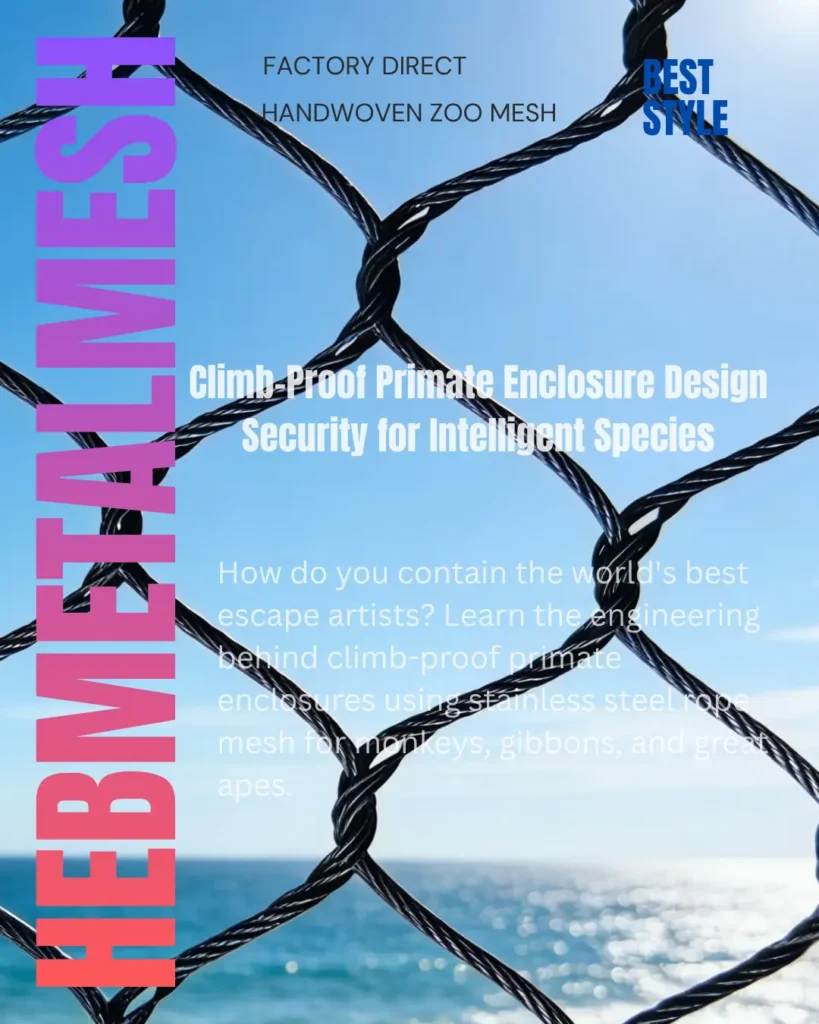
VI. Partnering with a Manufacturer: Why Hebmetalmesh?
In the specialized field of zoo architecture, the quality of your supplier defines the safety of the animal habitat. At Hebmetalmesh, we don’t just supply wire; we provide engineered solutions tailored to the unique biomechanics of wild animals.
Commitment to Zoo-Grade Engineering
We understand that a fence is not merely a boundary—it is an enclosure system. Our manufacturing process strictly adheres to global zoo-grade safety standards. We control every variable: from the exact wire gauge and cable diameter to the precision-engineered ferrules that secure the mesh. By managing the manufacturing process from start to finish, we ensure that our products meet the high tensile requirements needed to contain apex predators securely and safely.
Custom Fabrication for Unique Geometries
No two zoo habitats are identical. Whether you are designing an organic, curved leopard enclosure or a massive, elevated tiger habitat, standard-sized panels simply will not suffice. We specialize in custom fabrication. Our team works directly from your architectural drawings to create pre-tensioned, custom-dimensioned mesh panels that fit the specific contours of your site perfectly. This custom approach eliminates the need for field modifications, ensuring that the integrity of the mesh remains unbroken from corner to corner.
If you are ready to elevate the safety and durability of your facility, we invite you to explore our full range of zoo-grade netting products and discover how our solutions can be tailored to your project’s specific structural and aesthetic requirements.
VII. Conclusion
Securing a large carnivore habitat is an essential responsibility that demands materials capable of standing up to the raw power of nature. Relying on inferior, off-the-shelf netting is a risk that few modern facilities can afford to take. By prioritizing high-grade, weather-resistant, and impact-tested stainless steel mesh, you ensure the safety of your animals, the security of your guests, and the longevity of your investment.
At Hebmetalmesh, we pride ourselves on being more than just a manufacturer; we are your partner in wildlife containment engineering. We are committed to providing the durable, aesthetic, and reliable solutions that modern zoos require to thrive.
Ready to start your project? Whether you are planning a new habitat or retrofitting an existing one, our team is here to assist with technical specifications, material selection, and custom fabrication needs.
Need Custom Enclosure Solutions?
Don’t compromise on the safety of your animals. Hebmetalmesh specializes in heavy-duty, weather-resistant stainless steel netting engineered for large carnivores.
Get a Quote / Shop Our SolutionsFrequently Asked Questions (FAQ)
Under normal zoo conditions, 316-grade stainless steel mesh can last 20 to 30 years or more. Because it is highly resistant to corrosion from environmental factors and animal waste, it does not suffer from the same degradation cycles as galvanized or PVC-coated materials, making it the most cost-effective long-term solution.
Yes. 316-grade stainless steel is specifically formulated to resist chloride-induced corrosion. If your facility is located in a coastal region, our 316-grade products are the industry standard for preventing “tea-staining” and pitting, ensuring the enclosure remains both safe and visually appealing.
For large carnivores like tigers, lions, and leopards, we typically recommend a wire diameter between 2.0mm and 3.0mm, depending on the span and the specific temperament of the animal. We calculate the required diameter based on the impact force the mesh needs to absorb, ensuring maximum security without unnecessary bulk.
That is one of the primary advantages of our wire rope mesh. Because of its high strength-to-diameter ratio, the cables are thinner than traditional fencing. This provides a “near-invisible” effect, allowing guests to see the animals clearly without the visual clutter of heavy-duty chain-link or vertical bars.
Absolutely. We specialize in custom fabrication. We work closely with zoo designers and architects to produce panels that fit curved, sloped, or irregular geometries. Providing us with your project blueprints allows us to engineer a seamless, custom-fit system that maintains structural integrity across the entire enclosure.