I. Introduction: Bridging the Gap Between Architecture and Nature
In the modern era, biophilic design has transcended being a mere trend to become a fundamental necessity in architecture and animal welfare. As urbanization accelerates, the psychological and physiological need for “biophilia”—the innate human tendency to seek connections with nature—has never been more critical. Modern biophilic design is no longer just about adding a few potted plants to a room; it is about creating immersive environments that mimic natural ecosystems through light, air, and organic patterns.
The foundation of any successful biophilic project lies in its material selection. For a space to truly feel “natural,” the materials used must facilitate, rather than obstruct, the transition between the built environment and the outside world. This requires substances that offer high transparency, allow for natural ventilation, and possess the durability to withstand the elements without appearing industrial or intrusive. Material choice dictates whether an enclosure feels like a cage or a habitat, and whether a building feels like a bunker or a living part of the landscape.
Hebmetalmesh stands at the forefront of this movement as a global leader in high-performance customized stainless steel rope mesh solutions. Specialized in handwoven mesh that balances industrial-grade strength with an almost invisible aesthetic, Hebmetalmesh provides the literal fabric for modern biophilic structures. From world-class zoo mesh solutions and expansive aviaries to sustainable garden designs, our customized mesh rolls and large-scale panels (reaching up to 30′ x 60′) empower architects and facility managers to design without boundaries. By offering both natural and black oxide mesh options through our online store, Hebmetalmesh ensures that every project achieves its specific biophilic goals—prioritizing visibility, safety, and the seamless integration of nature.
Key Takeaways
- Definition: Biophilic design materials focus on the innate human connection to nature.
- Material Selection: Priorities include transparency, airflow, sustainability, and non-toxicity.
- The Hebmetalmesh Edge: Stainless steel rope mesh (nature/black oxide) offers structural strength with “invisible” aesthetics, perfect for biophilic environments.
- Applications: Ideal for large-scale zoo panels (up to 30′ x 60′), bird parks, and green walls.
II. The Philosophy of Biophilic Design Materials
To understand how materials like stainless steel mesh function within a biophilic framework, one must look at the scientific and philosophical foundations of the movement. The most recognized framework is the 14 Patterns of Biophilic Design, developed by Terrapin Bright Green. These patterns are grouped into three categories: Nature in the Space (direct presence of nature), Natural Analogues (indirect representations), and Nature of the Space (spatial configurations).
Materials play a pivotal role across these patterns. For instance, the Material Connection with Nature pattern emphasizes using minimally processed materials that reflect the local ecology. Similarly, the Complexity and Order pattern suggests that sensory information should mimic the rich, patterned hierarchies found in nature—much like the intricate, repeating diamond patterns of handwoven rope mesh.
Visual vs. Non-Visual Connections
A successful biophilic environment engages more than just the eyes. While a Visual Connection with Nature (Pattern 1) is achieved through clear sightlines to greenery or wildlife, the Non-Visual Connection (Pattern 2) is equally vital. This involves auditory, olfactory, and haptic (touch) stimuli.
In the context of zoo design or outdoor aviaries, the choice of mesh material directly impacts these connections. Traditional heavy bars or thick welded fences create a “visual wall” that severs the connection to the landscape. In contrast, high-transparency stainless steel rope mesh facilitates a constant visual link while allowing the “sounds of the wild”—rustling leaves, bird calls, and running water—to permeate the space. Furthermore, the tactile quality of handwoven mesh, which mimics the flexibility of organic vines or fibers, provides a naturalistic haptic experience for both human observers and the animals within.
The Synergy of Light and Space
Material selection is the primary tool for manipulating Dynamic and Diffuse Light (Pattern 6). In biophilic design, light should not be static or uniform; it should shift and filter just as it does under a forest canopy. This is where the finish of the material becomes a strategic choice.
A “natural” or polished stainless steel finish can catch and reflect sunlight, creating a sense of “brilliance” or sparkle that mimics sunlight hitting water. On the other hand, a black oxide stainless steel mesh is often preferred for biophilic applications because it absorbs light. This absorption reduces glare and makes the mesh virtually disappear against a natural backdrop, enhancing the Prospect pattern—our innate desire for an unimpeded view over a distance. By choosing a material that manages light effectively, designers can create a sense of “openness” and “freedom,” even within the structural constraints of an enclosure or a fence.
III. Top Biophilic Materials for 2026
As we look toward 2026, the palette of biophilic design materials is evolving to favor high-durability, low-maintenance, and low-impact solutions. The goal is to select materials that age gracefully and support biological life.
Natural Stone and Timber: The Classic Tactile Elements
Stone and wood remain the quintessential biophilic materials. In 2026, there is a renewed focus on raw, unpolished surfaces that showcase geological history or wood grain. These materials provide a grounding effect. When paired with architectural mesh, timber frames can soften the structural appearance of an enclosure, creating a hybrid of “hard” and “soft” biophilic elements that feel both secure and organic.
Living Walls and Greenery: Incorporating Flora
Vertical gardens and living walls are no longer niche; they are a standard component of urban biophilic design. However, for a living wall to thrive, it requires structural support that doesn’t hinder growth. Stainless steel rope mesh serves as an ideal trellis material. Its flexibility allows it to follow the contours of a building, providing a high-strength skeleton for climbing plants without the weight of traditional lattice systems.
Transparent and Mesh Structures: Psychologically Invisible Boundaries
The psychological impact of “invisible” boundaries cannot be overstated. High-transparency materials are critical for reducing the stress associated with feeling “closed in.” In human architecture, this translates to large glass facades; however, glass creates a barrier to airflow and can be hazardous for birds.
This is why stainless steel rope mesh is becoming a preferred biophilic material. It offers the same visual benefits as high-transparency glass but allows for the free passage of air, insects, and humidity—elements that are essential for a truly “living” environment. In 2026, architects are increasingly using mesh to create “outdoor rooms” that maintain a direct thermal and airflow connection to the outside world.
Deep Dive: Stainless Steel Rope Mesh
Among all architectural meshes, the handwoven stainless steel rope mesh is the gold standard for biophilic integration. Unlike welded wire mesh, which is rigid and presents a repetitive, industrial grid, handwoven mesh is tactile and supple. It adapts to the organic shapes of the landscape, much like the irregular but beautiful geometry found in nature.
Comparing Nature vs. Black Oxide Finishes
- Nature Finish: The stainless-steel-nature finish is ideal for environments where you want to highlight the structure or create a sense of brightness. It reflects the sky and the surrounding greenery, often shimmering under different lighting conditions.
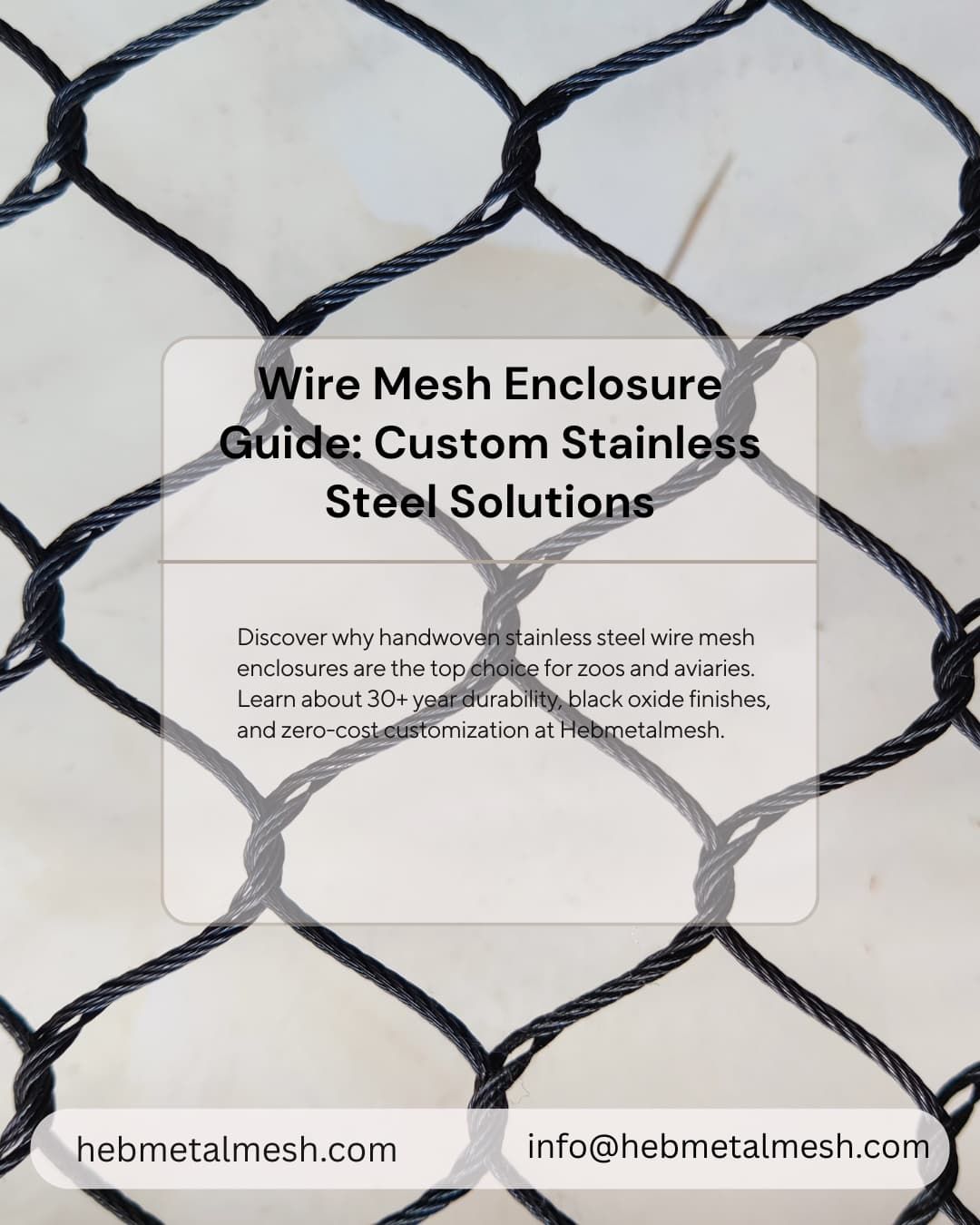
- Black Oxide Finish: In biophilic design, the black oxide finish is a masterpiece of “invisibility.” By chemically darkening the steel, the mesh loses its reflective properties. In an aviary or forest setting, the black oxide mesh disappears against the shadows of the foliage. This allows the observer to focus entirely on the animals and plants, fulfilling the biophilic goal of an unencumbered connection with nature.
IV. Case Study: Biophilic Materials in Zoos & Aviaries
The evolution of modern wildlife conservation has led to a paradigm shift in enclosure design: the move toward “cageless” environments. Biophilic design in zoos and bird parks is no longer just about aesthetics; it is about the ethical responsibility to provide animals with habitats that mirror their natural wild settings while offering visitors an immersive experience. Central to this transformation is the use of high-performance zoo mesh solutions.
Creating “Cageless” Environments
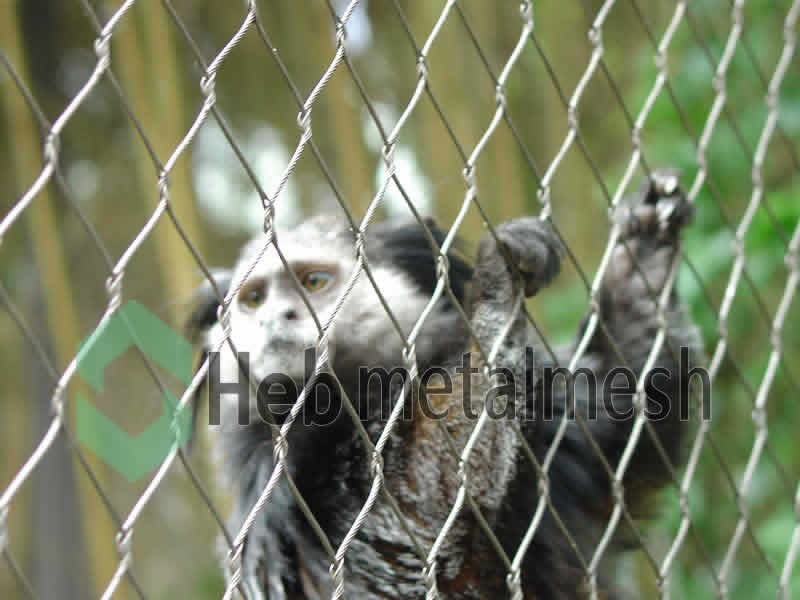
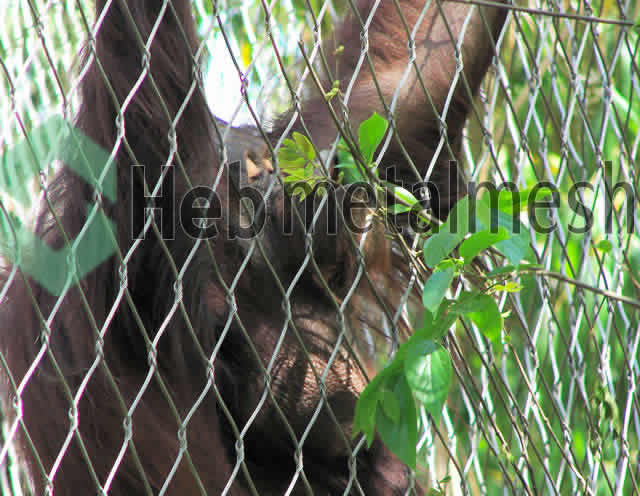
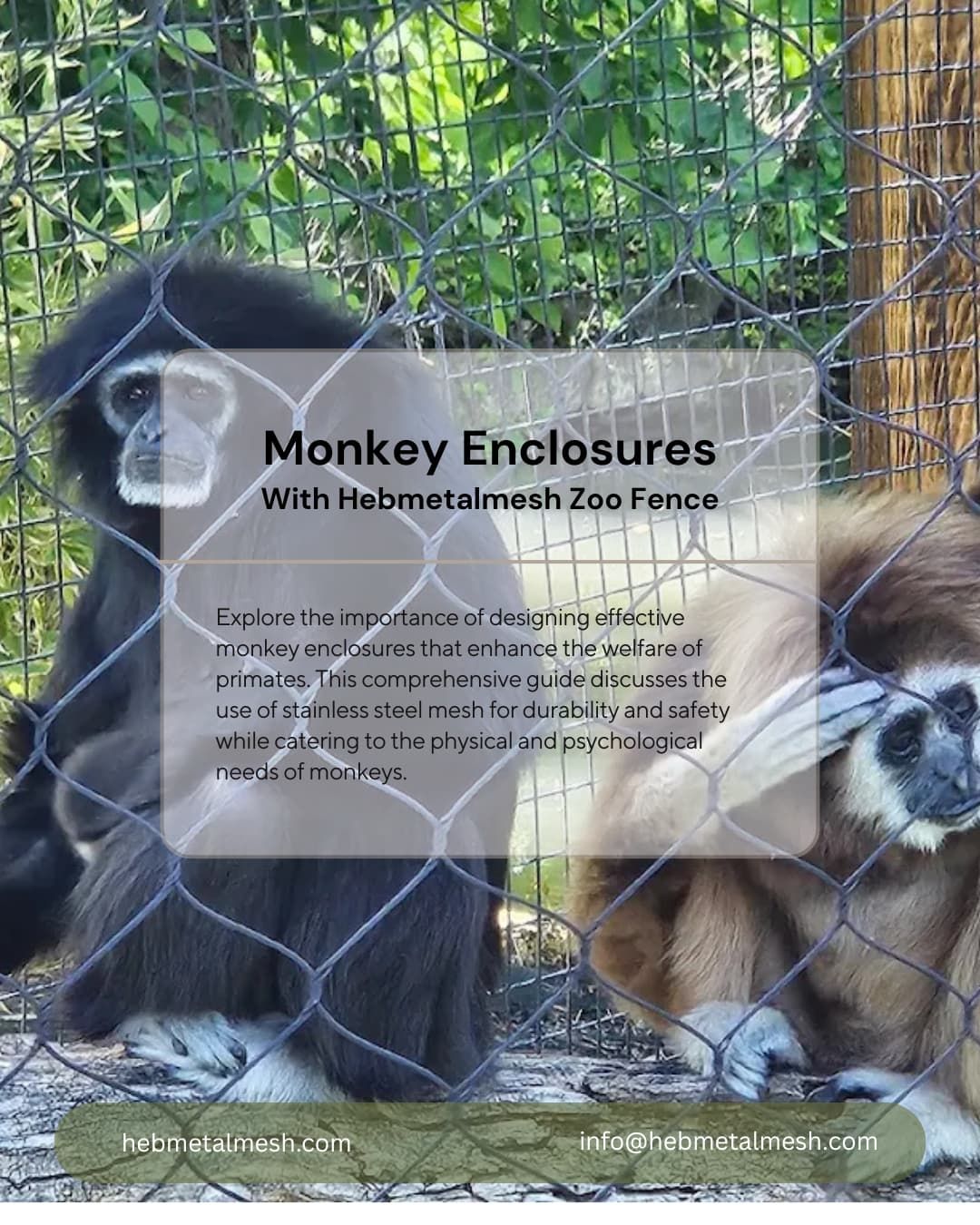
In traditional zoo architecture, thick bars and heavy concrete walls created a psychological barrier that emphasized captivity. By utilizing handwoven stainless steel rope mesh, designers can now create enclosures that are structurally sound yet visually permeable. The high strength-to-weight ratio of the rope mesh allows for incredibly thin wire diameters that can contain large primates or big cats while remaining nearly invisible to the human eye. This lack of visual obstruction fosters a deeper emotional connection between the visitor and the animal, a core tenet of biophilic engagement.
The Power of Customization: 30′ x 60′ Panels
One of the greatest challenges in biophilic architecture is the “seam.” In traditional fencing, visible joints and overlapping panels remind the observer of the artificial nature of the structure. Hebmetalmesh solves this through the production of massive, customized panels—reaching sizes up to 30′ x 60′.
These large-scale panels allow for the covering of vast spans in aviaries or multi-level habitats without the need for unsightly support beams or frequent seams. By providing customized roll sizes at no additional cost, Hebmetalmesh enables architects to “shrink-wrap” complex, organic landscape features like rock outcrops or ancient trees. This seamless integration ensures that the mesh follows the natural topography of the landscape rather than forcing the landscape to fit the fence.
Animal Welfare: Air, Light, and Safety
The biophilic benefits of stainless steel rope mesh extend beyond the human observer to the primary residents: the animals. Unlike solid barriers, the open-weave structure of handwoven mesh ensures 100% natural ventilation. This constant airflow is vital for regulating the microclimate of the enclosure, preventing the buildup of heat or humidity that can lead to respiratory issues in birds and mammals.
Furthermore, the mesh allows for the full spectrum of natural sunlight to reach the habitat, which is essential for the vitamin D synthesis and circadian rhythms of the animals. From a safety perspective, the handwoven nature of the rope mesh is exceptionally “kind” to animal skin and feathers. Unlike welded wire, which can have sharp burrs, the smooth, knotted junctions of handwoven rope mesh prevent snags and injuries, even if an animal comes into direct contact with the perimeter. For years, this combination of safety and biophilic transparency has made Hebmetalmesh the trusted choice for world-class wild parks and farms.
V. Technical Superiority of Hebmetalmesh
While the aesthetic and philosophical benefits of biophilic design materials are vital, their practical performance determines the long-term viability of any project. Hebmetalmesh has engineered its stainless steel rope mesh to meet the most rigorous technical standards, ensuring that “nature-first” designs do not compromise on structural integrity or longevity.
Customized Roll Sizes: A Zero-Waste Philosophy
In sustainable construction, waste reduction is a primary goal. Traditional fencing materials often come in fixed dimensions, leading to significant off-cut waste during installation on irregular biophilic sites. Hebmetalmesh disrupts this pattern by offering customized roll sizes at no additional cost. This bespoke approach allows architects to order the exact square footage required for their specific terrain or architectural frame. By eliminating excess material, we not only reduce the environmental footprint of the project but also streamline the installation process, making it faster and more cost-effective to realize complex biophilic visions.
The Durability of 304 and 316 Stainless Steel
Biophilic projects are, by definition, exposed to the elements. Whether it is the humidity of a tropical aviary or the salt spray of a coastal park, materials must resist corrosion to maintain their “invisible” quality. Hebmetalmesh utilizes premium 304 and 316 grade stainless steel.
- Type 304: Offers excellent corrosion resistance for most inland and garden applications.
- Type 316: Known as marine-grade steel, it is essential for high-corrosion environments or areas with heavy pollution. Both grades ensure that the mesh maintains its strength for decades without needing chemical coatings or frequent replacements. This durability is the ultimate form of sustainability, as it reduces the lifecycle cost and material consumption of the facility.
Large Panel Capabilities for Unobstructed Prospect
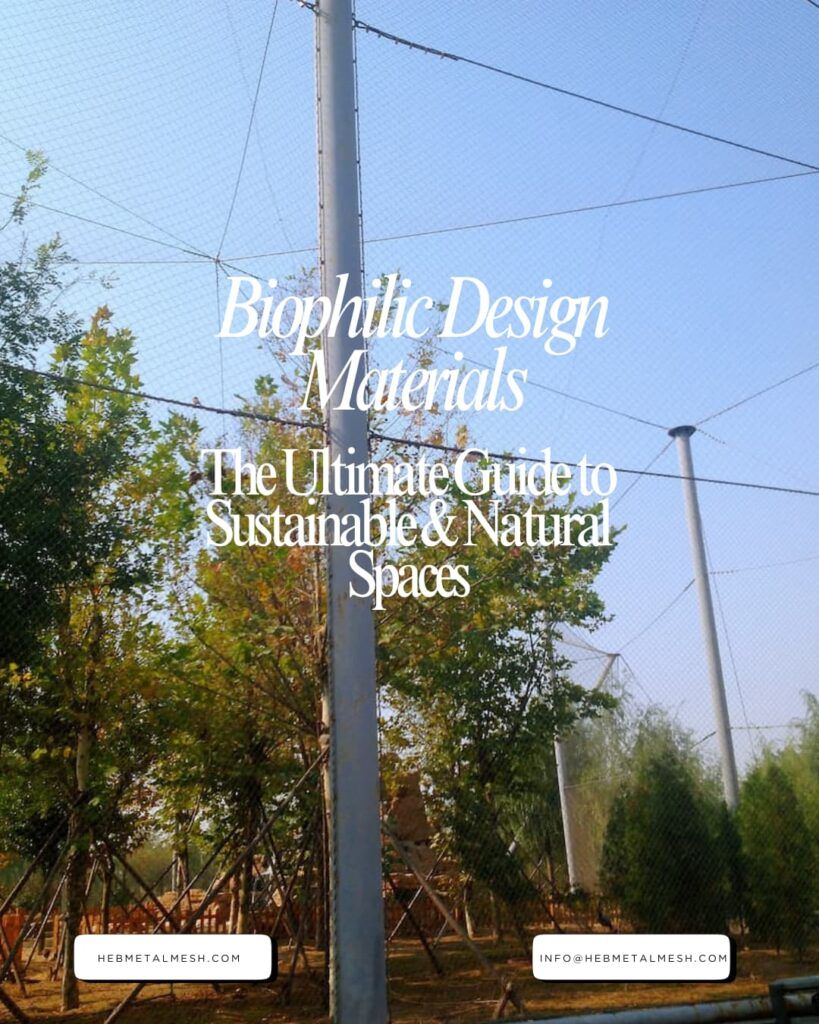
In biophilic design, the “Prospect” pattern—the ability to see over a distance—is essential for reducing stress. To achieve this, structural supports must be minimized. Hebmetalmesh specializes in exceptionally large panels, with dimensions reaching up to 30′ x 60′. These massive, single-piece panels can be draped over large-span structures, such as free-flight aviaries or hillside enclosures, with minimal intermediate support. The result is a clean, uninterrupted view that enhances the feeling of immersion.
For professionals looking to integrate these technical advantages into their next project, the Hebmetalmesh Online Store offers a direct gateway to browse our full range of fence panels and customized mesh rolls.
VI. Conclusion: The Future of Biophilic Architecture
As we look toward the future of sustainable development, the integration of biophilic design materials will become the standard for both commercial and environmental projects. The demand for spaces that support biological well-being—whether for humans in urban centers or for wildlife in conservation centers—is driving a movement toward transparency, airflow, and organic aesthetics.
Materials like stainless steel rope mesh represent the intersection of modern engineering and natural philosophy. By providing the structural strength necessary for safety while maintaining a nearly invisible footprint, Hebmetalmesh enables a world where our built structures no longer stand in opposition to the environment, but rather exist as a harmonious part of it. The shift toward customized, zero-waste, and long-lasting materials is not just an architectural choice; it is a commitment to a healthier, more connected planet.
Whether you are designing a high-visibility aviary, a safe zoo enclosure, or a modern biophilic garden, your choice of material will define the success of your vision. Hebmetalmesh is proud to provide the premium, handwoven solutions that bring these visions to life.
Ready to start your project? Visit the Hebmetalmesh Store today to explore our customized fence panels and discover how our stainless steel mesh can transform your next biophilic design.
Q&A FAQs: Common Questions on Biophilic Design Materials
Biophilic design materials are substances used in architecture and construction that help establish a direct or indirect connection to nature. This includes natural elements like timber and stone, as well as engineered materials like stainless steel rope mesh that prioritize natural light, ventilation, and visual transparency.
Unlike traditional bars or welded wire, stainless steel rope mesh provides high structural strength with minimal visual impact. It is “psychologically invisible,” reducing the sense of confinement in zoos and aviaries while allowing 100% natural airflow and light penetration—critical factors for biological health.
For biophilic applications, black oxide mesh is often superior because it absorbs light rather than reflecting it. This makes the mesh nearly disappear against natural backgrounds, enhancing the “Prospect” pattern and providing clearer views of wildlife and landscapes without glare.
Yes. Hebmetalmesh offers a “Zero-Waste” approach by providing customized roll sizes tailored to your specific project dimensions at no extra cost. This is ideal for irregular terrains or unique architectural frames common in biophilic design.
Hebmetalmesh specializes in large-scale installations, producing single panels as large as 30′ x 60′. These massive panels minimize seams and support structures, creating a more seamless integration with the environment.
Handwoven rope mesh is significantly safer than welded wire. The smooth, knotted intersections prevent snags on feathers or skin, and the material is non-toxic and highly resistant to chewing or impact from large animals.
Yes. Research into the 14 Patterns of Biophilic Design shows that materials providing visual and non-visual connections to nature (like airflow and natural light) significantly reduce heart rates, lower blood pressure, and improve cognitive performance.
In outdoor biophilic environments, 316-grade stainless steel rope mesh is designed to last over 30 years. It is highly resistant to corrosion, UV damage, and extreme weather, making it a sustainable long-term investment.
Absolutely. Stainless steel rope mesh is an excellent support structure for living walls. It is flexible enough to follow organic building shapes and strong enough to support the weight of heavy climbing plants and vines.
You can browse and purchase a full range of customized handwoven rope mesh and fence panels directly from the Hebmetalmesh Online Store.