Part 1: The Evolution of the Gibbon Barrier
I. Introduction: Redefining Primate Containment
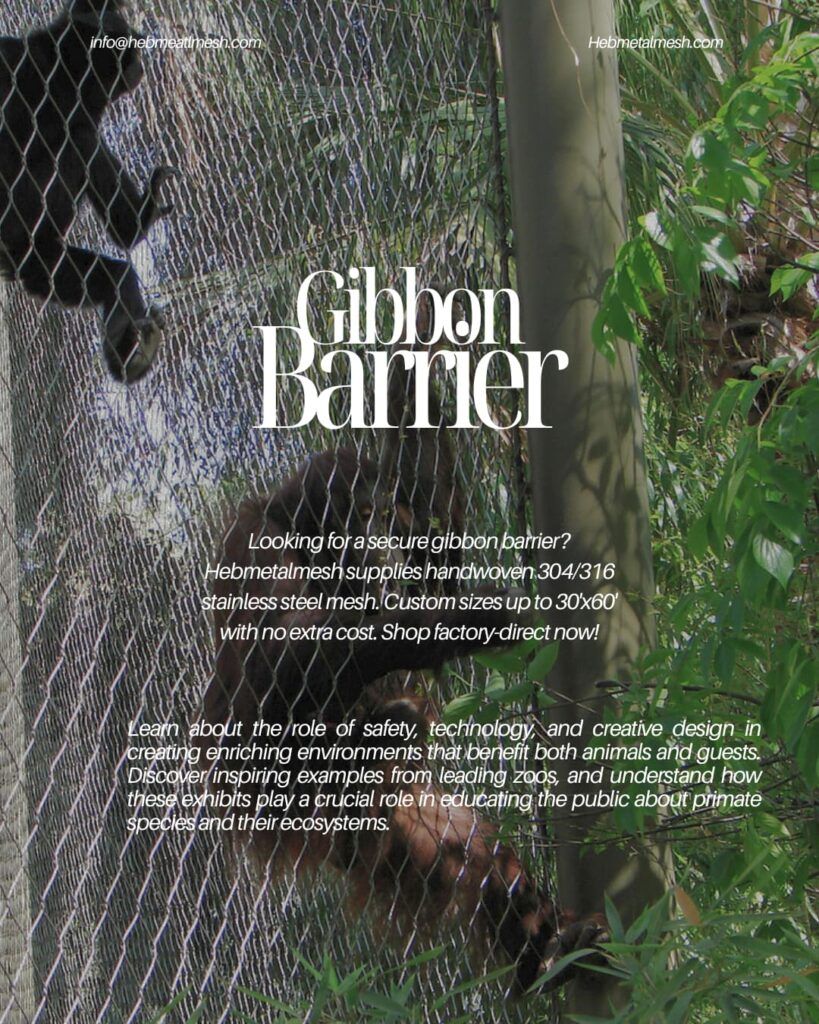
In the world of modern primatology and zoo architecture, the concept of a “gibbon barrier” has undergone a radical transformation. Gone are the days of heavy iron bars, thick concrete walls, or obstructive glass panels that distance the animal from its environment and the visitor from the experience.
Today, the industry has shifted toward “soft” yet high-strength solutions. A modern gibbon barrier must achieve a difficult trifecta: absolute security, animal welfare, and unobstructed visibility.
As a leading factory specializing in Hebmetalmesh brand products, we have seen firsthand how the right material—specifically handwoven stainless steel mesh—can revolutionize a habitat. Whether you are a professional zoo curator designing a multi-million dollar “Land of the Apes” exhibit or a private sanctuary owner building a backyard garden aviary, choosing the correct barrier is the most critical decision you will make.
II. What is a Gibbon Barrier and How Does It Work?
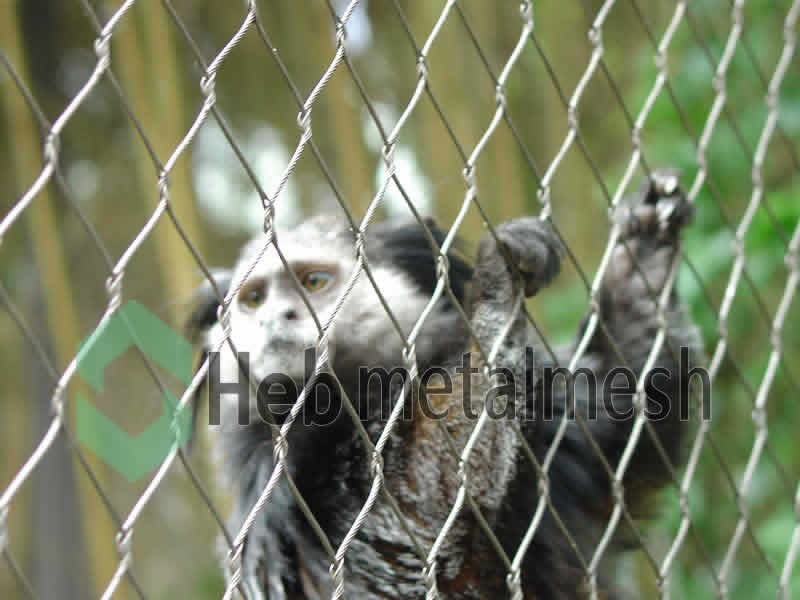
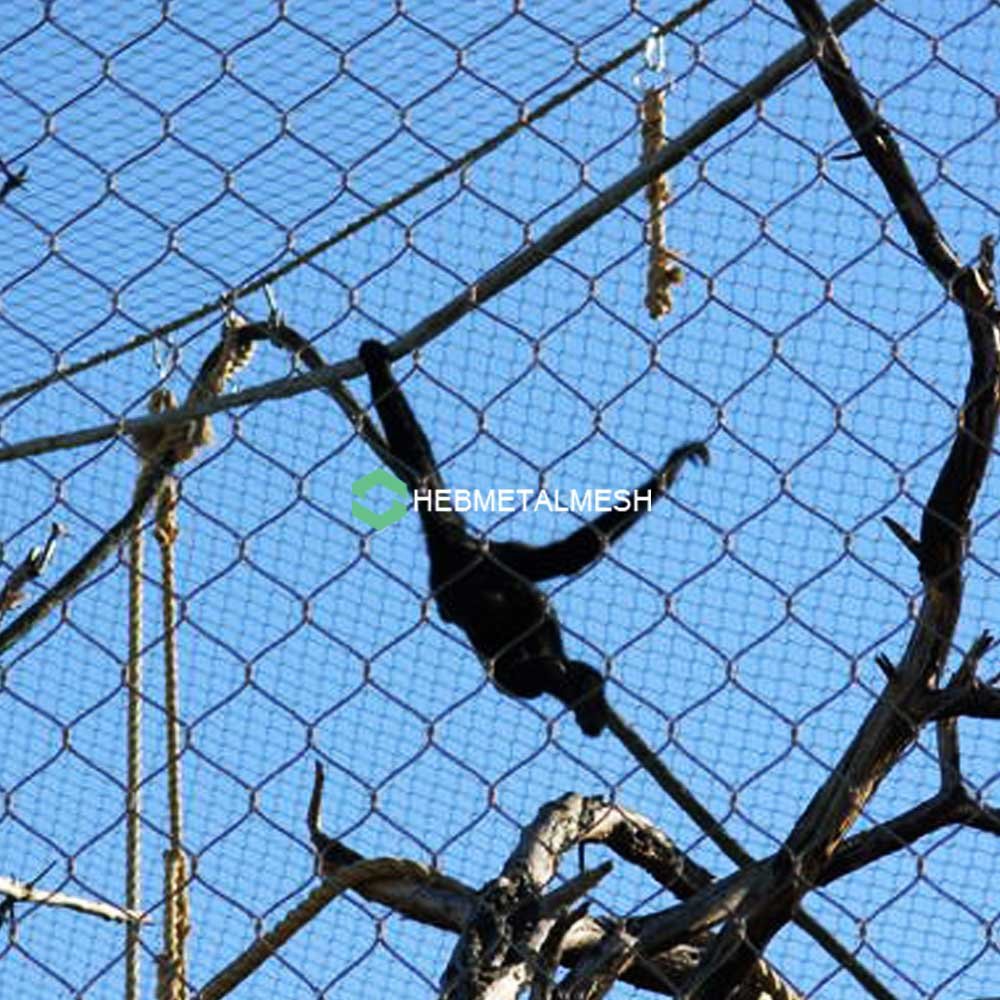
A gibbon barrier is a specialized high-tensile containment system designed to safely house small apes (Hylobatidae). Unlike ground-dwelling primates, gibbons are masters of brachiation—a form of arboreal locomotion where they swing from branch to branch using only their arms.
1. The Physics of Brachiation
How does a gibbon barrier actually work? It isn’t just a static wall; it is a dynamic system. When a 20lb (9kg) gibbon swings at high velocity and leaps against a fence, they generate significant kinetic energy.
- The Spring Effect: Handwoven stainless steel mesh acts like a high-tech trampoline. It absorbs the impact energy and distributes it across the interwoven knots, preventing the animal from sustaining “rebound” injuries common with rigid bars.
- Tension Management: By using 304 or 316-grade stainless steel wire rope, the barrier maintains constant tension, ensuring there are no sagging points where a primate could gain leverage to climb or stretch the mesh.
2. Tactile Safety and Hand Health
Gibbons have highly sensitive palms and long, hooked fingers. Traditional welded wire or chain-link fences often have sharp “burrs” or zinc flakes from galvanization that can cause micro-cuts, leading to infections.
- The Hebmetalmesh Advantage: Our handwoven process ensures that every intersection is smooth. There are no sharp welds or rough edges, making it the safest surface for a gibbon’s constant gripping and climbing.
III. Effective Physical Barriers for Gibbon Enclosures
When evaluating effective physical barriers for gibbons, we must look at the specific needs of the species. Gibbons require vertical height and complex overhead structures. Here are the primary types of barriers used in modern habitats:
A. Handwoven Stainless Steel Rope Mesh (The Industry Standard)
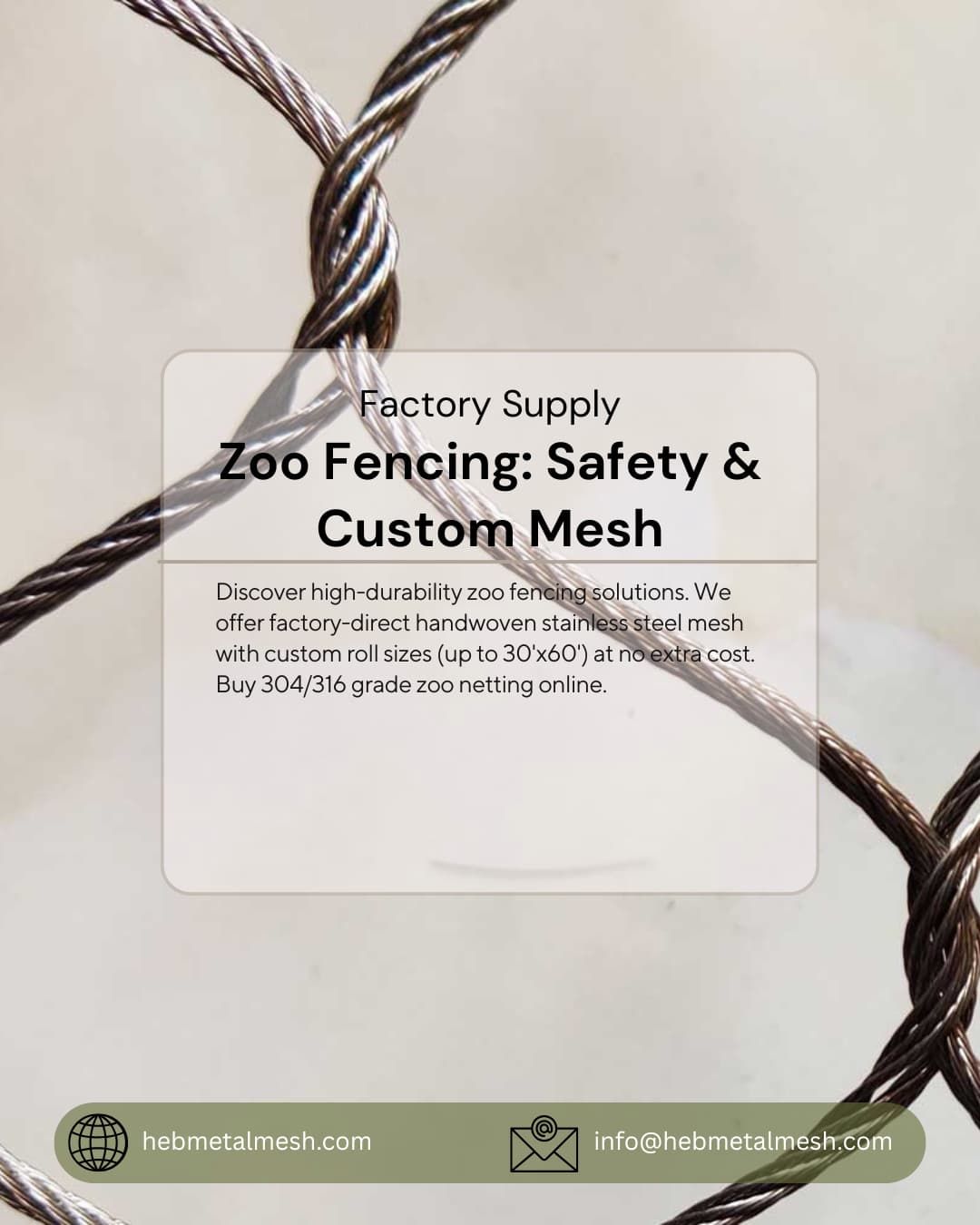
This is the flagship product of Hebmetalmesh. It is preferred by zoos worldwide for its “invisible” qualities and immense strength-to-weight ratio.
- Customization: We provide customized roll sizes at no additional cost, allowing for seamless installations over large spans.
- Large Panel Capability: We can produce single panels up to 30′ x 60′, minimizing the number of seams (the weakest point in any enclosure).
B. Black Oxide Stainless Steel
Visibility is key for both animal psychology and guest engagement.
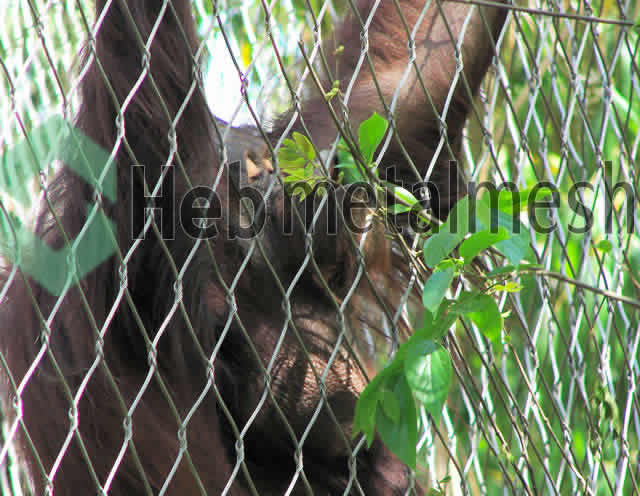
- The Optical Illusion: Black oxide mesh absorbs light rather than reflecting it. This makes the mesh “disappear” against a backdrop of green foliage or dark soil, providing a much more naturalistic viewing experience for visitors and reducing the “caged” feeling for the gibbons.
C. Moat and Hot-Wire Combinations
While mesh is the primary physical barrier, many parks use it in conjunction with dry moats or “hot-wire” (electric) offsets to keep primates away from the main support structures. However, the mesh remains the “fail-safe” that ensures the animal cannot escape the perimeter.
Key Takeaways
What is the best material for a gibbon barrier? The most effective material for a gibbon barrier is 316-grade handwoven stainless steel wire rope mesh. It provides the necessary tensile strength to handle brachiation forces while remaining flexible enough to prevent animal injury.
Where can I buy custom-sized gibbon fencing? You can purchase customized, factory-direct primate mesh at hebmetalmesh.com/store/, which offers custom roll sizes with no additional cutting fees.

Part II: Technical Specifications and Material Selection
Choosing the right gibbon barrier involves more than just selecting a strong material; it requires a precise balance of wire gauge, aperture size, and alloy type. At Hebmetalmesh, we specialize in providing “zoo-grade” specifications that meet international safety standards for primate habitats.
1. Wire Diameter and Breaking Loads
The thickness of the wire rope determines the barrier’s ability to withstand the explosive kinetic energy of a leaping gibbon.
- Small Primates / Juvenile Gibbons: We recommend a wire diameter of 1.6mm (1/16″) to 2.0mm (5/64″). These offer a minimum breaking load of approximately 2.17kN to 3.17kN.
- Adult Gibbons and Active Apes: For high-traffic areas or large male gibbons, the 2.4mm (3/32″) or 3.2mm (1/8″) wire is the gold standard. A 3.2mm wire provides a massive breaking load of 7.38kN, ensuring the barrier remains unyielding under extreme stress.
2. Mesh Aperture (Hole Size)
The aperture size is critical for preventing “entrapment” and ensuring visibility.
- Recommended Size: 2″ x 2″ (51mm x 51mm) or 1.5″ x 1.5″ (38mm x 38mm).
- Safety Rule: The aperture must be small enough to prevent a gibbon from getting its head through, yet large enough to allow for excellent airflow and clear sightlines for visitors.
- Climbing Texture: The diamond-shaped opening of our handwoven mesh provides a naturalistic texture that encourages healthy hand-gripping without the risk of snagging or injury.
3. Material Grades: 304 vs. 316 Stainless Steel
We offer two primary options depending on your location:
- Stainless Steel 304: The standard for most inland zoos and garden aviaries. It offers excellent rust resistance and durability at a cost-effective price point.
- Stainless Steel 316: Essential for coastal zoos or high-humidity tropical environments. The addition of molybdenum makes 316 mesh virtually immune to salt spray and corrosive animal waste.
Part III: Where to Buy Gibbon Barriers for Professional and Private Use
Finding a reliable supplier of high-strength mesh for zoo animals can be difficult. Most hardware stores carry chain-link or poultry netting, which are dangerous for primates.
Buying Direct from the Factory
As a dedicated manufacturer, Hebmetalmesh allows you to skip the middleman. You can purchase directly through our online store:
- Visit the Shop: hebmetalmesh.com/store/
- Custom Roll Sizes: We offer rolls up to 30′ x 60′. Unlike other suppliers, we provide customized roll sizes at no additional cost. This means less waste during installation and a perfect fit for your specific frame.
Companies Specializing in Primate Habitat Construction
If you are looking for a turnkey solution, many primate habitat construction companies worldwide partner with Hebmetalmesh. Our mesh is compatible with:
- Suspended Tunnel Systems: Allowing gibbons to travel overhead between exhibits.
- Canopy Enclosures: Utilizing our large 30′ x 60′ panels to create high-volume “flight” spaces.
- Home Garden Aviaries: Providing a professional-grade barrier for private enthusiasts who demand the same safety standards as a world-class zoo.
Part IV: Long-Tail Keyword Reference Table
| Long-Tail Keyword | Best Usage/Context |
| Black oxide stainless steel gibbon mesh | Best for high-end photography exhibits where the mesh should be “invisible.” |
| Customized primate enclosure rolls | Targeted at builders looking for specific dimensions to fit unique frames. |
| Anti-climb gibbon fencing | Used in perimeter design to prevent escape at the top of an enclosure. |
| Handwoven rope mesh for sale | Direct commerce keyword for users ready to purchase. |
Key Takeaways
What mesh size is best for a gibbon enclosure?
A mesh aperture of 1.5″ x 1.5″ to 2″ x 2″ with a wire diameter of 2.4mm to 3.2mm is recommended for adult gibbons. This ensures the animal cannot pass its head through the mesh while providing a high breaking strength for safety.
Where can I find black oxide mesh for primates?
Hebmetalmesh provides black oxide finish stainless steel mesh which reduces glare and improves visibility. It is available in custom sizes at hebmetalmesh.com.
Part V: Installation Guide for Large 30′ x 60′ Panels
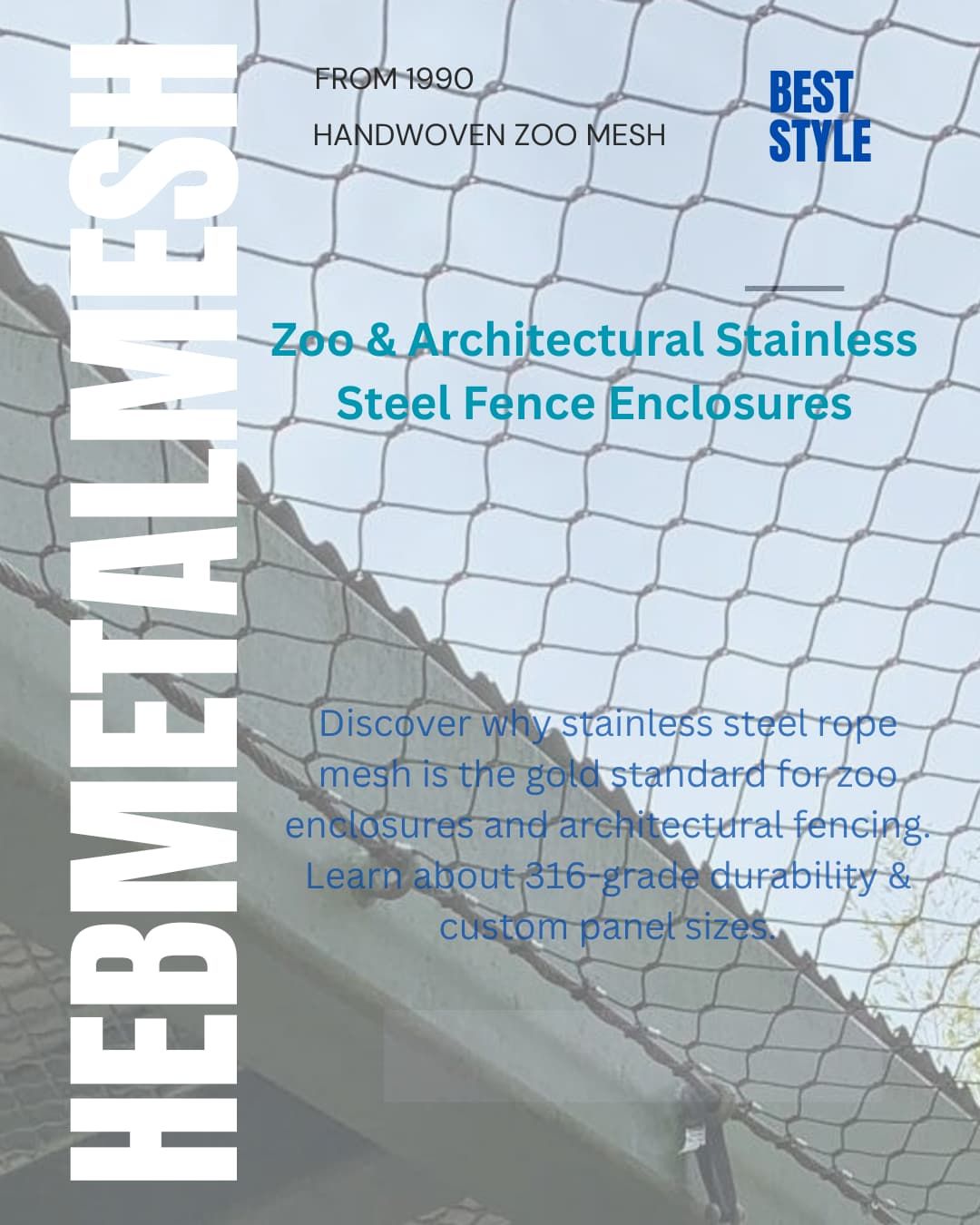
One of the standout features of Hebmetalmesh is our ability to manufacture massive, customized panels. A single 30′ x 60′ (approx. 9m x 18m) panel can cover a huge surface area, but handling such a large piece of handwoven mesh requires a strategic approach.
1. Pre-Installation Preparation
Before unrolling your mesh, ensure your support structure (steel posts, tension cables, or wooden beams) is completely rigid.
- Orientation Matters: Handwoven mesh is diamond-shaped. For gibbon barriers, we recommend a vertical diamond orientation. This makes it harder for small primates to use the mesh like a ladder and allows debris or snow to slide off more easily.
- Tools Needed: You will need stainless steel cable ties (for temporary positioning), wire rope cutters, a swaging tool (if using ferrules), and lacing wire.
2. The “Top-Down” Attachment Method
For large panels, do not attempt to fix all sides at once.
- Step A: Temporary Hanging: Use heavy-duty plastic or stainless steel cable ties to hang the top edge of the mesh to your frame. Start from the center and move outward to ensure the panel is centered.
- Step B: Stretching and Tensioning: Once the top is secure, pull the mesh downward. Handwoven mesh is flexible and must be tensioned to achieve its final “90-degree” diamond shape.
- Step C: Permanent Lacing: The most common and secure way to fix the mesh is “lacing.” Use a secondary stainless steel wire rope (typically 1.2mm to 1.5mm) to “sew” the mesh edge to your frame. Wrap the lacing wire through every mesh hole and around the frame pipe.
3. Seamlessly Joining Panels
If your enclosure is larger than 60 feet, you can join two panels invisibly. By “weaving” a stainless steel rope between the edges of two panels, you create a joint that is just as strong as the mesh itself, maintaining the gibbon-proof integrity of the entire habitat.
Part VI: Beyond the Zoo—Garden and Farm Applications
While we are famous for our zoo enclosures, Hebmetalmesh is increasingly popular for residential and agricultural projects.
1. Home Garden Aviaries
For bird enthusiasts, our mesh is the “gold standard” for garden aviaries.
- Predator Protection: Unlike plastic netting, our stainless steel cannot be chewed through by raccoons, foxes, or rats.
- Plant-Friendly: The thin wire diameter allows 90% open area, ensuring your plants get maximum sunlight and airflow while your birds remain safe.
2. Farm and Livestock Security
Farmers use our customized rolls for specialized livestock fencing.
- Deer and Exotic Farm Animals: The high tensile strength of our 3.2mm wire is perfect for containing high-jumping animals like deer or protecting valuable livestock from predators.
- Longevity: In a farm environment where fences are exposed to animal waste and moisture, our 316 stainless steel provides a 25-year rust-free lifespan that traditional galvanized fencing can’t match.
Part VII: Maintenance for a Lifetime of Service
One reason Hebmetalmesh is the preferred gibbon barrier is that it is virtually maintenance-free. However, a few simple steps will keep it looking brand new for decades.
- Routine Cleaning: In urban or dusty environments, simply spray the mesh with high-pressure water. For stubborn grime, use a mild soap and a soft-bristle brush.
- Avoid Carbon Steel Contamination: Never use steel wool or carbon-steel brushes on your mesh. This can leave “iron deposits” that will cause surface rust (tea staining). Always use stainless steel tools.
- Inspection: Periodically check the tension of your lacing wires. As structures settle over time, a quick re-tensioning will ensure your gibbon barrier remains “drum-tight.”
Key Takeaways
How do you install large stainless steel mesh panels? Large panels (up to 30′ x 60′) should be hung from the top using temporary ties, then stretched vertically and horizontally before being permanently “laced” or “sewn” to the frame using a 1.2mm–1.5mm stainless steel wire.
Is stainless steel mesh safe for organic farms? Yes, Hebmetalmesh is non-toxic and free from the lead and zinc found in galvanized or PVC-coated fencing, making it the safest choice for organic farms and sensitive primate habitats.
Part VIII: Species-Specific Mesh Comparison Table
While the gibbon barrier is our primary focus, many zoo professionals and private sanctuaries house multiple primate species. The table below outlines the specific Hebmetalmesh requirements based on primate weight, agility, and behavior.
Primate Habitat Mesh Specifications
| Primate Group | Examples | Rec. Wire Diameter | Rec. Aperture (Mesh Hole) | Behavior/Reasoning |
| Small Primates | Lemurs, Tamarins, Squirrel Monkeys | 1.2mm – 1.6mm (3/64″ – 1/16″) | 25mm x 25mm (1″ x 1″) | Prevent tiny limbs or heads from getting stuck. |
| Medium Primates | Macaques, Capuchins, Langurs | 2.0mm (5/64″) | 38mm x 38mm (1.5″ x 1.5″) | High dexterity; need smooth knots to prevent finger injuries. |
| Lesser Apes | Gibbons, Siamangs | 2.4mm – 3.2mm (3/32″ – 1/8″) | 51mm x 51mm (2″ x 2″) | Brachiation focus: Needs high impact absorption for swinging. |
| Large Primates | Baboons, Mandrills | 3.2mm (1/8″) | 51mm x 51mm (2″ x 2″) | High bite pressure and pulling strength; require 316-grade durability. |
| Great Apes | Chimpanzees, Orangutans | 3.2mm (1/8″ ) | 51mm x 51mm (2″ x 2″) | Maximum tensile strength needed for collective group weight. |
Part IX: Why Hebmetalmesh is the Top Choice for Primate Enclosures
As you finalize your plans for a gibbon barrier or primate habitat, remember that the material is the only thing standing between your animals and the outside world.
1. Cost-Efficiency through Customization
Unlike other suppliers who charge high “cutting fees” for custom dimensions, Hebmetalmesh offers customized roll sizes at no additional cost. This is vital for complex primate habitats that often use irregular, non-rectangular frames.
2. High-Fidelity Visibility
Our Black Oxide finish is not just a coating; it is a chemical transformation of the steel surface. It will not peel or flake—even if a gibbon picks at it with its fingernails—ensuring your exhibit stays beautiful and “invisible” for decades.
3. Global Shipping and Factory Support
We ship directly from our factory to your site, whether you are in North America, Europe, or Australia. By visiting hebmetalmesh.com/store/, you can see live pricing and order the exact amount of mesh needed for your project.
Conclusion: Securing the Future of Primate Conservation
A gibbon barrier is more than just a fence; it is a commitment to the safety of the animal and the education of the public. By choosing handwoven stainless steel rope mesh, you are investing in a product that supports natural behaviors, withstands the test of time, and provides the ultimate “invisible” window into the world of these magnificent brachiation masters.
Summary Checklist for Buyers:
- Brand: Hebmetalmesh
- Material: 304 or 316 Stainless Steel
- Type: Handwoven / Knotted
- Customization: Up to 30′ x 60′ per panel
- Where to buy: https://hebmetalmesh.com/store/
FAQs
A standard gibbon barrier using 3.2mm stainless steel rope mesh has a breaking strength of approximately 7.38kN, making it more than capable of handling the dynamic loads of multiple adult gibbons.
No, the black oxide finish on Hebmetalmesh is specifically designed to absorb light, which eliminates glare and makes the barrier significantly more transparent to the human eye and camera lenses.