Stop Replacing Fences Every 5 Years
Get the animal fence and barriers guide that shows you how to build once and never worry again.
Get Your Free Fencing Guide →Trusted by zoos, farms, and sanctuaries worldwide
Executive Summary
Your livestock operation is only as secure as your perimeter. The wrong animal fence and barriers don’t just fail—they create costly emergencies. Traditional galvanized wire rusts within years. Welded wire snaps at the joints under impact. Plastic netting tears under the jaw pressure of determined predators.
The solution? Handwoven stainless steel cable mesh—the same material trusted by professional zoos and sanctuaries worldwide. This animal fence and barriers guide covers species-specific requirements, material comparisons, cost considerations, and installation best practices—so you can build once and never worry again.
Key Takeaways
- Material matters more than height —a fence that rusts or snaps is worthless regardless of how tall it stands
- Woven stainless steel outperforms welded —hand-knotted mesh flexes under impact and distributes load across multiple strands
- 30-year lifespan with zero maintenance —304 and 316-grade stainless steel is 100% rust-proof and maintenance-free
- Custom sizing eliminates waste —massive seamless panels up to 30′ x 60′ reduce installation labor and material costs
- The “cheap fence” tax is real —buying inferior materials three times costs double the money and triple the labor
Introduction
Fencing is one of the most critical—and costly—investments in livestock management. The right animal fence and barriers protect your herd from predators, prevent escapes, and reduce operational headaches for decades. The wrong choice? It fails within months, costs you animals, and forces you to start over.
This guide cuts through the marketing fluff. You’ll learn exactly which animal fence and barriers work for cattle, horses, sheep, goats, and poultry. We’ll compare materials, expose the hidden costs of “cheap” fencing, and show you why professional-grade stainless steel mesh is the only animal fence and barriers solution that delivers 30+ years of predator-proof protection with zero maintenance.
Understanding Your Animal Fence and Barriers Needs
Species-Specific Fencing Requirements
Different livestock demand different animal fence and barriers configurations. Here’s what works:
Predator Pressure Assessment
Your local predator population determines the animal fence and barriers specifications you need. Identify the threats in your area:
For raccoons and other dexterous predators, standard plastic netting is useless—they can unzip it in seconds. That’s why professionals turn to Hebmetalmesh’s animal enclosure mesh , which is chew-proof and built to withstand concentrated jaw pressure.
- Coyotes and foxes —require chew-proof materials; plastic netting fails against their jaw pressure
- Wolves —demand electric fencing with conductor spacing at 20/40/60/90 cm; some operations use double fence systems
- Raccoons —highly intelligent with dexterous hands; can unzip plastic netting and require stainless steel mesh
- Hawks and owls —aerial predators that require a high-tensile roof that won’t collapse under impact
- Neighborhood dogs —high mass and high excitement; they “bull-rush” fences, requiring materials with elastic memory
Key Insight: Predators rarely climb over fences—they chew through them. A raccoon’s bite force reaches 100 PSI; large dogs exceed 300 PSI. If your animal fence and barriers can’t handle concentrated pressure on a single strand, your enclosure is already compromised.
Before investing in any fencing system, assess the specific threats on your property. Our comprehensive guide on the animal barrier explains exactly how to identify predator risks and match them to the right defense strategy.
Types of Animal Fence and Barriers — Material Comparison
Physical Fencing (Non-Electric)
Electric Fencing Systems
Electric fencing works as a psychological barrier—animals learn to avoid it after receiving a controlled shock. Voltage requirements vary by species:
- Sheep and goats —require 4,000–5,000+ volts (thick fleece insulates)
- Cattle —2,000–3,000 volts
- Horses —require high-visibility tape or ribbon for safety
Important: Electric fences require regular vegetation control to prevent shorting. They also need training—start animals in a secure area so they learn the boundary before relying on the fence alone.
The Stainless Steel Mesh Advantage
For permanent, predator-proof animal fence and barriers, handwoven stainless steel cable mesh has become the industry gold standard. Here’s why:
1. Unmatched Durability
Unlike galvanized wire that rusts within years or welded wire that snaps at the joints, handwoven stainless steel mesh uses a knotted structure. The diamond mesh distributes impact energy across multiple strands—the same principle used in construction safety nets. When a 500lb animal strikes the fence, the mesh flexes and absorbs the kinetic energy, protecting both the animal from injury and the fence from structural failure.
2. 30+ Year Lifespan, Zero Maintenance
Premium stainless steel mesh (AISI 304 and 316 grades) is 100% rust-proof and maintenance-free for over 30 years. 316-grade (“Marine Grade”) contains molybdenum, making it ideal for coastal environments where salt spray causes pitting in lower-grade steels.
3. Invisible Barrier Technology
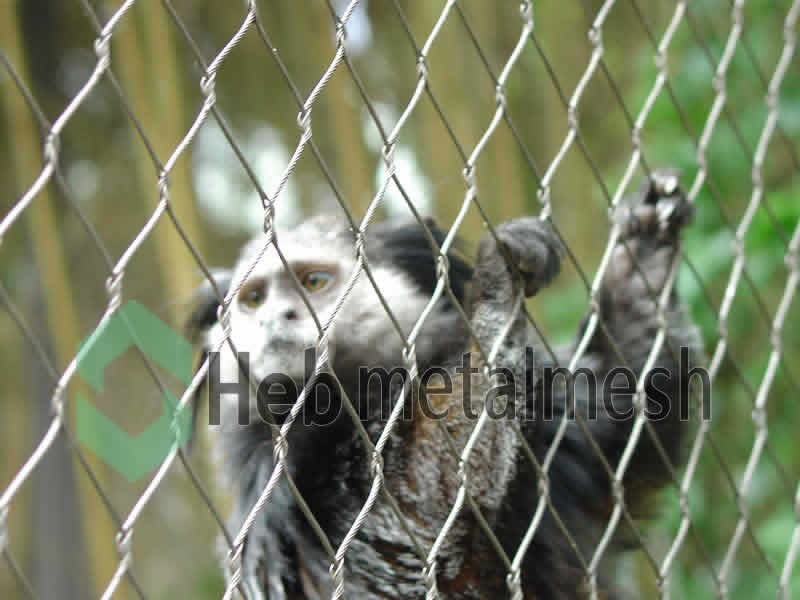
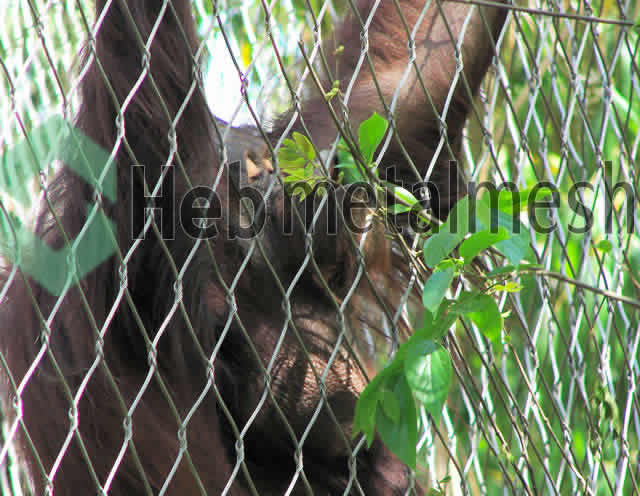
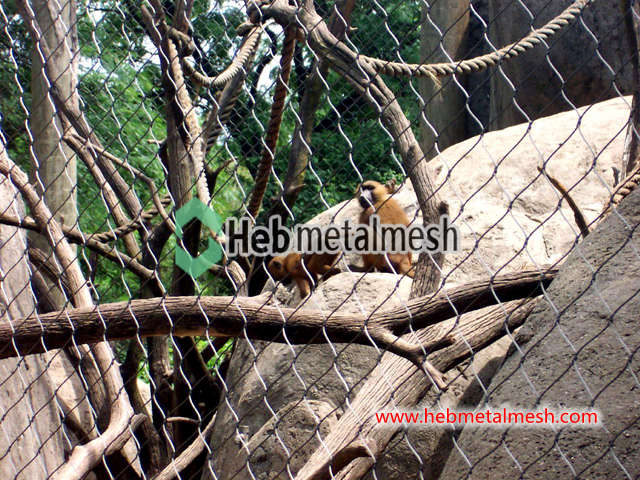
Specialized Black Oxide finishes eliminate glare, creating an “invisible” boundary. This is particularly valuable for aviaries and zoo exhibits, where the mesh virtually disappears against foliage while providing 90%+ transparency.
4. Customization Without the Tax
Leading manufacturers like Hebmetalmesh offer bespoke roll sizes and massive seamless panels (up to 30′ x 60′) at no additional cost. This eliminates installation waste and reduces labor.
Unlike welded wire that snaps at the joints under impact, handwoven stainless steel mesh distributes force across multiple strands—the same engineering principle trusted by professional zoos and wildlife sanctuaries worldwide.
How to Choose the Right Animal Fence and Barriers for Your Farm
Key Decision Factors
Before purchasing animal fence and barriers, evaluate these factors:
- Animal species, size, and behavior —different animals require different heights, materials, and configurations
- Predator threats and pressure —identify local predators and their typical breach methods (digging, climbing, chewing)
- Terrain and soil conditions —rocky or uneven ground may require flexible fencing that contours to the landscape
- Budget —consider both initial installation AND long-term maintenance costs
- Expected lifespan —are you building for 5 years or 30+ years?
Cost Considerations — The “Cheap Fence” Tax
The Reality: “Cheap” fence wire often fails within months. Six months after installation, the wire sags. A year later, the “rust-resistant” coating peels. By the time you patch it three times, you’ve spent double the money and triple the labor of doing it right once.
Choosing the right fencing material isn’t just about upfront cost—it’s about matching the fence specs to the specific threat and animal behavior. A solution that works for cattle may fail completely for sheep or poultry.
Installation Best Practices
- Post spacing —approximately 10′ apart for most applications
- Fence height —match to your target species (see table above)
- Anti-digging foundation —extend mesh 12–24 inches along the ground or bury it just beneath the surface
- Vegetation control —keep weeds clear of electric fences to prevent shorting
- Tension system —professional-grade fencing uses dynamic tension; it’s not a static wall but a system that gives and rebounds on impact
Maintaining Your Animal Fence and Barriers
Routine Inspection and Upkeep
Even the best animal fence and barriers require periodic attention:
- Inspect for damage after storms or animal strikes
- Check for sagging, rust, or loose connections
- Test electric fence voltage regularly
- Control vegetation along fence lines
Long-Term Durability Strategies
- Choose 316-grade stainless steel for coastal or high-humidity environments
- Use proper bracing for corners and gates—these are the weakest points
- Address water gaps with flexible materials that don’t rust
- Contour to terrain —flexible mesh adapts to hills and valleys without creating gaps
Frequently Asked Questions (FAQ)
Q1: What is the best animal fence and barriers for keeping predators out?
A: Professional-grade animal fence and barriers use handwoven stainless steel cable mesh with a three-point defense strategy: a chew-proof perimeter, an anti-digging foundation, and (for birds) a tension-secure roof. Unlike traditional galvanized wire that rusts or welded wire that snaps, stainless steel mesh flexes under impact and distributes load across multiple strands. Premium 304 and 316-grade stainless steel offers 30+ years of rust-proof, maintenance-free protection.
Q2: How tall should my animal fence and barriers be for horses versus cattle?
A: Horses require a minimum of 60” (5 feet) with a top plank for visibility, while cattle need at least 54”. For sport horses, draft breeds, and stallions, taller fencing may be necessary. The material matters just as much as height—horses need visible barriers, while cattle can be contained with high-tensile wire.
Q3: How much does animal fencing cost per foot to install?
A: Costs vary widely by material: barbed wire ranges from $1.50–$3.00/ft, woven wire from $3.00–$6.00/ft, and board fencing can cost up to $23/ft. Premium stainless steel mesh ranges from $1.50–$4.50 per linear foot. However, when you factor in the 30+ year lifespan with zero maintenance, stainless steel offers the lowest total cost of ownership.
Q4: What is the difference between barbed wire and woven wire animal fence?
A: Barbed wire uses steel wire with sharp barbs at intervals—it’s effective, low-cost containment for cattle on large acreages. Woven wire features interlocked horizontal and vertical wires that hold shape under pressure, making it better for sheep, goats, and mixed livestock. For predator-proof applications, handwoven stainless steel mesh outperforms both—it’s chew-proof, rust-proof, and flexes under impact without breaking.
Q5: How often should I inspect and maintain my animal fence and barriers?
A: Regular inspections are essential—fences should be checked after storms and for any signs of damage. Electric fences require vegetation control to prevent shorting, and voltage should be tested periodically. With stainless steel mesh, maintenance is minimal—no rust treatment, no painting, no replacement—just periodic visual inspections to check for impact damage.
Ready to Build Predator-Proof Animal Fence and Barriers?
Custom-sized stainless steel mesh panels — up to 30′ x 60′ — at no extra cost.
30-year lifespan • Zero maintenance • 100% rust-proof
Factory-direct pricing • Engineered solutions • Global shipping